
 By
By BREAKING: President Trump Issues Stark 48-Hour Ultimatum to Iran
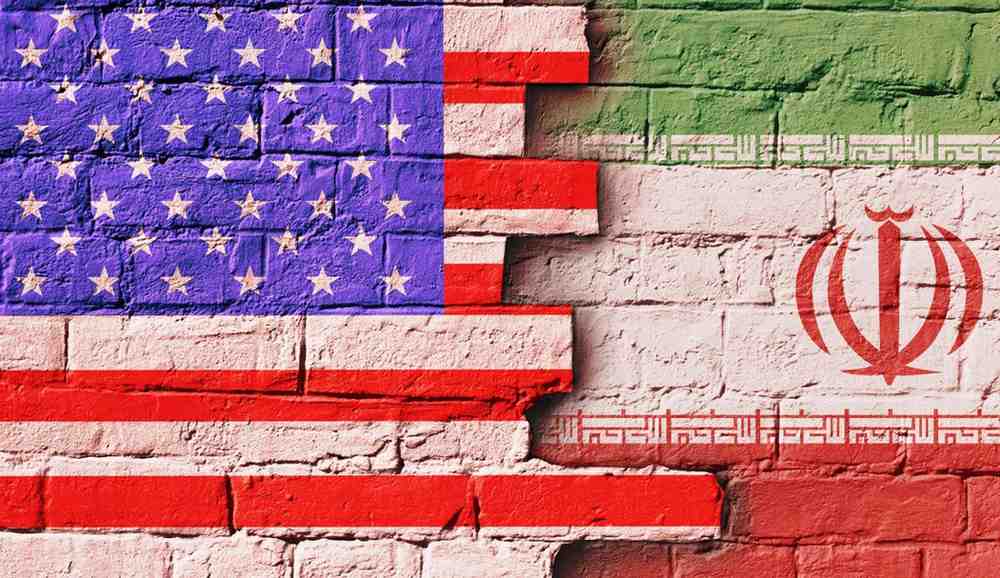
In a dramatic and direct warning that has sent shockwaves across global capitals, President Donald J. Trump issued an unambiguous ultimatum to the Iranian regime:
“If Iran doesn’t FULLY OPEN, WITHOUT THREAT, the Strait of Hormuz, within 48 hours from this exact point in time, the United States of America will hit and obliterate their various POWER PLANTS, STARTING WITH THE BIGGEST ONE FIRST!”
“Thank you for your attention to this matter. President DONALD J. TRUMP.”
The message blunt, urgent, and unprecedented in tone sets a hard deadline that expires within two days, and raises the very real prospect of a dramatic escalation in the already devastating U.S.-Iran conflict. As the world holds its breath, the U.S. Department of State has simultaneously issued a sweeping global security advisory, urging all American citizens wherever they are in the world to exercise increased caution immediately.
The U.S. Department of State has issued a sweeping global security advisory urging all American citizens wherever they are in the world to exercise increased caution in the wake of ongoing U.S. military combat operations against Iran. The advisory, last updated on February 28, 2026, comes as the conflict between the United States, Israel, and Iran stretches into its fourth week, sending shockwaves across the Middle East, global energy markets, and international diplomatic circles.
Table of Contents
ToggleU.S. State Department Worldwide Caution Advisory
The advisory, last updated on February 28, 2026, comes as the conflict between the United States, Israel, and Iran stretches into its fourth week, sending shockwaves across the Middle East, global energy markets, and international diplomatic circles.
What the Advisory Says
The State Department warns that following the launch of U.S. combat operations in Iran, Americans worldwide and especially those in the Middle East — should closely follow guidance issued by the nearest U.S. embassy or consulate. The advisory also notes that travelers may experience disruptions due to periodic airspace closures.
All American citizens abroad are being directed to enroll in the Smart Traveler Enrollment Program (STEP) at step.state.gov, which provides real-time security alerts. The State Department is also encouraging citizens to follow the official “U.S. Department of State – Security Updates for U.S. Citizens” channel on WhatsApp to stay informed as the situation rapidly evolves.
How It All Started
On February 28, 2026, the United States and Israel launched coordinated military operations against the Iranian regime, targeting nuclear facilities, military infrastructure, and top leadership. The action came after Washington and Jerusalem concluded that diplomacy had been exhausted and that a nuclear-armed Iran posed an unacceptable security threat.
President Donald Trump announced the start of “major combat operations” against Iran, and Supreme Leader Ayatollah Ali Khamenei was among those killed in Tehran on the opening day of strikes. His son, Mojtaba Khamenei, was subsequently chosen as his successor.
The U.S. operation has been codenamed Operation Epic Fury, while Israel’s parallel campaign was named Operation Roaring Lion. The Israeli Air Force said it struck 500 military targets in western and central Iran, including air defenses and missile launchers, using approximately 200 fighter jets in the largest combat sortie in its history.
The Scope of the Conflict
Now in its fourth week, the conflict has expanded far beyond its initial targets. The U.S. claims to have struck more than 7,800 targets, flown more than 6,500 combat flights, and damaged or sunk more than 100 ships — including the first sinking of a ship by U.S. torpedo since World War II. U.S. Central Command has deployed a broad range of assets, including B-1, B-2, and B-52 bombers along with F-15, F-16, F-18, F-22, and F-35 fighter jets, and not one but two Navy carrier strike groups are currently positioned in the region.
Iran has retaliated by launching missile and drone attacks toward Israel and neighboring Gulf countries. Unlike earlier strikes in 2025, the current conflict has spread across at least a dozen countries, closed the Strait of Hormuz the world’s major oil artery and resulted in more than 2,300 deaths in the region.
The Strait of Hormuz: A Global Flashpoint
One of the most alarming developments in the conflict has been the threat to global shipping through the Strait of Hormuz. Iran has been attempting to block some shipping traffic through the strait, while Iranian Foreign Minister Seyed Araghchi insisted the waterway is not officially closed, arguing that ships are hesitating due to war-risk insurance fears rather than a physical blockade. This uncertainty has already begun to rattle global energy markets, as the Strait of Hormuz remains one of the world’s most critical chokepoints for oil and gas shipments.
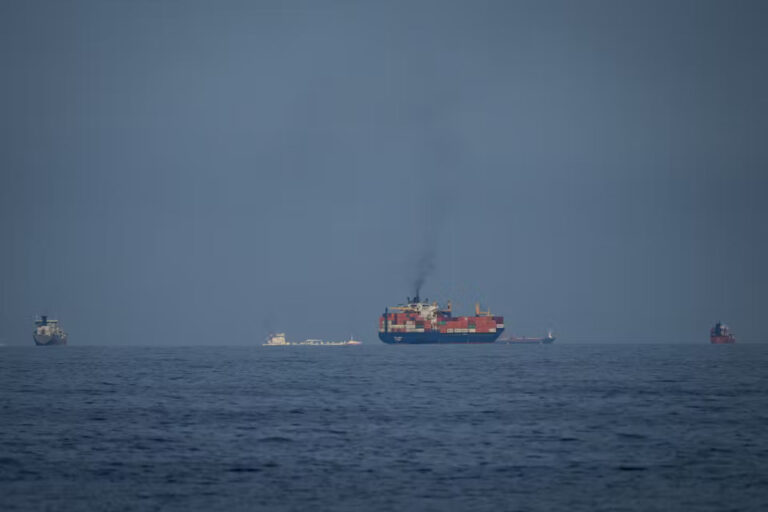
President Trump responded with a stark warning, issuing a 48-hour ultimatum for Iran to fully open the strait without threats or face strikes on Iranian power plants, starting with the largest. The standoff has rattled global oil markets and alarmed major trading nations that depend on the route for energy imports.
The conflict has not stayed contained within Iran’s borders. Iranian strikes have directly targeted locations tied to U.S. forces, including facilities linked to the U.S. Fifth Fleet in Bahrain, as well as bases in Qatar, Kuwait, and Iraq. Air defense systems across the region have been intercepting incoming missiles and drones.
Israel has also begun striking Iranian oil and natural gas production infrastructure in the conflict’s third week, including attacks on South Pars the world’s largest liquefied natural gas field, which Iran shares with Qatar. Meanwhile, over a million people in Lebanon have been displaced as Israel intensifies operations against Iran-backed Hezbollah fighters along the Lebanese border.
International Reaction
The conflict has exposed deep fractures in Western alliances. In a joint statement with the leaders of France and Germany, UK Prime Minister Sir Keir Starmer condemned Iranian counter-strikes and called for a return to diplomacy, saying he did “not believe in regime change from the skies.” The UK has not participated militarily in the strikes.
Trump called on European and some Asian nations to help patrol the Strait of Hormuz, but allies feeling alienated by ongoing tariff disputes and blindsided by the Iran operation have largely declined. Trump has since said he no longer needs their help, though tensions with NATO partners remain high.
What Americans Abroad Should Do Now
The State Department’s advisory is a serious reminder that the effects of this conflict extend well beyond the Middle East. Americans living abroad or planning international travel should take these precautions seriously:
Register with the STEP program immediately at step.state.gov to receive emergency alerts from the nearest U.S. embassy or consulate. Keep travel documents up to date and accessible at all times. Monitor news from official sources and stay alert to any changes in local security conditions. Avoid protests and large public gatherings, maintain a low profile, and have a plan in place should conditions deteriorate. Contact the State Department’s 24/7 emergency line at +1-202-501-4444 (from abroad) or +1-888-407-4747 (from the U.S. and Canada) if assistance is needed.
Looking Ahead
With the conflict now entering its fourth week and no ceasefire in sight, the situation remains deeply fluid. Iran’s regime, while severely weakened militarily, remains intact. Despite the destruction of most of its conventional military capability, Iran’s government has not collapsed, and analysts note the country remains vast, with over 90 million residents.
The world is watching closely. For travelers, expatriates, and global citizens, the State Department’s worldwide caution advisory is not a formality it is a direct signal that the effects of this war are global, and preparedness is essential.
Source: U.S. Department of State — travel.state.gov
