
 By
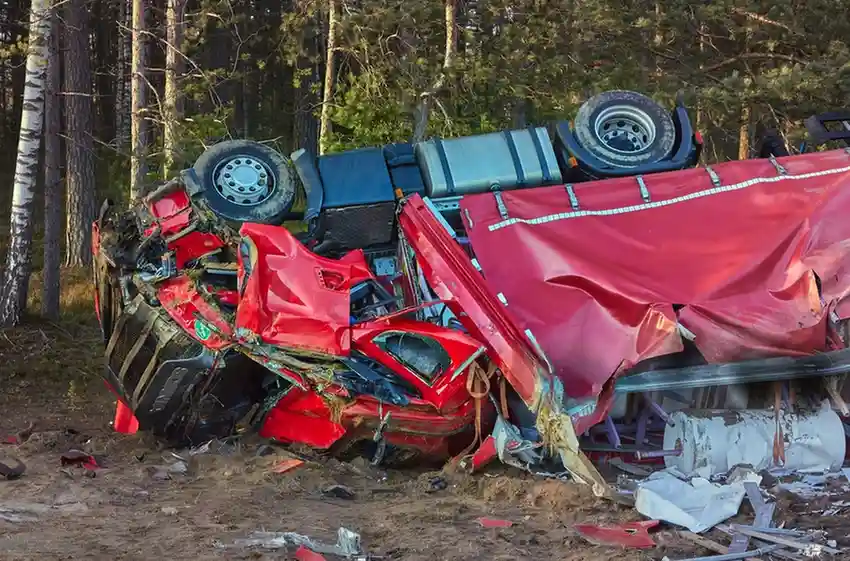
By The catastrophic accidents that occur on American highways, few are as terrifying or as deadly as a jackknife truck accident. In a fraction of a second, an 80,000-pound commercial vehicle can fold violently at its trailer hitch, swinging its massive trailer sideways across multiple lanes of traffic, leaving drivers with no time to react and nowhere to go. These crashes consistently rank among the most destructive in terms of fatalities, serious injuries, and property damage.
Yet despite their devastating outcomes, the underlying jackknife truck accident causes are rarely mysterious. Most jackknife crashes are the product of identifiable failures mechanical defects, driver error, carrier negligence, or some combination of all three. Understanding what triggers these accidents, what hidden dangers they carry beyond the initial collision, and how liability is determined under the law is essential for any victim or family member seeking accountability in the aftermath of a jackknife crash.
What Is a Jackknife Truck Accident?
A jackknife truck accident occurs when a large articulated vehicle most commonly a tractor-trailer or semi-truck loses directional control and the cab and trailer swing out to form an acute angle, resembling the folding blade of a jackknife. The event is specific to vehicles with a hitch connection between two separate sections: the powered cab (the tractor) and the unpowered cargo unit (the trailer).
Under normal driving conditions, the cab and trailer track together. When braking force, a sudden evasive maneuver, or a mechanical failure causes the drive wheels of the cab to lose traction before the trailer does or vice versa the trailer continues moving forward at its original speed and angle while the cab decelerates or changes direction. The resulting pivot around the hitch point drives the trailer sideways, often sweeping across the entire width of a highway in less than two seconds.
The Federal Motor Carrier Safety Administration (FMCSA) reports that large truck crashes cause tens of thousands of serious injuries and thousands of fatalities each year in the United States. Jackknife events represent a disproportionate share of the most catastrophic outcomes in that data, precisely because a jackknifed trailer does not simply stay in one lane it becomes a moving wall that other vehicles cannot avoid.
“A jackknife doesn’t just involve one truck. In a matter of seconds, a single articulated vehicle becomes a multi-lane obstacle that can sweep away every car in its path. That is why these crashes produce some of the highest injury tallies of any highway accident type.”
The Most Common Jackknife Truck Accident Causes
Understanding the root causes of jackknife accidents is critical both for prevention and for establishing legal liability after a crash occurs. Investigations into these events consistently identify the same cluster of contributing factors, most of which are preventable a fact that becomes deeply important when injured victims pursue compensation.
Brake Failure and Improper Brake Use
Brake-related problems are the single most frequently identified factor in jackknife truck accidents. Commercial trucks use air brake systems that apply braking force across multiple axles simultaneously. When a driver brakes too hard, too suddenly, or when the braking system is out of balance applying more force to the front axle than the rear the drive wheels of the cab can lock up while the trailer’s momentum continues pushing it forward. This wheel lockup is the mechanical event most directly associated with initiating a jackknife.
Poorly maintained brakes, air brake leaks, and brake fade from overheating on steep descents are all documented contributors. Federal regulations require commercial carriers to inspect and maintain brake systems on a rigorous schedule failures to do so expose carriers to direct liability when defective brakes cause a crash.
Speeding and Driving Too Fast for Conditions
Speed is a multiplying factor in virtually every jackknife scenario. At higher speeds, the forces acting on the trailer during any change of direction are dramatically greater. A truck that makes an emergency lane change at 45 miles per hour may remain controllable; the same maneuver at 70 miles per hour generates angular momentum that overwhelms the driver’s ability to correct. Speeding is particularly dangerous on curved highway ramps, which are among the most common sites for jackknife events.
Slippery or Adverse Road Conditions
Rain, ice, snow, and road debris reduce the traction available to a truck’s drive wheels. When traction is reduced, the braking force required to slow a loaded trailer can easily exceed what the road surface can provide causing wheel lockup and initiating the jackknife sequence. Drivers who fail to reduce speed in adverse weather, or who apply brakes without accounting for reduced traction, are engaging in the very conduct that federal hours-of-service and safety regulations are designed to prevent.
Improper or Uneven Cargo Loading
The distribution of weight within a trailer has a profound effect on its handling characteristics. An improperly loaded trailer with cargo shifted to one side, or weight concentrated too far toward the rear can create asymmetric braking forces that make a jackknife far more likely during any sudden maneuver. Federal regulations establish strict cargo securement standards, and violations of those standards can create liability not just for the driver and carrier, but for the shipper or loading company responsible for the trailer’s contents.
Driver Fatigue and Impairment
A fatigued driver has measurably slower reaction times, poorer judgment, and a reduced ability to detect and respond to hazards before they escalate into emergencies. The connection between driver fatigue and commercial truck accidents is well-documented in both regulatory literature and accident investigation data. Similarly, drivers impaired by alcohol, prescription medications, or over-the-counter substances that affect alertness present the same pattern of delayed, inadequate response to developing road situations.
Sudden Evasive Maneuvers
When a truck driver is forced to swerve abruptly to avoid a pedestrian, an animal, a debris field, or a merging vehicle the sudden change in cab direction can outpace the trailer’s ability to follow. The physics of a loaded trailer mean that it will continue in its original direction of travel even as the cab pivots, swinging the trailer outward and initiating a jackknife. Driver inattention that leads to these last-second maneuvers is itself a form of negligence.
Summary: Key Jackknife Truck Accident Causes
- Brake failure or sudden hard braking — locks drive wheels, allowing trailer momentum to swing the unit sideways.
- Excessive speed — amplifies angular forces beyond what a driver can correct.
- Adverse road conditions — reduces traction below the threshold needed to maintain directional control.
- Improper cargo loading — creates uneven weight distribution that destabilizes the trailer under braking.
- Driver fatigue or impairment — delays the response needed to prevent or correct a developing jackknife.
- Sudden evasive maneuvers — generates angular momentum that a loaded trailer cannot absorb without swinging wide.
The Hidden Dangers Most Drivers Never See Coming
The visible danger of a jackknife crash a trailer sweeping laterally across the roadway is catastrophic enough on its own. But these events carry a cluster of secondary and less obvious dangers that extend well beyond the initial moment of the crash, and that account for a significant portion of the total harm they cause.
Multi-Vehicle Chain Reaction Crashes
When a tractor-trailer jackknifes on a highway, it typically blocks multiple lanes simultaneously. Vehicles following at highway speeds have stopping distances measured in hundreds of feet far greater than the time available to respond. The result is frequently a chain-reaction pile-up in which multiple vehicles strike the jackknifed trailer in rapid succession. Each subsequent collision compounds the injuries of those already involved and adds new victims to the crash.
Cargo Spillage and Secondary Hazards
Commercial trailers carry an extraordinary range of cargo, and the violent forces of a jackknife event routinely breach the trailer’s structural integrity, spilling contents across the roadway. When that cargo includes hazardous materials chemicals, flammable liquids, compressed gases the consequences can include fires, explosions, or toxic contamination that affects not only crash victims but emergency responders and nearby residents. Even non-hazardous cargo spillage creates road debris that triggers secondary accidents long after the primary crash has occurred.
Fuel Tank Rupture and Fire
Tractor-trailers carry large diesel fuel tanks that are vulnerable to rupture during a jackknife event. A ruptured fuel tank in the presence of sparks or hot metal can ignite rapidly, trapping occupants in nearby vehicles and transforming a serious accident into a fatal one. Fire-related deaths in large truck accidents are disproportionately associated with jackknife and rollover events rather than standard rear-end or sideswipe collisions.
Underride Collisions
One of the most deadly and least visible dangers associated with jackknife accidents is the underride collision. When a passenger vehicle’s front end slides beneath the frame of a swinging trailer, the trailer’s floor can shear off the top of the passenger compartment entirely often killing occupants who would have survived even a severe frontal impact. Underride guards are required by federal regulation, but older trailers and improperly maintained equipment continue to present this deadly hazard on U.S. highways.
Extended Road Closure and Emergency Response Risks
Jackknife accidents frequently close highways for hours, diverting traffic onto secondary roads and creating conditions for additional accidents. Emergency responders working the scene of a jackknife crash are themselves at elevated risk from vehicles that fail to slow in the approach zone a phenomenon that federal “move over” laws address but cannot fully eliminate.
Also on Attorneys Magazine
The dangers of commercial truck accidents extend well beyond the initial collision. For a broader look at how courts assess liability in complex multi-vehicle crashes: A Complete Guide to the Three Types of Torts.
Who Is Legally Responsible for a Jackknife Accident?
One of the most legally complex aspects of a jackknife truck accident claim is determining who bears responsibility and in what proportion. These crashes rarely have a single responsible party. The law recognizes that multiple actors in the commercial trucking chain may have contributed to the conditions that made the crash possible, and experienced truck accident attorneys investigate all of them.
The Truck Driver
The driver is the most obvious potential defendant. Speeding, hard braking on a slick surface, driving while fatigued, failing to account for cargo weight, or making an unnecessary evasive maneuver can each independently establish driver negligence. When a driver’s conduct falls below the standard of care expected of a trained commercial vehicle operator, they and often their employer bear liability for the resulting harm.
The Trucking Company (Motor Carrier)
Under the legal doctrine of respondeat superior, an employer is generally liable for the negligent acts of an employee committed within the scope of employment. Most truck drivers operating a jackknifed vehicle were doing so in the course of their employment, making their carrier a primary defendant. Beyond vicarious liability, carriers face independent negligence claims for negligent hiring and retention of unqualified or safety-record-impaired drivers, failure to enforce federal hours-of-service rules, inadequate vehicle maintenance programs, and pressure to meet delivery schedules that incentivizes speeding or fatigued driving.
The Vehicle or Parts Manufacturer
If the jackknife event was caused or contributed to by a defective brake component, a faulty anti-lock braking system (ABS), or a defective trailer hitch, the manufacturer of that component may face strict products liability claims regardless of whether the carrier or driver was also negligent. Defective truck parts litigation has produced significant verdicts against major commercial vehicle manufacturers and brake system suppliers.
The Cargo Loading Company or Shipper
When improper cargo loading contributed to the instability that triggered the jackknife, the company responsible for loading or securing the cargo bears independent liability. This is particularly significant in accidents involving third-party logistics operations, where a separate entity from the carrier handled freight loading.
Federal Trucking Regulations and How Violations Drive Liability
Commercial trucking in the United States is one of the most heavily regulated industries in the country. The Federal Motor Carrier Safety Administration issues and enforces a comprehensive set of rules governing virtually every aspect of commercial vehicle operation from how many consecutive hours a driver may operate a vehicle, to the precise specifications for brake performance, cargo securement, and trailer safety equipment. These regulations exist because Congress and federal regulators have determined that the risks inherent in operating 80,000-pound vehicles at highway speeds are too serious to leave to voluntary compliance.
When a carrier or driver violates FMCSA regulations and that violation contributes to a jackknife accident, the doctrine of negligence per se may apply meaning that the regulatory violation itself establishes the breach element of the victim’s negligence claim, without the need for expert testimony about what a “reasonable” trucking company would have done differently. Common regulatory violations that appear in jackknife accident litigation include hours-of-service violations documented through ELD data, brake maintenance deficiencies identified in pre- and post-trip inspection logs, overweight or improperly distributed loads documented in weigh station records, and driver qualification failures revealed through employment and licensing records.
The practical significance of a regulatory violation in a truck accident case cannot be overstated. It transforms the liability analysis from a contest of expert opinions about reasonable conduct into a straightforward question: did the carrier or driver comply with the federal rule that was specifically designed to prevent this type of accident?
Also on Attorneys Magazine
Federal regulatory frameworks continue to evolve in ways that reshape liability across commercial sectors. See: US Supreme Court Decisions That Could Change Business Regulations in 2026.
The Bottom Line: Jackknife Crashes Are Preventable and When They Aren’t Prevented, Someone Is Responsible
Jackknife truck accident causes are not random or unforeseeable. Brake failures, excessive speed, fatigued or impaired driving, improper loading, and adverse road conditions that are met with inadequate precaution these are the identifiable, preventable factors that appear again and again in post-crash investigations. When carriers and drivers fail to address those factors, the consequences for other road users can be permanent and devastating.
The hidden dangers of these crashes chain-reaction pile-ups, cargo fires, underride collisions, and the cascading economic consequences of catastrophic injury mean that the full harm of a jackknife event extends far beyond what is visible at the crash scene. Victims and their families deserve legal representation that understands the full depth of that harm and is equipped to pursue every avenue of accountability the law provides.
If you or someone you love has been injured in a jackknife truck accident, do not assume that the matter will resolve itself fairly through the insurance process. Consult an experienced truck accident attorney as early as possible before evidence is lost, before statutes of limitations run, and before the other side’s institutional advantage becomes insurmountable. The law provides meaningful remedies for victims of these crashes; taking advantage of them requires acting promptly and with skilled legal guidance.
Authority Sources & Further Reading
- Federal Motor Carrier Safety Administration — Large Truck and Bus Crash Facts — The authoritative annual statistical report on large truck crashes, fatalities, and injury rates in the United States.
- FMCSA — Federal Motor Carrier Safety Regulations (FMCSRs) — The complete regulatory framework governing commercial vehicle operation, driver qualifications, hours of service, and vehicle maintenance standards.
- National Highway Traffic Safety Administration — Large Truck Safety — Federal crash data and safety initiatives specific to large commercial vehicles, including jackknife and rollover event analysis.
- Insurance Institute for Highway Safety — Large Trucks — Independent research on large truck crash patterns, underride guard effectiveness, and safety technology performance.
- American Transportation Research Institute — Safety Research — Industry-sponsored research on commercial truck safety, driver fatigue, and crash causation factors.
- Cornell Law School LII — 49 CFR Part 393: Parts and Accessories Necessary for Safe Operation — The federal regulatory text governing brake systems, cargo securement, and safety equipment standards for commercial motor vehicles.
