 By
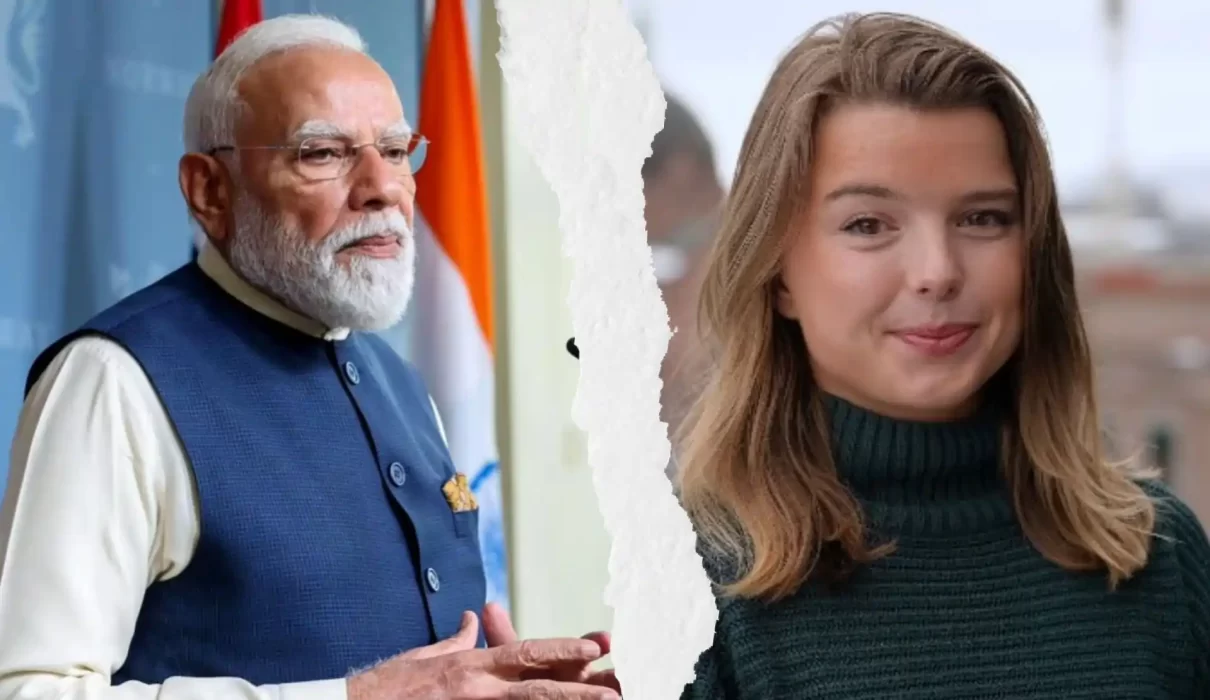
By When journalist Helle Lyng Svendsen shouted a question at India’s Prime Minister as he walked out of a joint briefing in Oslo, she could not have anticipated the storm that followed — from viral infamy to suspended social media accounts, spy accusations, and a global debate over press freedom in the world’s largest democracy.
| QUICK SUMMARY: What Happened in Oslo? On May 19, 2026, Norwegian journalist Helle Lyng Svendsen of Dagsavisen shouted a question at Indian Prime Minister Narendra Modi as he exited a joint media briefing in Oslo without taking questions. The exchange went viral globally. Modi did not respond. The incident triggered a diplomatic incident, coordinated online harassment against Svendsen, the suspension of her social media accounts, and a renewed international debate about press freedom in India — which ranks 157th out of 180 countries on the 2026 World Press Freedom Index. |
What Happened at the Oslo Press Briefing?
What Happened at the Oslo Press Briefing?On the morning of May 19, 2026, Prime Minister Narendra Modi of India stood alongside Norwegian Prime Minister Jonas Gahr Støre at a joint media appearance in Oslo. The setting was polished, choreographed, and conspicuously short on spontaneity. No question-and-answer session had been planned.
The rigid structure was typical for the Indian Prime Minister’s international appearances, but it stood in stark contrast to the venue. Norway proudly holds the number-one position on the 2026 World Press Freedom Index, while India sits at 157th out of 180 countries. As the leaders turned to leave the room, that statistical divide became a real-time confrontation when a Norwegian journalist near the back raised her voice.
“Prime Minister Modi, why don’t you take some questions from the freest press in the world?”
Modi kept walking. Helle Lyng Svendsen, a reporter for the Oslo-based daily newspaper Dagsavisen, followed him out of the conference room and tried again : “Do you deserve the trust of our government?”
Again, there was no response. For a leader who has not held an open, question-taking press conference domestically since first taking office in 2014, the silent departure was standard operating procedure. However, on foreign soil, the optics were entirely different. Within hours, a video of the brief exchange had swept across global social media, triggering a firestorm that consumed the rest of Modi’s two-day visit to Norway and sent shockwaves far beyond it.
Who Is Helle Lyng Svendsen?
Helle Lyng Svendsen is a journalist at Dagsavisen, one of Norway’s prominent daily newspapers based in Oslo. She is not a celebrity correspondent — by her own account, she did not enter the press briefing expecting a dramatic confrontation. What she brought was a firm sense of professional duty grounded in Norwegian journalism’s tradition of press freedom accountability.
Norway holds the number-one position on the 2026 World Press Freedom Index published annually by Reporters Without Borders. India, by contrast, sits at 157th out of 180 countries — ranked alongside Palestine, the United Arab Emirates, and Cuba. For Svendsen, the contrast was not merely statistical. It was a moral and professional framework.
| “Norway has the number one spot on the World Press Freedom Index. India is at 157th, competing with Palestine, Emirates & Cuba. It is our job to question the powers we cooperate with.” — Helle Lyng Svendsen, Dagsavisen journalist, posting on X (formerly Twitter) |
After posting the video on X, Svendsen elaborated on her motivations. “In Norway, when foreign leaders visit, the press usually will get to ask questions. Not many, but a few. That was not the case today with Modi, and will not be tomorrow either,” she wrote. She told Al Jazeera: “We were, of course, expecting him not to answer questions, as that is what the PM does.” Her question, she insisted, was not meant to insult India or its people. “My only intention is to try to challenge the powerful people of this world, including PM Modi,” she told the outlet Newslaundry.
Why Was Prime Minister Modi in Norway? The Purpose Behind the Visit
Modi’s stop in Oslo was part of a sweeping five-nation European tour that began in the United Arab Emirates on May 15 before moving through the Netherlands, Sweden, and Norway, with Italy as the final stop. It marked the first time an Indian Prime Minister had visited Norway in over 43 years.
The centerpiece of the Oslo leg was the India-Nordic Summit, a gathering of leaders from India, Norway, Sweden, Denmark, Finland, and Iceland to discuss cooperation across green energy, digital innovation, maritime governance, trade, and investment. The Nordic nations possess deep technical expertise in wind power, offshore energy technology, and sustainable industry — sectors where India is aggressively seeking partnerships as it transitions its massive economy toward renewables.
Alongside the summit, Modi received Norway’s highest honor for foreign nationals: the Grand Cross of the Royal Norwegian Order of Merit, awarded by King Harald V. The visit produced a new Green Strategic Partnership between India and Norway and moved the two countries closer to a multi-billion-dollar trade agreement.
| KEY FACTS: MODI’S NORWAY VISIT — MAY 2026 |
| ▶ Modi’s Norway visit (May 18–19, 2026) was the first by an Indian PM in over 43 years. |
| ▶ Norway ranks #1 on the 2026 World Press Freedom Index; India ranks 157th out of 180 countries. |
| ▶ No Q&A session was planned at the joint media briefing — standard practice for Modi’s international appearances. |
| ▶ Modi has not held a standalone press conference since becoming Prime Minister in 2014, according to press freedom organizations. |
| ▶ The India-Nordic Summit covered green energy, digital cooperation, trade, and maritime governance. |
| ▶ Modi received Norway’s Grand Cross of the Royal Norwegian Order of Merit from King Harald V. |
| ▶ The visit yielded a new India-Norway Green Strategic Partnership agreement. |
Why Hasn’t Modi Held a Press Conference in 12 Years?
To understand why Modi’s silence in Oslo was so charged with meaning, it helps to understand what the joint media briefing was — and what it was not. The appearance with PM Støre was structured as a joint statement format: both leaders deliver remarks; neither takes questions. This format is not unusual in international diplomacy.
What made it significant is the broader pattern: Modi has not held an open, question-taking press conference since he first took office in 2014. That twelve-year gap is not accidental, observers say. It reflects a carefully managed communications strategy in which the Prime Minister speaks through social media, controlled events, and choreographed media interactions — but rarely faces unscripted questions from an independent press.
Norwegian PM Støre also did not take questions during the joint briefing, a fact that some Modi supporters highlighted in his defense. But his critics noted that Støre regularly holds press conferences and is routinely accessible to Norwegian journalists, making the comparison imperfect.
When Svendsen shouted her question as Modi exited, she was leveraging the only opportunity available to her. The Indian side made no comment on the exchange at the time — but the video’s viral spread forced the Indian diplomatic machinery to respond, and its response only amplified the controversy.
India’s Ministry of External Affairs Fires Back
By the next day, the Indian Embassy in Norway had taken the unusual step of publicly tagging Svendsen on X and inviting her to a separate media briefing hosted by India’s Ministry of External Affairs (MEA). She accepted.
The briefing was led by MEA Secretary (West) Sibi George and MEA spokesperson Randhir Jaiswal. Svendsen did not soften her approach. She pressed the officials on India’s human rights record, its treatment of journalists and dissidents, and when exactly Modi intended to face unscripted questions from the Indian press. The MEA officials pushed back, defending India’s democratic framework, describing the country’s elections as a “festival of democracy,” and invoking India’s constitutional foundations.
MEA Secretary George criticized what he characterized as selective assessments by non-governmental organizations and international press freedom bodies. The exchange grew visibly tense. Svendsen left dissatisfied, later describing the officials’ answers as deflective.
Meanwhile, India’s MEA social media channels posted a lengthy response citing India’s contributions to world culture — including the invention of the number zero, yoga, and chess. The response struck many observers as an odd way to address pointed questions about journalists being jailed or harassed under current government policies. It spread widely online, often cited with bemusement.
Political Fallout Inside India: Rahul Gandhi vs. BJP
Back in India, the Oslo video landed in the middle of an already charged political atmosphere. Opposition leader Rahul Gandhi seized on the moment swiftly, criticizing Modi for what he called a reflection of the government’s fear of accountability. Gandhi posted on social media: “When there is nothing to hide, there is nothing to fear.” He characterized the Norway episode as damaging to India’s global image and indicative of a broader pattern of press suppression under the BJP government.
The BJP and Modi’s supporters pushed back hard. They argued that Svendsen’s conduct at the briefing was unprofessional and that the episode was being weaponized by opposition figures to “defame India” on foreign soil — a familiar line of attack whenever international press freedom assessments are cited. Some commentators noted that Norwegian PM Støre also did not take questions, framing the controversy as a misrepresentation of standard diplomatic protocol.
The episode also intersected with broader, long-simmering debates in India about the state of its press. Freedom House’s 2026 report notes that under Modi’s government, harassment of journalists, NGOs, and critics has increased significantly. The democracy research organization V-Dem classifies India as an “electoral autocracy” since 2017, citing systematic deterioration in freedom of expression and media independence. Reporters Without Borders describes press freedom in India as being in crisis. The Indian government contests all these assessments, describing them as politically motivated and methodologically flawed.
Online Backlash: Spy Accusations and Suspended Social Media Accounts
For Helle Lyng Svendsen personally, the days following the Oslo briefing were a crash course in coordinated online harassment. As the video spread across Indian social media platforms, she became the target of a torrent of abuse. Some users described her as a “foreign plant,” a “spy,” and a “Chinese proxy,” citing earlier articles she had written that mentioned China favorably. Others threatened her directly.
Within a day of the incident, Svendsen reported that her Facebook and Instagram accounts had been suspended. She posted about the suspensions on X, tagging Meta Platforms directly. “If you’re trying to reach me on Instagram or Facebook, I would like to let you know I have been suspended from both accounts,” she wrote. “I have wanted to respond to as many Indians as possible, but my responses will now be delayed.”
She described the suspension with striking equanimity: “Throughout the day, I have struggled to log onto my Instagram account. Now I have been suspended. It is a small price to pay for press freedom, but I’ve never experienced it before.” The Instagram suspension notice indicated 180 days to file an appeal before permanent deactivation.
| “I never thought I would have to write this, but I am not a foreign spy of any sort, sent out by any foreign government. My work is journalism.” — Helle Lyng Svendsen, on X, May 18, 2026 |
The Aftenposten Cartoon: A Second Controversy Erupts
The online storm was further complicated by a separate controversy that broke out simultaneously. Norway’s largest newspaper, Aftenposten, published a political cartoon by illustrator Marvin Halleraker accompanying a commentary piece by veteran journalist Frank Rossavik. The piece, headlined “A Clever and Slightly Annoying Man,” examined India’s motivations in cultivating Nordic partnerships.
The accompanying illustration depicted Modi seated cross-legged on a rug, playing a flute, with a fuel pump nozzle shaped like a snake emerging from a basket — a rendering rooted in the centuries-old colonial caricature of the Indian snake charmer.
The cartoon went viral almost immediately, generating its own wave of outrage. Critics — including many who had no particular sympathy for Modi’s press avoidance — described the image as racist and steeped in colonial stereotyping. “Would Aftenposten publish an image of the Nigerian President as a witch doctor during a state visit?” one widely-shared post asked.
The cartoon added a layer of complexity to the already polarized debate: India’s government and its supporters now had a legitimate grievance about Western media bias and cultural condescension, even as questions about press freedom inside India remained unresolved.
International Reaction: How the World Responded
International coverage of the Oslo episode was extensive and largely sympathetic to the press freedom questions Svendsen had raised. Al Jazeera covered the story in depth, framing it as an illustration of Modi’s documented reluctance to engage with media. The BBC, Firstpost, Deccan Herald, Outlook India, The Quint, and numerous other outlets ran detailed analyses.
Several international press freedom organizations used the moment to amplify their existing concerns. Reporters Without Borders noted that India’s 157th-place ranking reflected documented cases of journalists being jailed, threatened, and subjected to legal harassment. The incident in Oslo, they argued, was simply the most visible recent example of a long-running pattern.
Within Norway, reactions were mixed. Many Norwegian journalists rallied around Svendsen’s right — and duty — to ask the question. Others were uncomfortable with the aggressive tone of the follow-up at the MEA briefing, suggesting it risked undermining the professionalism of her initial challenge. The Aftenposten cartoon drew criticism from Norwegian commentators themselves, with some acknowledging that the illustration had crossed into difficult territory on cultural sensitivity grounds.
The Deeper Legal and Political Conflict: Two Irreconcilable Positions
At its core, this episode is not merely about one journalist and one unanswered question. It is a collision between two irreconcilable positions that play out frequently at the intersection of international law, press freedom, and state sovereignty.
India’s government maintains that its press is free, its democracy is robust, and that international rankings by Western-based organizations are politically biased instruments that fail to account for India’s complexity and its extraordinary scale of democratic participation — 970 million eligible voters in the 2024 general election. From New Delhi’s perspective, Norway’s number-one press freedom ranking is not a moral verdict; it is a small, wealthy country applying its own standards to a civilization of 1.4 billion people.
The counter-argument, articulated by Svendsen and echoed by every major international press freedom organization, is simpler and starker: a leader who has not held an open press conference in twelve years, in a country where journalists are arrested under sedition and anti-terrorism laws, where media ownership is increasingly concentrated among conglomerates with ties to the ruling party, and where critical reporting leads to tax raids and harassment — that leader has not earned the description of presiding over a free press, regardless of how his government characterizes itself.
Neither argument is entirely without merit. What the Oslo episode made impossible to avoid was the tension between them — played out in real time, in a room where one of the world’s most powerful leaders simply walked away.
What Happened to Helle Lyng Svendsen?
In the days following the incident, Svendsen’s profile rose dramatically beyond Norway’s borders. She gave interviews to Al Jazeera, Newslaundry, and other international outlets, consistently maintaining the same position: she was doing her job, she bore no ill will toward Indians, and she would do the same again. “My intention was not to insult Indians. My only intention is to try to challenge the powerful people of this world, including PM Modi,” she told Newslaundry.
Her Meta accounts remained suspended as of the time of this report, with the Instagram suspension notice indicating 180 days to appeal before permanent deactivation. She continued to post on X, where her follower count surged. The Indian Embassy’s decision to invite her to the MEA briefing — a move clearly intended to manage the narrative — instead gave her an additional platform to press her questions before cameras and international correspondents.
The briefing backfired in public relations terms: rather than containing the story, it produced footage of Indian officials growing visibly frustrated under questioning, and an official social media response about yoga and chess that became the subject of widespread mockery. The diplomatic response, in other words, kept the story alive far longer than Modi’s silent exit alone would have.
What Oslo ultimately demonstrated is that the management of political image has limits. A twelve-year record of avoiding the press can be sustained through careful scheduling and cooperative domestic media. But on foreign soil, in a country where journalists expect to ask questions and where a free press is a lived institutional reality, the silence speaks. And sometimes, one journalist standing near a door, raising her voice as a Prime Minister walks away, is enough to make the world hear it.
| FREQUENTLY ASKED QUESTIONS |
| Q: Why did Modi not take questions from the press in Oslo? A: The Oslo joint briefing was formatted as a statement event, not a press conference. Modi has not held a standalone press conference since taking office in 2014 — a twelve-year gap that press freedom organizations describe as a deliberate communications strategy. Q: What is India’s press freedom ranking in 2026? A: India ranks 157th out of 180 countries on the 2026 World Press Freedom Index published by Reporters Without Borders. Norway ranks 1st. Q: Were Helle Lyng Svendsen’s social media accounts suspended? A: Yes. Following the viral spread of the video, Svendsen’s Facebook and Instagram accounts were suspended. She attributed the suspensions to the wave of reports and coordinated activity by online users. Her Instagram suspension indicated 180 days to appeal before permanent deactivation. Q: What was the purpose of Modi’s visit to Norway in May 2026? A: Modi visited Norway as part of a five-nation European tour to attend the India-Nordic Summit, discussing green energy, digital innovation, trade, and maritime governance. He also received Norway’s Grand Cross of the Royal Norwegian Order of Merit from King Harald V, and signed a new India-Norway Green Strategic Partnership. |

Hazel Isabella
Editor at Attorneys Magazine. Hazel Isabella supervises editorial content concerning the law, legal marketing, attorneys’ perspectives, and other matters pertaining to the industry. She is dedicated to providing quality content and works with legal experts and writers to generate informative pieces about various aspects of the law.