
 By
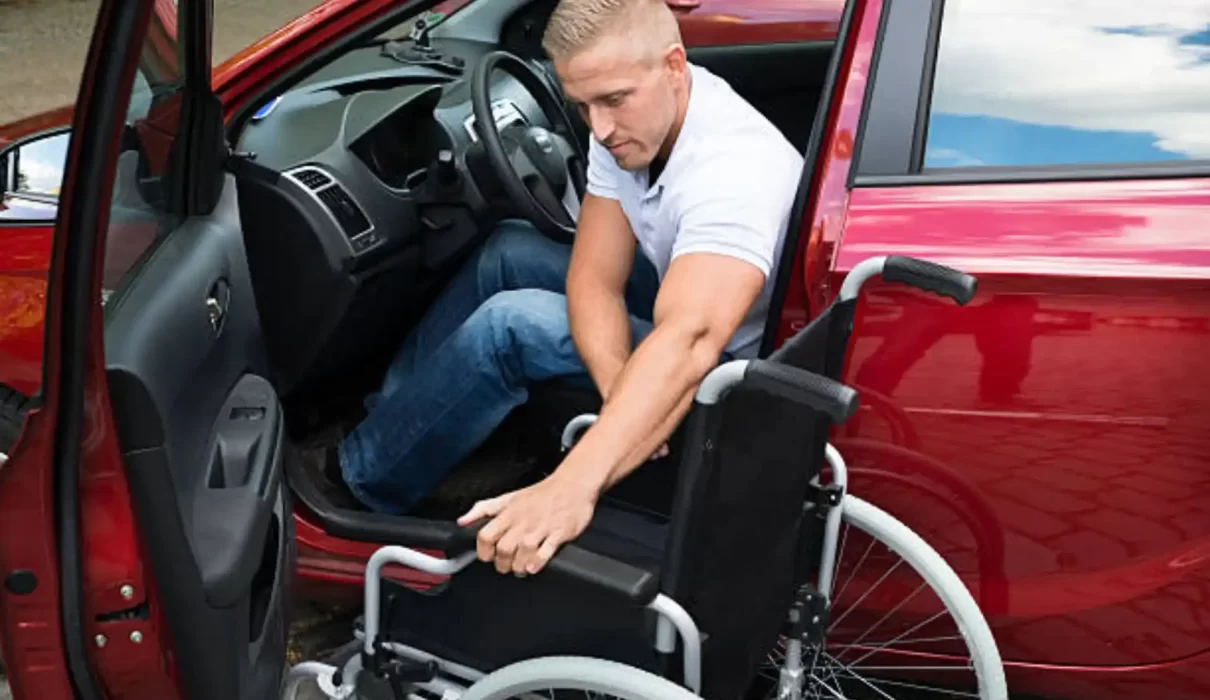
By If someone becomes quadriplegic, one of the first questions that comes up is whether they’ll ever drive again. It’s a fair question, but a hard one to answer in a single word, because quadriplegia isn’t one fixed condition. It ranges from limited arm movement to no movement below the neck, and that range is exactly why there’s no single answer to whether someone can drive. What actually decides it isn’t the diagnosis itself, but what a person can do behind the wheel, what adaptive equipment can bridge the gap, and what their state’s DMV is willing to license based on that evaluation.
Yes, a quadriplegic can legally drive a car in most cases, but only after meeting a few specific conditions. It comes down to functional ability, adaptive driving equipment, a medical evaluation, and your state’s licensing rules. There’s no single “quadriplegic license,” and no blanket rule that covers everyone the same way.
A lot of people assume a quadriplegia diagnosis automatically rules out driving. Others assume the opposite, that with a van and some hand controls, anyone can just get behind the wheel with no questions asked. The truth is somewhere in the middle. So, can a quadriplegic drive a car? And is it legal for a quadriplegic to drive in the first place? The real answer depends on adaptive driving equipment, medical clearance, and the licensing laws in your state. Can a quadriplegic get a driver’s license at all? Often, yes. But usually it’s a restricted one, built around the exact equipment and conditions that make safe driving possible for that person.
Is It Legal for a Quadriplegic to Drive?
There’s no federal or state law that bans people with quadriplegia from driving. Disability status by itself isn’t a disqualifier anywhere in the country.
What actually matters is functional capacity, not the diagnosis on paper. States license drivers based on demonstrated ability to operate a vehicle safely, which means you need to:
- Pass vision and cognitive screening
- Show you can control the vehicle, with or without adaptive equipment
- React to road conditions within a reasonable time
- Meet any additional medical review steps your state requires
If you can check those boxes, quadriplegia on its own isn’t a legal wall.
| Related Readings on Attorneys Magazine: How Car Accident Lawyer Changes Case Outcome |
What Do State Driver Licensing Laws Say?
Here’s where people usually get it wrong. There’s no national driving law written specifically for people with disabilities. Driver’s licensing is governed primarily by individual state DMV laws, and each state runs its own medical review process, sets its own equipment standards, and uses its own restriction codes.
California, for instance, runs a Driver Safety program through its DMV that reviews medical conditions affecting driving. Texas and Florida each have their own medical review units, with different paperwork and different timelines. A restriction that works one way in one state might look completely different in another. So don’t assume what applies in your neighbor’s state applies in yours.
Most states rely on some combination of:
- A medical evaluation or physician’s report
- A behind-the-wheel test with a certified driver rehabilitation specialist
- Restriction codes printed directly on the license, like “hand controls required”
How Do Medical Evaluations Determine Driving Eligibility?
Medical evaluations aren’t there to diagnose you. You already have a diagnosis. They exist to figure out what you can actually do behind the wheel. Most states require or strongly recommend a Comprehensive Driving Evaluation (CDE), usually run by a certified driver rehabilitation specialist (CDRS).
These evaluations typically look at:
- Upper body strength, range of motion, and reaction time
- How quickly you respond to sudden hazards
- Whether you can operate steering, acceleration, and braking
- Cognitive processing and decision-making under pressure
- How well you work with specific adaptive equipment
Depending on the results, you’ll be cleared to drive, cleared with restrictions, or asked to complete more training first.
What Adaptive Driving Equipment Makes Driving Possible?
This is the part that actually makes quadriplegic driving work in practice. The right setup depends heavily on the level and completeness of the spinal cord injury, but common options include:
- Hand controls for gas and brake
- Steering aids like spinner knobs, tri-pins, or low-effort steering systems
- Zero-effort steering and braking for people with limited upper body strength
- Sip-and-puff systems that let someone drive using breath control for higher-level injuries
- Voice-activated or touchpad controls for turn signals, wipers, and other secondary functions
- Wheelchair-accessible vans that allow driving directly from a wheelchair
None of this is one-size-fits-all. The exact combination gets decided during the driving evaluation based on what actually works for that person.
Can a Quadriplegic Get a Driver’s License?
Yes, in most cases, though it usually comes as a restricted license rather than a standard one. That restriction isn’t a punishment. It’s just a legal way of saying “this person drives safely under these specific conditions.”

At a Glance: Quadriplegic Driver Licensing
| Factor | Typical Requirement |
| Diagnosis alone | Not disqualifying |
| Medical evaluation | Usually required |
| Behind-the-wheel test | Often required with adaptive equipment |
| License type | Often restricted, not standard |
| Equipment | Must match evaluation results |
| Renewal | May require periodic medical review |
Standard License vs. Restricted License with Adaptive Equipment
| Feature | Standard License | Restricted License (Adaptive Equipment) |
| Vehicle requirements | Any standard vehicle | Must include specified adaptive equipment |
| Medical review | Usually not required | Often required at issuance and renewal |
| Testing | Standard road test | Specialized road test with equipment |
| License notation | None | Restriction codes listed on the license |
| Flexibility | Can drive any compliant vehicle | Limited to vehicles matching the restriction |
When Can a License Be Restricted, Suspended, or Denied?
States can restrict, suspend, or deny a license, but it has to be based on real documented safety concerns, not assumptions about disability in general. Common reasons include:
- Failing the behind-the-wheel evaluation
- Medical documentation pointing to unsafe reaction time or control
- Not using the adaptive equipment the license requires
- A medical condition that changes significantly after licensing, triggering a re-evaluation
Any denial has to connect to a demonstrated inability to drive safely. It can’t just be based on the diagnosis. If you think a denial was based on assumptions rather than an actual evaluation, most states let you request a re-test or file an appeal.
Does the Americans with Disabilities Act (ADA) Protect Driving Rights?
The Americans with Disabilities Act (ADA) doesn’t hand out driving privileges. Licensing is a state matter, not a federal one. But the ADA does prohibit discrimination based on disability in public programs, and that includes DMV services.
In practice, this means:
- A DMV can’t reject your application just because you have quadriplegia
- You’re entitled to reasonable accommodations during testing, including using your own adapted vehicle
- States have to give you an individualized assessment instead of applying a blanket policy against disabled applicants
The ADA protects your right to a fair process. It doesn’t override a state’s safety standards, and it doesn’t guarantee you’ll automatically get a license.
Frequently Asked Questions
Can a quadriplegic drive a regular car?
Only if their functional ability allows safe operation without adaptive equipment. That’s uncommon for most quadriplegia classifications, but it’s not impossible depending on the injury level.
Do quadriplegics need a special license?
Usually yes, in the form of a restricted license tied to specific equipment, rather than a separate license category altogether.
How much does adaptive driving equipment cost?
It varies a lot. Basic hand controls might run a few hundred dollars. A fully adapted, drive-from-wheelchair van can run into the tens of thousands.
Does insurance cover adaptive equipment?
Sometimes, especially if the injury came from a covered accident. Health insurance, auto insurance, and vocational rehab programs can all play a role depending on the situation.
A diagnosis alone doesn’t determine whether someone can legally drive. Safe driving ability and licensing requirements do. States evaluate real-world function, not labels, and that distinction is what ultimately decides who gets behind the wheel.
Conclusion
So, can a quadriplegic drive a car? In most cases, yes, as long as the right adaptive driving equipment is in place, the medical and behind-the-wheel evaluations are passed, and the person meets their specific state’s licensing rules. It’s not a decision based on diagnosis. It’s a decision based on ability, backed by evaluation and a clear legal process. If you or someone you know is looking into this, the real question isn’t whether it’s allowed. It’s what equipment and evaluation steps make it possible. That’s what actually decides the answer.
Last Updated on: August 13, 2026

Adam Fermin
Chief Editor of Attorneys Magazine. Adam oversees the selection and verification of legal, marketing, and technology content. He focuses on distilling complex industry updates into actionable insights, ensuring every editorial piece meets the highest standards of accuracy, relevance, and professional quality.