
 By
Movierulz doesn’t operate as one licensed streaming service with a fixed address. It’s a name reused across dozens of domains that rotate as older ones get blocked, currently listing recent Hindi, Telugu, Tamil, and Malayalam releases. A film showing up on one of these sites says nothing about whether that site has permission from the copyright holder to show it. Licensed platforms secure rights before publishing anything. Unauthorized sites skip that step entirely.
Why the Search Stays Popular
A movie releases, an unlicensed copy appears online, sites host it, enforcement shuts them down, new domains appear. This cycle repeats constantly. A new domain doesn’t mean a new license. It just means the same unlicensed content moved addresses.
Is It Legal? Short Answer: No, If the Site Lacks Rights
Under the Copyright Act, 1957, distributing a film without the rights holder’s authorization is infringement, regardless of how easily the file can be accessed.
Section 51 defines what counts as infringement, generally covering unauthorized use of a copyrighted work in ways the owner hasn’t permitted.
Section 63 covers criminal infringement. Knowingly infringing or helping someone infringe copyright carries a prison term of six months to three years and a fine between ₹50,000 and ₹2 lakh, with harsher terms for repeat offenses. That said, simply visiting a page isn’t automatically criminal. The law looks at actual conduct.
Section 52 carves out exceptions for private research, criticism, review, and news reporting. It’s not a blanket excuse to stream or download commercial films for entertainment. Whether an exception applies depends on the specific facts.
The 2023 Cinematograph Amendment
This amendment added Sections 6AA and 6AB to the Cinematograph Act, targeting unauthorized recording in cinemas and unauthorized exhibition of those recordings. Penalties run up to three years in prison and fines as high as ₹10 lakh or three times the film’s audited production cost, whichever is greater. It gives authorities a direct tool against the camcorder-to-piracy pipeline that feeds sites like Movierulz.
Enforcement Has Teeth
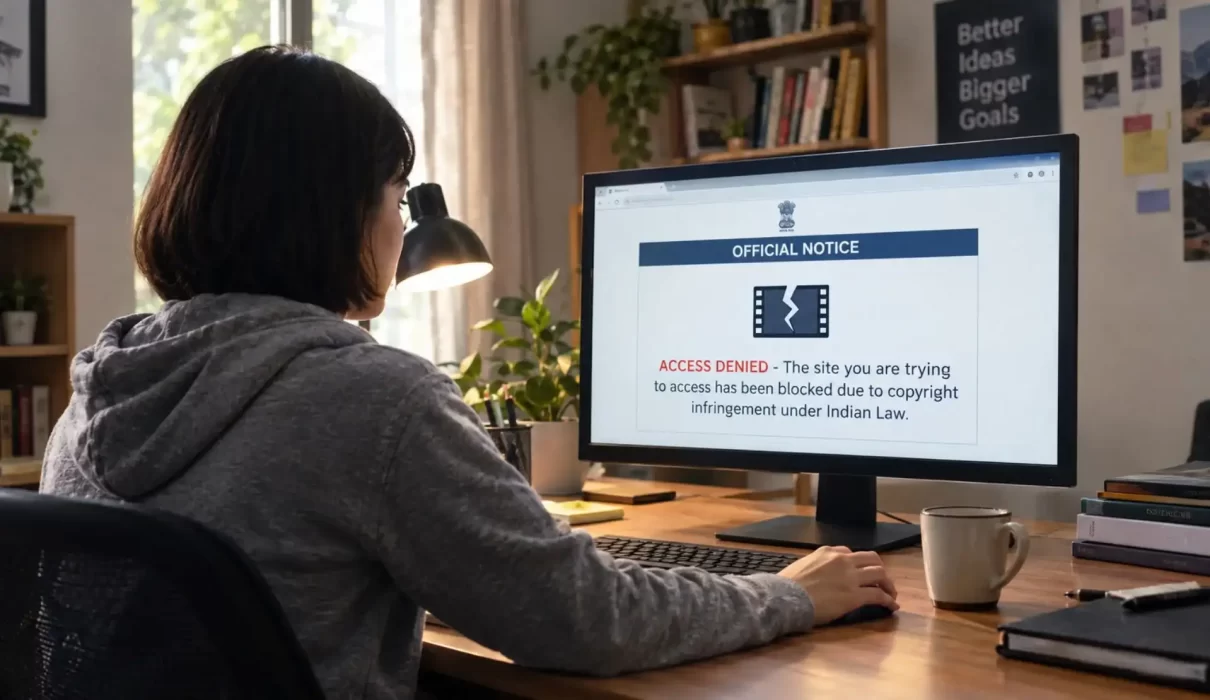
In March 2026, India’s Ministry of Information and Broadcasting reported roughly 800 piracy sites disabled through ISPs, citing powers from the Cinematograph Amendment Act. A further enforcement round followed in August 2026. Sites keep disappearing and reappearing under new names because of this pressure, not because the law is unclear.
Downloading vs. Streaming vs. VPNs
Downloading stores a copy on your device; streaming generally doesn’t. That distinction can matter when assessing conduct, but neither makes an unauthorized source legal. Uploading or redistributing what you download raises legal exposure considerably. Site operators face far more liability than an individual viewer does.
A VPN changes your IP address and routing. It does not grant a copyright license or create a legal exception. Neither does switching to a new mirror domain.
Safety, Separate From Legality
Piracy sites carry security risks independent of copyright law: aggressive redirects, fake download buttons, and prompts to install unfamiliar software or browser extensions. Treat any such prompt as a red flag, not a required step to watch a movie.
Where to Watch Legally
Netflix, Amazon Prime Video, JioHotstar, ZEE5, Sony LIV, Aha, Sun NXT, and ManoramaMAX cover most current Indian releases, depending on the title’s distribution deal. If a movie isn’t streaming yet, it may still be in theaters or awaiting its digital window. Search the title plus “official streaming” rather than defaulting to an unauthorized source.
FAQ
Is Movierulz legal in India? No. Sites using that name distribute copyrighted films without authorization, which is infringement under the Copyright Act, 1957.
Is it safe? Not reliably. Expect intrusive ads, redirects, and potentially harmful downloads.
Can I get in trouble for downloading from it? Possibly, and more so if you redistribute what you download. Enforcement generally targets distributors more than individual viewers, but conduct matters.
Does a VPN make it legal? No. It hides your traffic; it doesn’t grant rights.
Why does the domain keep changing? Enforcement keeps blocking it. A new address doesn’t equal a new license.
Last Updated on: September 17, 2026
