
 By
| Quick Answer: Is Satta King Legal? No. Satta King is illegal in every Indian state under the Public Gambling Act, 1867 and state-level gambling laws, and it is banned nationwide for its online form under the Promotion and Regulation of Online Gaming Act, 2025. In the United States, running, advertising, or financing a Satta King-style betting operation is prohibited under the Wire Act, the Unlawful Internet Gambling Enforcement Act (UIGEA), and state gambling statutes. There is no state, city, or online market, including Delhi, Disawar, Faridabad, Taj, 786, or Shri Ganesh, where it is a licensed or legal activity. |
Type satta king into any search bar in India, and you will get results before you finish typing the second word. That alone tells you something. This is not a niche habit. It is a daily ritual for an enormous number of people, mostly men, mostly from working-class and lower-middle-income households, who open their phones at a fixed time every evening hoping that two digits will change their life.
They almost never do. What usually changes is the size of the debt.
Satta King is illegal. It has been illegal in India since before independence, it is illegal under the laws of individual Indian states, and the apps and websites that now run it from servers outside the country are illegal under the newest central law as well. It is also illegal to operate or finance from inside the United States, where it quietly exists in diaspora WhatsApp groups and Telegram channels. This piece is not a guide to playing it. It will not tell you a market, a time, or a number. It is here to explain, as plainly and as honestly as possible, what this racket actually is, why governments on two continents have banned it, who it hurts, and what happens legally to the people who run it, advertise it, or get caught funding it.
What Is Satta King, Really?
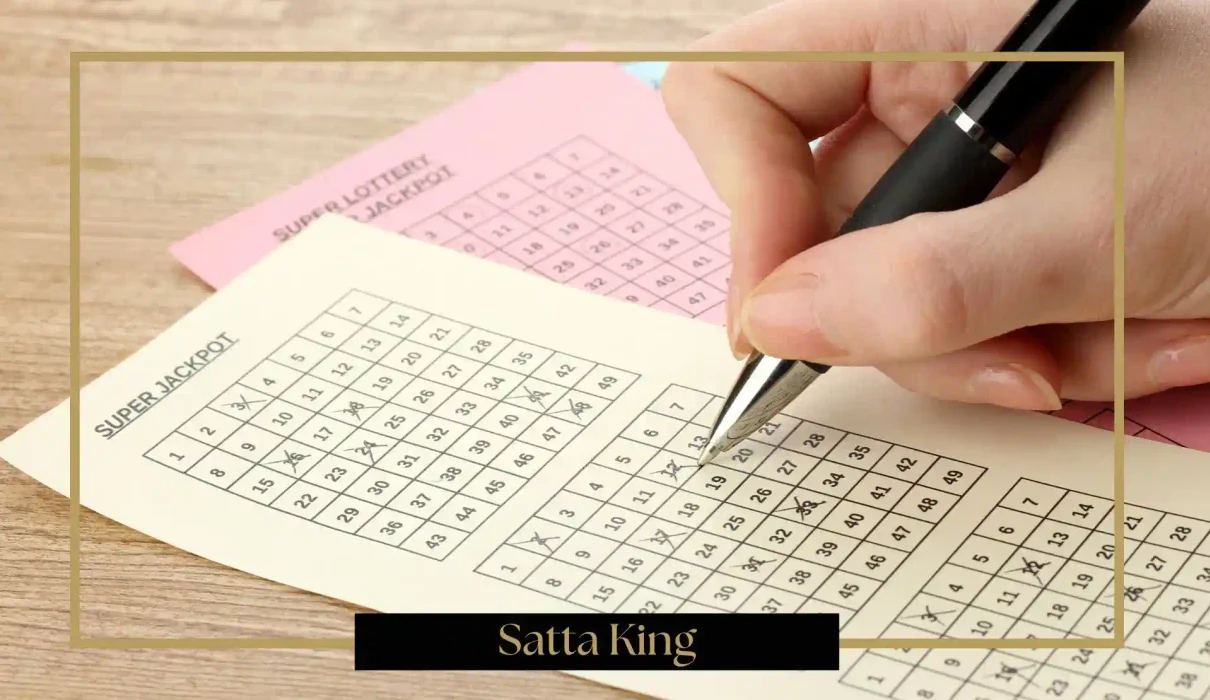
Satta king is a numbers-betting racket that has existed in India for decades, originally built around guessing the opening and closing cotton rates on the New York Cotton Exchange before cotton trading moved on and the game simply kept running on invented numbers instead. The word satta means betting or wagering in Hindi, and king refers to whoever ends up on top of a given round. A player picks a number, usually somewhere between 00 and 99, hands over cash to a local agent or deposits money through a betting app, and waits for a result to be declared at a fixed time. If the declared number matches, the payout can run many times the stake. If it does not, which is the overwhelming majority of the time, the money is simply gone.
There is no regulator behind any of this. No government licenses it, no auditor checks the draw, and no court enforces a payout if an operator decides not to pay. Every rupee that moves through the system moves on trust between a player and a bookie who has every incentive to make sure the house always wins.


Delhi, Disawar, Faridabad, Taj, Shri Ganesh: One Racket, Many Brand Names
Part of what makes this network so hard to shut down is that it was never really one game. It is a loose federation of local and online “bazaars,” each one branded like a product. You will come across names like Delhi Satta King, Satta King Disawar (sometimes written as Disawar Satta King), Satta King Faridabad, Satta King Taj, Satta King 786, and Shri Ganesh Satta King, which is also marketed as a “1 se 100 tak ki family” game, meaning a wider family of number combinations between 1 and 100.
Each of these names simply refers to a different declaration window and a different operator or syndicate running it. Disawar was originally tied to a town near Delhi and became one of the earliest and most recognisable names in the racket. Faridabad and Gali are other long-running markets. Taj and 786 are newer, often online-only brands built to look more modern and trustworthy, frequently with names chosen to sound auspicious or lucky. Shri Ganesh plays on religious sentiment the same way, invoking a deity associated with good fortune to sell what is, underneath the branding, an unregulated numbers bet with no legal protection whatsoever for the person placing it.
None of these brands are licensed by any state or central authority in India. None of them are legal lotteries. A state-run lottery, where one exists, is regulated, audited, and taxed. A Satta King market is none of those things, regardless of how official its website or app looks.
Why “Kya Aaya” Gets Searched by Thousands of People Every Single Day
Anyone who has looked at search trends around this topic has noticed the same pattern. Queries like satta king disawar mein kya aaya, satta king disawar mein kya hai, satta king faridabad mein kya aaya, satta king faridabad mein kya hai, and simply satta king mein kya aaya spike at the same times every single day, across the same cities, from roughly the same group of devices. That is not curiosity. That is compulsion, and it is one of the clearest behavioural fingerprints of gambling addiction that exists online.
Psychologists who study gambling describe this as intermittent reinforcement. A player does not win often, but the small, unpredictable wins that do happen are enough to keep the brain hooked on checking “one more time.” The daily result-check becomes a habit the same way refreshing a notification does, except the stakes are a family’s grocery money instead of a social media like. The repeated, almost ritualistic nature of these searches is not evidence that the game is harmless entertainment. It is evidence of exactly the opposite: a user base that has lost the ability to simply stop looking.
That is also why this article will not answer that question. There is no result posted here, no market timing, no number chart, and no shortcut to “today’s” anything. If you have found yourself typing one of those searches every evening, that habit itself is worth paying attention to, not feeding.
| Related Readings in Attorneys Magazie: VA Disability Calculator Guide Yellow Social Interactive Lawsuit |
The Human Cost Nobody Puts in the App Store Description
Reporting on this subject eventually stops being about numbers and starts being about families. In Telangana, a young man named Harish began betting through online apps, and by the time his family understood how deep the debt had gone, they had sold land just to keep the lenders away. In another household in the same reporting, a father repaid his son’s loan of roughly three lakh rupees, and the son still died by suicide. A sister, speaking about her brother’s death after an IPL betting debt spiral, said plainly that the loss was not his alone, that the entire household lost its savings and the future it had planned together.
Al Jazeera’s 2026 investigation into India’s online gambling crisis documented case after case like this, and cited a 2025 report from the public-policy research group CUTS International estimating that the fifteen largest unauthorised betting platforms in India received more than 5.4 billion visits from Indian users in a single financial year. A 2026 meta-analysis of fourteen separate studies, also referenced in that reporting, found a consistent link between gambling disorder and suicidal ideation, suicide attempts, and suicide mortality.
These are not isolated tragedies confined to one state or one app. News archives carry a grim, repeating pattern: a teacher in Tamil Nadu who had lost several lakhs; a couple in Andhra Pradesh who could not repay debts run up by their son; three members of one family in Mysuru who died together after a betting loss; a father in Indore who ended his life in front of his eight-year-old daughter after years of gaming debt. A man in Nagpur, specifically chasing losses from local satta, hanged himself after weeks of mounting losses to a neighbourhood betting syndicate.
None of these deaths can be reduced to a single cause, and responsible reporting never claims otherwise. But the pattern across dozens of these cases is too consistent to ignore: a person starts betting for a quick win, loses more than they can afford, borrows to chase the loss, and the shame and pressure compound until the family is left holding both the debt and the grief.
Why Governments Actually Ban Games Like This
It would be easy to assume gambling bans exist mainly for moral reasons, and that is part of the story, but not the whole of it. Regulators and lawmakers in both India and the United States point to a narrower, more practical set of harms:
- No consumer protection. There is no regulator to complain to when an operator simply refuses to pay a winning bet.
- Organised crime financing. Investigations by India’s Enforcement Directorate into cases like the Mahadev Online betting app estimated a single illegal platform generated roughly ₹430 billion over seven years, money that moves well outside any tax system and frequently funds other criminal activity.
- Predatory targeting of vulnerable users. Operators routinely use fake social media profiles and mobile apps to pull in users with promises of quick “number predictions,” charging upfront fees before a bet is even placed.
- Documented links to addiction, debt and suicide, detailed above, that fall disproportionately on lower-income households with the least financial cushion to absorb a loss.
- Money laundering risk, since anonymous, untraceable cash and crypto transactions are difficult for banks and investigators to monitor.
Put together, the case against Satta King is not primarily about morality. It is about a system with zero accountability, built specifically to extract money from people who can least afford to lose it, operating entirely outside the reach of any consumer protection law.
What Indian Law Actually Says
The Public Gambling Act, 1867. This colonial-era law is still the backbone of Indian gambling regulation. It criminalises running or being found in a “common gaming house” and penalises public gambling more broadly, while carving out an exception for games that are predominantly games of skill rather than chance. Satta King, which is pure number guessing, does not qualify for that exception. Because “public order” and “betting and gambling” sit in the State List of India’s Constitution, individual states have layered their own versions on top of the 1867 Act: the Bombay Prevention of Gambling Act 1887, the Uttar Pradesh Public Gambling Act 1961, the Tamil Nadu Gaming Act 1930, the West Bengal Gambling and Prize Competitions Act 1957, and similar statutes in Punjab, Madhya Pradesh, Kerala, Jammu and Kashmir, Goa, Rajasthan and elsewhere. Delhi applies its own Delhi Public Gambling Act, 1955. Penalties typically include fines and imprisonment for both operators and, in several states, for players caught at a physical gambling den.
The Information Technology Act, 2000 and IT Rules. The original IT Act does not mention gambling by name, which created years of legal ambiguity for online operators. That gap has since been narrowed. Amendments to the Intermediary Guidelines in 2023 placed specific obligations on online gaming intermediaries, and internet service providers have been directed to block access to gambling websites and content that promotes them. States including Goa have used cyber police units to block dozens of illegal gambling sites at a time.
The Promotion and Regulation of Online Gaming Act, 2025. This is the most significant recent development, and it closes most of the gaps the older laws left open. Passed by Parliament and given presidential assent in August 2025, the Act imposes a blanket, nationwide ban on all “online money games,” a category defined broadly enough to cover games of chance, games of skill, and anything that blends the two, which puts number-betting platforms like Satta King squarely inside the ban. The law applies to any online money gaming service operating in India or accessible from India, even if the servers sit overseas. Offering such a service now carries up to three years in prison and a fine of up to ₹1 crore; advertising a banned game carries up to two years and a fine of up to ₹50 lakh. Offences are cognisable and non-bailable, and banks and payment processors are barred from processing transactions tied to banned gaming platforms. The Act does not criminalise the individual player directly, but it goes after everyone around them: the operator, the advertiser, the bank, and the payment gateway.
Read together, the legal picture in India is unambiguous. Whether you look at a 158-year-old colonial statute, a modern state gambling act, or a law passed in 2025 specifically to deal with online betting, Satta King fails every single test for legality.
What US Law Says
Satta King is not a uniquely Indian problem anymore. It travels with the diaspora, surfacing in WhatsApp groups, Telegram channels and regional Facebook pages aimed at Indian communities in the US, UK, Canada, Australia and the Gulf. US law treats it, and operations like it, as illegal gambling at both the federal and state level.
The Wire Act of 1961 (18 U.S.C. § 1084). Originally written to target organised bookmaking over telephone lines, the Wire Act prohibits using a wire communication to transmit bets, wagers, or wagering information across state lines as part of a betting business. US courts and Department of Justice opinions have since narrowed its scope mainly to sports betting, but it remains one of the foundational federal tools used against illegal betting operations that cross state lines.
The Unlawful Internet Gambling Enforcement Act of 2006 (UIGEA). UIGEA does not, on its own, declare any specific game illegal. What it does is prohibit banks, payment processors and financial institutions from knowingly processing payments connected to gambling that is already unlawful under existing federal or state law. In practice, this is the law that cuts off the money supply: it makes it a federal offence for a US bank or payment app to move funds for an illegal operation like a Satta King betting ring, carrying penalties of up to five years in prison.
The Illegal Gambling Business Act, the Travel Act, RICO, and state statutes. Large-scale illegal betting operations in the US are frequently prosecuted as organised criminal enterprises under RICO, or targeted through the Illegal Gambling Business Act, which covers gambling operations that violate state law, involve five or more people, and have been running for more than thirty days. Because gambling regulation in the US is primarily a state matter, the exact legal exposure depends on where an operator, agent, or payment collector is physically located, but nearly every US state criminalises operating an unlicensed numbers or lottery racket of the kind Satta King represents. Running or promoting it from US soil, or collecting money for it there, is not a legal grey area. It is a prosecutable offence under one or more of these overlapping laws.
Where Is Satta King Banned?
Functionally, everywhere it is played. Within India, every state that has adopted its own Public Gambling Act variant, plus the newer central online gaming law, treats it as illegal, including the states that run the heaviest search traffic for it: Uttar Pradesh, Delhi-NCR, Rajasthan, Madhya Pradesh, Bihar and Punjab among them. States such as Telangana and Andhra Pradesh went further and banned online gambling outright after a wave of debt-related deaths. In the US, no state licenses a Satta King-style numbers racket; it exists only in the unregulated shadow economy of informal betting rings and online diaspora groups, which is precisely the activity the Wire Act, UIGEA, and state gambling statutes were built to shut down. Major social media and payment platforms also prohibit gambling promotion in their own terms of service, which is why Satta King marketing constantly migrates between Telegram channels, throwaway Instagram pages, and short-lived websites that reappear under a new domain within days of being taken down.
If This Sounds Familiar
If you recognise the daily checking habit described earlier in yourself, a friend, or a family member, that pattern deserves honest attention rather than shame. Gambling addiction behaves like other compulsive behaviours: it tends to get worse without support, and it responds well to it. A good first step is talking to a doctor, a counsellor, or a mental health helpline rather than trying to quietly manage it alone or chase a loss back to zero.
This is a sensitive subject for a lot of readers, and if any part of this has felt close to home, that is worth sitting with rather than brushing past.
The Bottom Line
Satta King survives because it keeps rebranding, not because it is legal, safe, or regulated anywhere it operates. Under the Public Gambling Act of 1867, under every state gambling law built on top of it, under India’s new Promotion and Regulation of Online Gaming Act, 2025, and under US federal statutes like the Wire Act and UIGEA, it is illegal in every form it takes, physical, online, Delhi, Disawar, Faridabad, Taj, 786, or Shri Ganesh. The daily habit of checking a result is not a quirky pastime. For a significant number of the people doing it, it is the visible edge of a debt trap that has already taken homes, savings, and in far too many documented cases, lives. Awareness is not a cure, but it is the first thing that has to exist before anything else can change.
Frequently Asked Questions
Is Satta King legal in India?
No. It is illegal under the central Public Gambling Act, 1867, under every state gambling law built on top of it, and under the Promotion and Regulation of Online Gaming Act, 2025, which bans online money games nationwide regardless of whether they are framed as skill or chance.
Is Satta King banned in the United States?
Yes, functionally. No US state licenses a Satta King-style numbers racket. Operating, advertising, or collecting payments for one falls under the Wire Act, the Unlawful Internet Gambling Enforcement Act, the Illegal Gambling Business Act, and individual state gambling statutes, all of which carry criminal penalties.
What is Satta King Disawar?
Disawar is the name of one of the oldest and most recognisable “markets” or declaration windows within the broader Satta King network, historically associated with a town near Delhi. Like every other market under this umbrella, it is unregulated and illegal.
What is Satta King Faridabad?
Faridabad is another long-running regional market name within the same illegal numbers-betting network, operating on its own declaration schedule under a different local or online syndicate.
What is Shri Ganesh Satta King, or the ‘1 se 100 tak ki family’ game?
Shri Ganesh is a branded variant of the same racket that markets itself around a wider “family” of number combinations from 1 to 100, often using religious imagery to appear more trustworthy. The underlying activity is identical to every other Satta King market: an unlicensed, unregulated numbers bet with no legal protection for the player.
What happens if you are caught playing or running Satta King?
Under India’s state gambling laws, both operators and, in several states, players caught at a physical den can face fines and imprisonment. Under the 2025 central Act, operating or advertising an online money gaming service carries up to three years in prison and fines up to ₹1 crore for operators, and up to two years and ₹50 lakh for advertisers; these offences are cognisable and non-bailable.
Why do Satta King apps and websites keep reappearing after being blocked?
Operators rotate domains, rebrand under new names, and move between Telegram, WhatsApp and short-lived apps faster than individual websites can be blacklisted, which is part of why India’s 2025 law targets the banks and payment processors that fund these platforms rather than relying on website blocking alone.
Last updated on: October 28, 2026
- Al Jazeera — ‘The family paid the price’: India’s deadly online gambling crisis (2026)
- Wikipedia — Gambling in India (Public Gambling Act 1867, state laws, 2025 Act)
- Drishti IAS — Promotion and Regulation of Online Gaming Act, 2025: provisions and penalties
- Mondaq / Majmudar & Partners — Summary of the Online Gaming Act, 2025
- CRS Report via EveryCRSReport — Internet Gambling: An Overview of Federal Criminal Law (Wire Act)
- Gambling Insider — Online betting ring dismantled in India as police arrest six suspects
- The News Minute — Karnataka woman dies by suicide allegedly over husband’s IPL betting debt
- Devdiscourse — Nagpur man ends life over gambling losses tied to local satta