 By
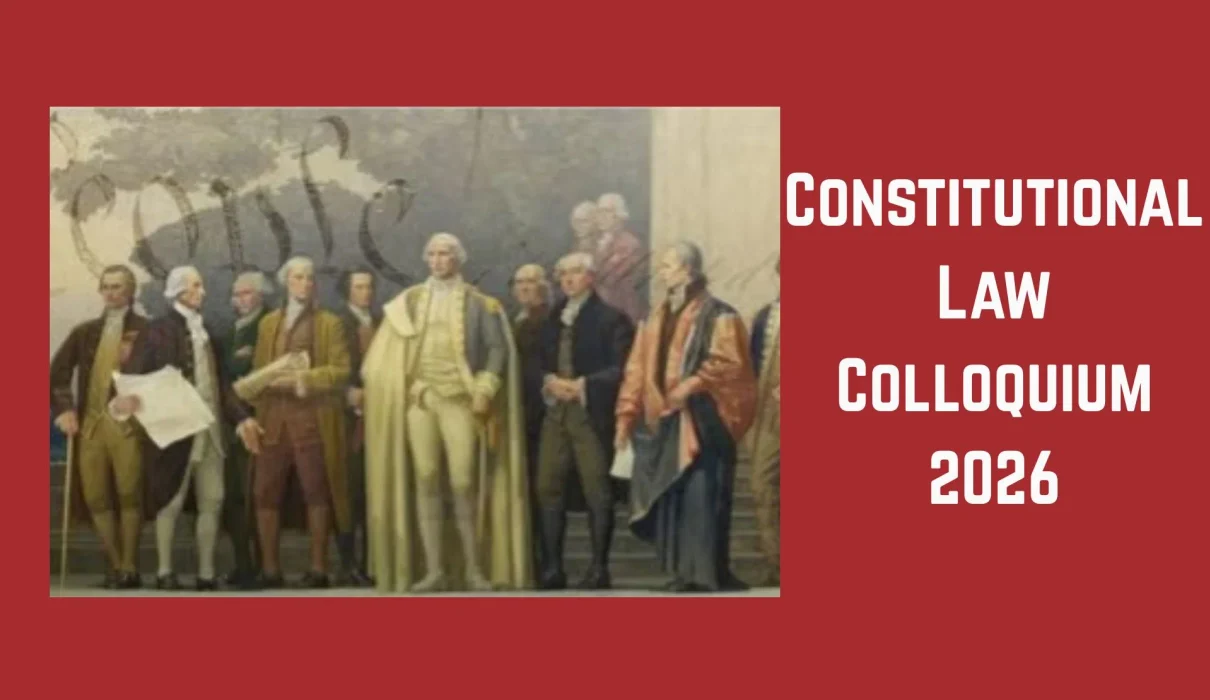
Tallahassee, Florida hosts the Constitutional Law Colloquium on Friday, November 6, 2026, bringing together scholars, judges, and practicing attorneys to examine how courts are currently interpreting and applying constitutional principles. For a document written in the eighteenth century, the US Constitution continues to generate an extraordinary volume of litigation, and colloquia like this one exist precisely because interpretive questions rarely resolve cleanly or permanently.
The timing and location are notable. Florida has been at the center of several closely watched constitutional disputes in recent years, touching on free speech, state regulatory authority, and the balance of power between state legislatures and the courts that review their actions. Hosting a constitutional law colloquium in Tallahassee, the seat of Florida’s state government, places the event close to the political and legal institutions actively shaping these disputes, giving attendees a somewhat more grounded perspective than a colloquium held purely within an academic bubble.
The program typically draws a mix of constitutional law scholars presenting original research alongside practicing attorneys who bring direct experience litigating constitutional claims. That combination tends to produce more useful discussion than either group could generate alone. Scholars contribute doctrinal depth and historical context, while litigators bring the practical reality of how constitutional arguments actually perform in front of judges who may or may not share an academic’s theoretical framework.
Sessions generally address evolving interpretations of core constitutional provisions, how originalist and living constitutionalist approaches continue to compete for influence on the bench, and how lower courts are applying recent Supreme Court precedent to new fact patterns. Given how often state courts are asked to interpret both federal constitutional protections and their own state constitutions, which sometimes offer broader protections than their federal counterparts, sessions addressing state constitutional law tend to draw particular interest from Florida practitioners.
For litigators, especially those handling civil rights claims, election law disputes, or challenges to state regulatory action, staying current on constitutional interpretation trends is not optional. Arguments that succeeded five years ago may no longer persuade a court operating under a different interpretive framework, and colloquia like this one offer a faster way to track that shift than waiting for case law to fully develop through the appellate process.
Event details, including the speaker roster and registration process, can be found through the colloquium’s listing on 10times, which aggregates event information as it becomes available from organizers.
Attorneys interested in foundational constitutional doctrine, particularly the origins of judicial review that underpin much of modern constitutional litigation, may also want to revisit Attorneys Mag’s breakdown of Marbury v. Madison, a decision that remains a reference point in nearly every serious discussion of how far courts can go in checking the other branches of government.
Law students attending the colloquium stand to benefit from direct exposure to the kind of rigorous argumentation that constitutional litigation demands. Unlike many areas of practice where precedent is relatively settled, constitutional law remains genuinely contested terrain, and students who can engage with competing interpretive frameworks early in their careers tend to develop stronger analytical instincts for appellate work. For a smaller, more intimate event compared to a major national conference, the Constitutional Law Colloquium offers exactly the kind of focused, substantive engagement that larger gatherings sometimes sacrifice for breadth.
Last updated on: November 4, 2026