 By
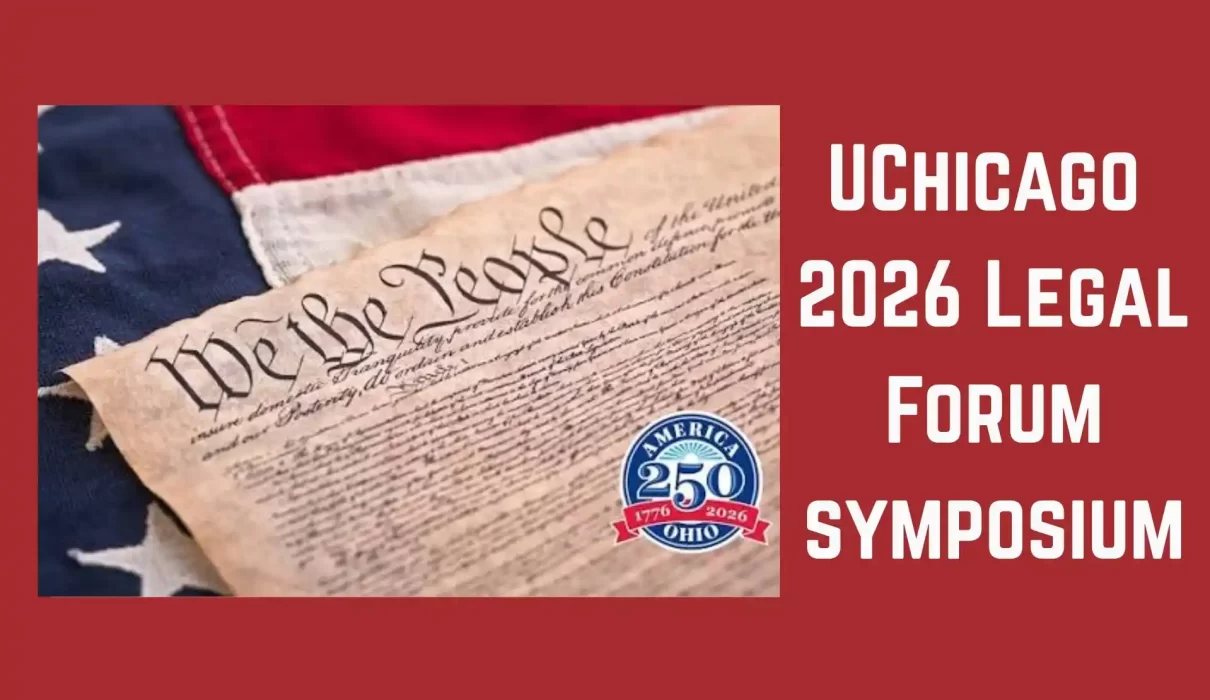
The University of Chicago Law School hosts its 2026 Legal Forum Symposium on Friday, November 6, 2026, built around the theme “America 250: Tradition, Innovation, and Norms.” The timing is deliberate. With the country approaching the 250th anniversary of its founding, the symposium uses that milestone as a lens for examining how American legal institutions have held up, and where they have struggled, over nearly two and a half centuries.
The University of Chicago Law Review’s annual Legal Forum symposium has built a reputation over the years for attracting serious scholarly engagement rather than surface-level commentary, and the 2026 program continues that tradition. Panels are expected to address federalism and the ongoing tension between state and federal authority, a subject that has become newly relevant as states diverge sharply on issues ranging from reproductive rights to environmental regulation. Other sessions will likely focus on innovation in the law itself, examining how legal doctrine adapts, or fails to adapt, to new technology and changing social conditions. A third track addressing race and identity in American law rounds out a program clearly designed to grapple with foundational questions rather than narrow doctrinal ones.
The symposium’s keynote features former Illinois Supreme Court Chief Justice Mary Jane Theis, whose career on the Illinois bench offers a useful vantage point for discussing how state courts navigate politically charged questions while maintaining institutional legitimacy. For attorneys and law students interested in judicial philosophy and the practical realities of serving on a state’s highest court, her perspective is likely to be one of the day’s more substantive contributions.
Academic symposia of this kind matter to practicing attorneys more than some might assume. Legal scholarship produced at events like this often finds its way into briefs years later, particularly in cases involving novel constitutional questions where courts are actively searching for persuasive frameworks. Litigators working on cases touching federalism, separation of powers, or constitutional interpretation more broadly may find value in tracking the papers and discussions that come out of this symposium, even if they cannot attend in person.
Law students, in particular, should view this as a chance to engage directly with the kind of scholarship that shapes legal education and, eventually, legal practice. The University of Chicago’s law and economics tradition has influenced generations of judges and practitioners, and symposia like this one give students direct exposure to how that intellectual tradition continues to evolve.
The full schedule, including panel lineups and registration information, is available on The University of Chicago Law School’s events page, which is updated as the program is finalized.
Constitutional questions around federalism and institutional norms have come up repeatedly in recent litigation, and attorneys looking for foundational background may find it useful to revisit landmark decisions that still shape how these arguments are framed. Attorneys Mag’s case brief on Marbury v. Madison remains a relevant touchpoint for understanding how judicial review itself, a core subject likely to surface throughout the symposium, became embedded in American constitutional law in the first place.
For legal educators and law school administrators, events like the Legal Forum Symposium also serve a recruiting and reputational function, signaling the kind of intellectual rigor a program is known for. Attorneys considering whether to pursue an LLM or academic fellowship often look to symposia like this one as an indicator of a school’s current scholarly direction, making the 2026 program worth watching even for those outside Chicago’s immediate academic community.
Last updated on: November 4, 2026