
 By
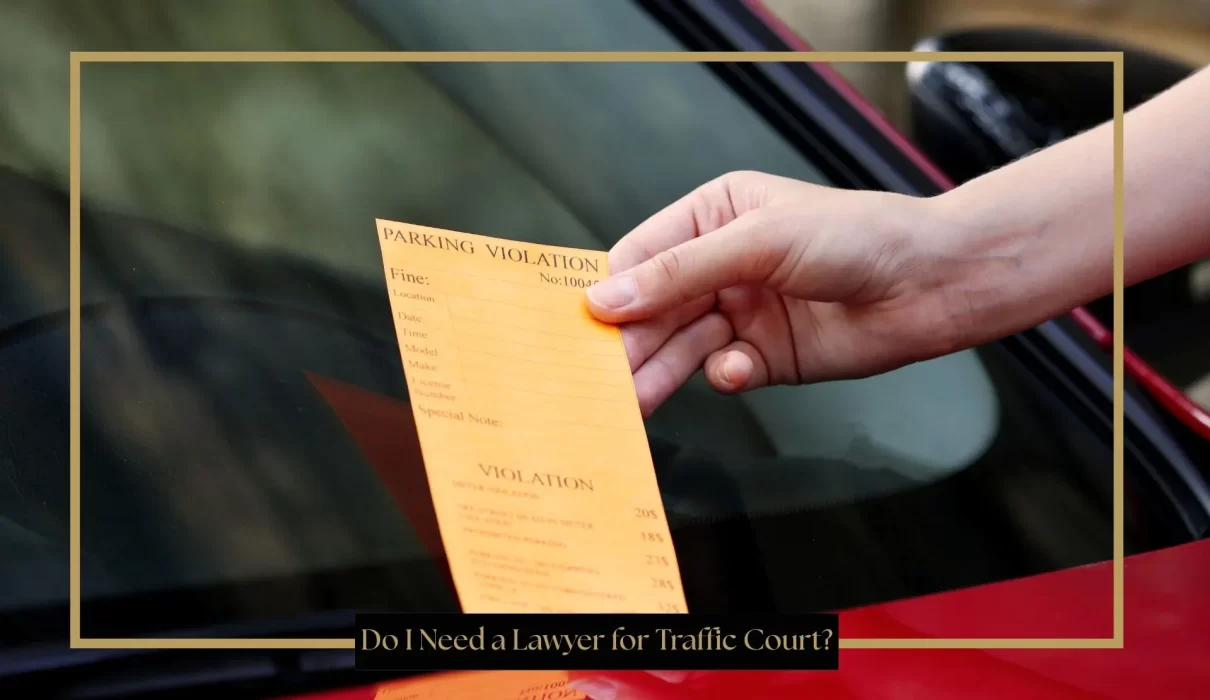
By Minor traffic infractions like simple speeding or rolling stops usually do not require a lawyer, making self-representation a reasonable, money-saving choice. However, you should consider hiring an attorney if a citation threatens your driver’s license, carries criminal charges like reckless driving, or significantly spikes your insurance rates. Legal fees vary depending on your local court, the severity of the charge, and whether the lawyer bills a flat fee or an hourly rate. If you choose to represent yourself, you will need to double-check your citation details, gather supporting evidence, understand your plea options, and navigate standard court steps on your own. Ultimately, because traffic rules and point systems differ widely by state, the full impact of any ticket depends on local laws and your prior driving record.
No, you don’t always need a lawyer for traffic court. Most minor traffic infractions, like a routine speeding ticket or a rolling stop, can be handled on your own by paying the fine or appearing before a judge without representation. The calculation changes once the stakes go up. If your citation could lead to a suspended license, points that spike your insurance rates, a permanent mark on your driving record, or criminal penalties, a traffic lawyer is usually worth the conversation, even if you decide not to hire one.
This guide walks through exactly when self-representation makes sense, when it doesn’t, what a lawyer actually does for you, what it costs, and what to expect if you end up standing in front of a judge yourself.
The honest answer to “do I need a lawyer for traffic court” is rarely a flat yes or no. It’s a judgment call based on what’s actually at risk: a $150 fine and two points is a very different situation from a citation that could suspend your license or show up on a background check. The rest of this guide breaks that judgment call down into concrete, specific factors so you can make the call with confidence, whether that means hiring an attorney or walking into court on your own.
Traffic Infraction vs. Traffic Violation vs. Criminal Offense
Before deciding whether you need an attorney, it helps to know what category your ticket actually falls into. The terms get used loosely, but courts generally sort traffic matters into three tiers, and the tier determines everything else: the potential penalty, whether you get a jury, and whether a conviction follows you around for life.
A traffic infraction is the lowest tier. It’s a civil violation, not a crime, and it typically covers things like speeding, an expired inspection sticker, a broken taillight, or failing to signal. You get a citation, you pay a fine or contest it in traffic court, and even a loss usually means points and money rather than a criminal record.
A traffic violation is a broader umbrella term. Depending on the state, it can refer to any breach of the vehicle code, infractions included, but it’s also the phrase people reach for when a ticket carries a bit more weight, like multiple points or a citation tied to an accident.
A criminal traffic offense is where things get serious. This tier includes misdemeanors and felonies: driving under the influence, reckless driving, driving on a suspended license, hit and run, and vehicular manslaughter. DUI charges in particular go by different names depending on the state; some states use the term OWI instead, and the legal distinctions between OWI and DUI are worth understanding if a charge like this is on the table, since the underlying penalties can be steep regardless of which term your state uses. These charges can carry probation, mandatory court appearances, a criminal record, and jail time. The classification isn’t identical everywhere. What one state charges as a misdemeanor, another may treat as a straightforward infraction, so the exact line always depends on your state’s vehicle code.
Here’s a simplified comparison of how the three tiers generally break down:
| Term | General Meaning | Typical Consequence |
|---|---|---|
| Traffic infraction | Lower-level, non-criminal offense handled through a citation | Fine and possible points, no jail time |
| Traffic violation | Broad term for any breach of traffic law, infraction or worse | Varies widely by the underlying offense |
| Criminal traffic offense | Misdemeanor or felony conduct, such as DUI or reckless driving | Fines, probation, license loss, possible jail time |
The practical takeaway: if your citation sits in the infraction tier, self-representation is usually reasonable. The moment you’re looking at a misdemeanor or felony traffic charge, that’s a different conversation entirely, and it’s worth remembering that the exact classification, and the exact penalty attached to it, depends on where you were cited. The same conduct that’s a simple infraction in one state can be a misdemeanor in another.
When Do You Actually Need a Traffic Lawyer?
There’s no single rule that applies to every driver, but four situations consistently tip the scale toward hiring a traffic lawyer rather than handling the ticket alone. In each of these, the common thread isn’t the ticket itself so much as what happens after: a license you can’t drive without, an insurance bill you’ll be paying for years, or a criminal record that shows up on a background check long after the fine is forgotten.
You Could Lose Your License
A suspended or revoked license changes the calculus more than almost anything else on this list. Losing your license can mean losing your commute, your job, or your ability to care for family members who depend on you. Suspensions typically follow from accumulating too many points within a set period, a DUI conviction, or repeated serious violations. A suspended license attorney can sometimes negotiate a restricted or hardship license, challenge the underlying violation that triggered the suspension, or identify errors in your driving record that caused the suspension in the first place.
You Were Charged With Reckless Driving
Reckless driving isn’t treated like an ordinary speeding ticket in most states. It’s frequently charged as a misdemeanor, which means it can carry jail time, a criminal record, and a far larger fine than a routine infraction. A reckless driving lawyer understands how prosecutors typically define “willful disregard for safety” in your jurisdiction and can push for a reduction to a lesser, non-criminal charge, which matters enormously for your record and your insurance. Because a misdemeanor reckless driving charge sits closer to criminal court than traffic court, it’s worth approaching it the way you would choosing any criminal defense attorney: checking their track record with this exact charge, not just their general reputation.
You Have Repeat or Serious Violations
A second or third ticket rarely gets treated the same as your first. Courts and insurers pay attention to patterns, and prior offenses often trigger enhanced penalties, longer suspensions, or mandatory court appearances that a first-time citation wouldn’t. Commercial drivers face even steeper consequences, since a conviction can jeopardize a CDL and, by extension, a livelihood. A traffic violation attorney or traffic defense attorney can review your full driving history, flag which prior violations are actually counting against you, and build a defense around the cumulative picture rather than just the newest ticket. This is also where a traffic violation defense attorney earns their fee: negotiating outcomes that keep points off your license so a fourth ticket doesn’t become the one that costs you your driving privileges altogether. It’s also worth checking whether an older violation is still legally countable against you. Many states only count points or prior offenses within a rolling window, often three to five years, and a lawyer can confirm whether a citation from years ago should even be part of the current calculation.
You’re Not Sure How to Fight the Ticket
Not every ticket is a slam dunk for the state. Radar and lidar devices require calibration and proper officer certification. Traffic signs need to be visible and properly placed. Officers sometimes make procedural errors in how a stop was conducted or how a citation was written. If you’re wondering how to fight a speeding ticket but don’t know what a viable defense even looks like, a lawyer can evaluate the evidence, the officer’s report, and any procedural issues before you commit to a plea. Even if you ultimately decide to represent yourself, a single consultation can tell you whether you actually have a case.
Do Specific Ticket Types Need a Lawyer?
Different violations carry different stakes, and the right move often depends on exactly what you were cited for.
Speeding Tickets
Speeding is the most common ticket on the road, and most of them are genuinely minor: a few miles over the limit, a modest fine, a couple of points. Where it gets more serious is excessive speed (often 20 to 30 mph over the limit, depending on the state), a school zone violation, or a speeding charge stacked on top of a prior offense. If you’re searching for a speeding ticket lawyer near me, it’s usually because one of those factors applies, or because the points from this ticket would push you toward a suspension. A lawyer for speeding ticket cases can also be useful if you have a commercial license, since even a minor speeding conviction can affect CDL status.
Red-Light Tickets
Whether a red-light ticket is worth fighting often comes down to how it was issued. Camera-issued citations differ from officer-issued ones in several states, sometimes carrying no points at all, just a fine, while an officer-issued citation for the same conduct may carry points and affect your insurance. People asking how much is a ticket for running a red light are often surprised that the ticket price is the smallest part of the total cost. Points on your license can raise insurance premiums for three to five years, often outweighing the original fine several times over. If a red-light violation involved a collision, the ticket itself becomes a secondary concern next to the injury claim, and it’s worth knowing what to ask a lawyer before filing a car accident claim alongside handling the citation.
Reckless Driving
As covered above, reckless driving sits in a different category from an ordinary moving violation. It’s frequently prosecuted as a criminal misdemeanor rather than a civil infraction, which is the main reason it appears twice in discussions about when legal help matters.
Fix-It Tickets and Other Violations
Not every citation involves how you drove. A fix it ticket, sometimes called a correctable violation, covers equipment or documentation problems: worn tires, a burned-out headlight, expired registration, or a missing proof of insurance. These are usually resolved by fixing the underlying issue, getting an officer or the court to sign off on the correction, and paying a small administrative fee, often far less than a standard fine. Whether the fine can be waived, and how the correction process works, depends on your state, so it’s worth checking your local court’s procedure before assuming a fix-it ticket is automatically dismissed once the repair is done.
Other common violations that fall into gray territory include failure to yield, improper lane changes, stop-sign violations, driving without insurance, and driving on a suspended license. Several of these can carry more weight than drivers expect, particularly driving without insurance or on a suspended license, both of which can escalate quickly if mishandled. A traffic violation this significant is usually worth at least a phone call to a traffic violation attorney before you enter a plea. Where a violation like failure to yield leads to an accident, the financial exposure often runs well beyond the ticket itself; if that happens, it helps to understand how personal injury settlements are generally calculated before deciding how to handle either matter.
Is a Traffic Lawyer Worth It?
Is a traffic lawyer worth it really comes down to a cost-benefit comparison specific to your ticket.
On the benefit side, an attorney can potentially get charges reduced to something that carries fewer or no points, negotiate a lower fine, help you avoid a license suspension, and in some jurisdictions appear in court on your behalf so you don’t have to take time off work. For cases with real defenses (a faulty speed-detection device, an improperly issued citation, weak officer testimony) a lawyer may be able to get the case dismissed outright. Because points directly influence insurance premiums, keeping your record clean often saves far more over a few years than the attorney’s fee cost upfront.
On the other side of the ledger, if you’re looking at a straightforward, low-level infraction with a small fine and minimal or no points, hiring a lawyer may cost more than simply paying the ticket. There’s no universal answer here. The right move is to weigh the attorney’s likely fee against what you stand to lose: the fine itself, the points, the insurance increase over the next several years, and, in serious cases, your ability to drive at all.
How Much Does a Traffic Lawyer Cost?
There’s no single number that applies everywhere, because how much does a traffic lawyer cost depends on several moving parts:
- The type of violation (a basic speeding ticket costs far less to defend than reckless driving)
- Your state and county, since court fees and typical attorney rates vary widely
- Whether the case goes to trial or resolves through negotiation
- The lawyer’s experience level
- Whether they charge a flat fee or bill hourly
- How many court appearances the case requires
- The overall complexity of the case, including whether expert testimony or technical evidence is involved
Many traffic attorneys charge a flat fee for routine infractions, since the scope of work is predictable, while more serious or contested matters may be billed hourly. Questions like how much is a traffic lawyer and how much does a traffic ticket lawyer cost rarely have a one-size-fits-all answer, and any attorney quoting a firm number without knowing your state or your citation is guessing. Here’s a general sense of how cost tends to scale with the type of case:
| Factor | Why It Tends to Affect Cost |
|---|---|
| Simple traffic ticket | Usually resolved quickly with minimal legal work |
| Speeding violation | Cost depends on how far over the limit and your prior record |
| Reckless driving | Criminal exposure means more preparation and higher stakes |
| License suspension | Higher stakes and often a separate administrative hearing |
| Trial | Requires more legal work, evidence review, and court time |
Avoid trusting any source that gives one universal price for “a traffic lawyer.” The honest answer is always: it depends on your violation and your state, so a quick consultation is the fastest way to get a real number.
It’s also worth understanding what you’re actually paying for. A flat fee for a basic speeding ticket typically covers reviewing the citation, one or two court appearances or negotiations with the prosecutor, and handling the paperwork so you don’t have to. Hourly billing tends to show up for more contested matters, where the amount of work genuinely can’t be predicted in advance, such as a reckless driving charge headed toward trial. Some attorneys also offer a free initial consultation, which is a low-risk way to get a specific cost estimate and a sense of whether the case is even worth fighting before you commit any money. When comparing quotes, ask exactly what’s included: a fee that sounds low but excludes a second court date or a contested hearing can end up costing more than a higher quote that covers everything upfront.
Can You Fight a Traffic Ticket Without a Lawyer?
Yes. In most jurisdictions, you’re free to represent yourself in traffic court for the vast majority of citations, subject to your local court’s rules. If you’re weighing self-representation, here’s a practical sequence to follow:
- Review the citation carefully. Confirm the officer’s account, the code section cited, and whether the details (date, location, vehicle description) are accurate.
- Check the deadline. Missing your response window can trigger an automatic conviction or an added fee, regardless of the merits of your case.
- Determine whether a court appearance is required, or whether you can resolve it by mail, online, or by paying the fine outright.
- Review the alleged violation and think through whether you actually have a factual or procedural defense, not just a disagreement with the fine amount.
- Gather evidence: photos, dashcam footage, witness contact information, or anything that supports your account.
- Understand your plea options. Guilty, not guilty, and no contest carry different consequences, and in some states a diversion program or defensive driving course can keep the ticket off your record entirely.
- Prepare for the hearing, including a short, factual summary of what happened and why.
- Present your case respectfully, sticking to relevant facts rather than arguments that feel true but don’t hold up legally, like claiming you didn’t see a posted sign.
This is also the stage where people start researching how to fight a speeding ticket in more detail. Self-representation works best for factual disputes on minor infractions. It works far less well when the case involves technical evidence, expert testimony, or a genuine risk of a criminal conviction.
What Happens in Traffic Court?
Knowing the sequence of a typical hearing takes a lot of the anxiety out of showing up.
Check-In
You’ll typically check in with the clerk when you arrive, confirming your name and case number. Courts often call cases in the order people checked in or by a docket schedule, so arriving early matters.
The Citation Is Called
When your case is called, you’ll step forward and the judge or clerk will confirm the charge against you.
Plea or Response
You’ll enter your plea (guilty, not guilty, or no contest) or, if you already entered one, proceed to the next stage the court has scheduled.
Evidence and Testimony
If you’re contesting the ticket, this is where the officer testifies, you present your evidence or cross-examine, and any witnesses are heard.
Judge’s Decision
The judge weighs what was presented and either finds you responsible, dismisses the charge, or in some courts reduces it to a lesser violation.
Fines, Points, or Other Penalties
If you’re found responsible, the court will impose a fine and any applicable points, and may set additional requirements like traffic school.
It’s worth separating two things people often conflate: how long you sit in the courtroom waiting for your case to be called, and how long your case as a whole takes to resolve from citation to final judgment. Those are frequently very different timelines.
How Long Does Traffic Court Take?
How long does traffic court take depends heavily on whether you’re pleading guilty outright or contesting the citation. A straightforward guilty plea at your first appearance can be over in well under an hour, sometimes in fifteen to thirty minutes once your case is actually called. Contested cases move differently. They typically pass through an arraignment, pretrial conferences, and eventually a trial date, and the full process can stretch across several months if the charge is serious or heavily disputed.
Several variables drive that range:
- The specific court’s location and typical caseload
- How many cases are on the docket that day
- Whether you plead guilty or no contest versus contesting the ticket
- Whether witnesses or expert testimony are required
- Whether the matter proceeds to a full trial
- Whether additional hearings get scheduled due to continuances
A useful distinction: how long does court take on the day you show up (often a few hours of waiting even for a short hearing) is different from how long does traffic court take as a full case, which for a contested serious violation can realistically run two to six months or longer. If you want the fastest possible resolution and you have no real defense, pleading at your first appearance is usually the quickest path. If you have a legitimate case worth fighting, expect the trade-off to be more time in exchange for a shot at a better outcome.
How to Find a Traffic Ticket Lawyer Near You
If you’ve decided legal help makes sense, choosing the right traffic ticket lawyer matters as much as the decision to hire one at all. A few things worth checking before you commit:
Experience with your specific offense. A lawyer who handles DUI cases daily isn’t necessarily the strongest choice for a routine speeding ticket, and vice versa.
Experience in the specific court where your case will be heard. Familiarity with local judges, prosecutors, and courtroom procedure can genuinely affect outcomes.
Fee structure. Ask upfront whether it’s a flat fee or hourly, and whether that fee covers all court appearances or just the first one.
Reviews and reputation. Look for a consistent track record, not just a handful of five-star reviews.
Whether they personally handle your case, or hand it off to a junior associate you haven’t spoken with.
Whether they can appear in court on your behalf, which, where permitted, saves you the time off work.
What outcome and defenses they realistically expect, rather than vague promises of a guaranteed dismissal.
Searching traffic ticket lawyers near me or speeding ticket lawyer near me will surface plenty of options, but the local piece matters less than the experience piece. A traffic court lawyer who knows your specific courthouse’s tendencies is often more valuable than one who is simply nearby.
Questions to Ask Before Hiring a Traffic Lawyer
A short consultation call is the best way to figure out whether a lawyer is the right fit. Worth asking directly:
- Have you handled this specific type of traffic violation before?
- Have you appeared in this particular court?
- What are the realistic possible penalties in my case?
- Do you charge a flat fee or an hourly rate?
- Does that fee include all necessary court appearances?
- Could this ticket affect my license?
- Could it affect my insurance premiums, and by roughly how much?
- What defenses might actually apply here?
- What happens if the case goes to trial instead of settling?
- Do I need to appear in court personally, or can you appear for me?
A lawyer who answers these clearly and specifically, rather than in vague generalities, is usually a good sign you’re talking to someone who actually handles these cases regularly.
Alternatives Worth Considering Besides Hiring a Lawyer
Hiring an attorney isn’t the only middle ground between paying a ticket outright and fighting it entirely on your own.
Traffic school or a defensive driving course is available in many states for eligible violations, and completing it can keep the ticket off your driving record entirely or reduce the points assessed. Eligibility usually depends on how fast you were going, whether you’ve taken the course recently, and whether you hold a commercial license.
Deferred adjudication or diversion programs, offered in some jurisdictions, let you plead guilty or no contest, pay a fee, and avoid a formal conviction as long as you don’t pick up another citation during a set probationary period.
Public defenders are generally reserved for criminal matters where jail time is a realistic possibility, such as a repeat DUI or a serious misdemeanor traffic charge, not for routine civil infractions. If you’re facing a criminal traffic charge and can’t afford a private attorney, ask the court directly about eligibility.
None of these options are a substitute for legal advice in a genuinely serious case, but they’re useful to know about before you assume your only two choices are “pay the fine” or “hire a lawyer.”
Frequently Asked Questions
Do you automatically need a lawyer for a first-time speeding ticket? No. A first-time, low-speed ticket with no accident involved is one of the clearest cases where self-representation is reasonable.
Will hiring a lawyer guarantee my ticket gets dismissed? No attorney can ethically guarantee a dismissal. What a lawyer can offer is a realistic assessment of your defenses and experience negotiating with the specific court and prosecutor handling your case.
Does a traffic lawyer need to be from the same city as the courthouse? Not necessarily, but they do need to be licensed in your state and familiar with the specific court, since local procedure and prosecutor tendencies vary even within the same state.
Can points be removed from my license after the fact? Sometimes, through a hearing, an appeal, or in some states a waiting period after which points age off. A lawyer can tell you whether that’s realistic for your specific record.
Is it too late to hire a lawyer if I already have a court date? Generally no, as long as you reach out before the date itself. Waiting until the morning of your hearing narrows your options considerably, so earlier is always better.
Do I Need a Lawyer for Traffic Court? Final Answer
You do not automatically need a lawyer for traffic court. For a simple, low-level ticket with a modest fine and no real risk to your license, representing yourself is often perfectly reasonable, and thousands of drivers do it successfully every day. But once the citation could lead to significant fines, a meaningful jump in points, a suspended license, a spike in your insurance costs, or a criminal record, talking to a qualified traffic lawyer is worth the time, even if you end up handling the rest yourself. The safest approach is the simplest one: read your citation carefully, understand what tier of violation you’re actually facing, and get a professional opinion before you decide how to plead.
Why Traffic Ticket Rules Differ by State
Traffic-ticket consequences can vary significantly from one state to another. States use different systems for recording moving violations, assigning points or other driving-history consequences, handling repeat offenses, and restricting or suspending driving privileges. Some states use traditional point systems, while others rely on different driver-record or violation-based systems. The table below provides a high-level comparison. The exact consequence of a particular ticket still depends on the violation, the driver’s record, and the applicable state and local rules.
| Editorial note: This table is a high-level state-by-state overview, not a substitute for the law or the instructions on a specific citation. State rules, thresholds, court procedures, and driver-improvement programs can change. Confirm the current rule with the applicable state motor-vehicle agency or court before publishing or relying on a specific legal claim. |
| State | How Traffic Violations Are Tracked | Key Driver-Record Rule / Difference |
|---|---|---|
| Alabama | Traditional point system | 12 points in 2 years starts the suspension schedule; longer suspensions apply at higher totals. |
| Alaska | Traditional point system | Moving violations generally carry 2–10 points; 12 points in 12 months or 18 in 24 months can trigger licensing consequences. |
| Arizona | Traditional point system | 8 or more points within 12 months can lead to Traffic Survival School or suspension. |
| Arkansas | Violation/driver-record system | Traffic convictions, failure-to-appear/pay and related information are recorded and can affect licensing. |
| California | Point system | 4 points in 12 months, 6 in 24 months, or 8 in 36 months can trigger negligent-operator action. |
| Colorado | Point system | Adults can face suspension at 12 points in 12 months or 18 points in 24 months. |
| Connecticut | Point system | Points remain for 24 months; exceeding 10 points can result in a 30-day suspension. |
| Delaware | Calculated point system | Points are calculated over a 24-month period, with full and reduced values during different periods. |
| Florida | Point system | 12 points in 12 months, 18 in 18 months, or 24 in 36 months can trigger suspension. |
| Georgia | Point system | 15 points in 24 months can suspend a driver’s license; eligible drivers may reduce points through an approved course. |
| Hawaii | No traditional demerit-point system | Hawaii uses a traffic-abstract system rather than a traditional demerit-point system. |
| Idaho | Point system | 8–11 points in 12 months generates a warning; higher totals can result in suspension. |
| Illinois | Violation/point system | Point values vary by offense, with the state distinguishing moving and non-moving violations. |
| Indiana | Point system | Moving violations carry 0–10 points; points remain active for two years. |
| Iowa | Driver-record/point system | Consequences depend on the offense, applicable state rules, and the driver’s existing record. |
| Kansas | Driver-record/violation system | The effect of a conviction depends on the offense, prior convictions, and licensing rules. |
| Kentucky | Point system | 12 points within two years can lead to a suspension hearing for adults; lower threshold for drivers under 18. |
| Louisiana | Point system | Qualifying traffic violations are tracked through a state point system; impact depends on offense and record. |
| Maine | Demerit-point system | 6 points triggers a warning; 12 or more points can result in suspension. |
| Maryland | Point system | Point levels can lead to warnings, driver-improvement requirements, suspension notices, or revocation. |
| Massachusetts | Surchargeable-event system | Uses surchargeable events for important insurance and license consequences rather than a traditional DMV demerit-point model. |
| Michigan | Point system | Points remain for two years; 12 or more points in two years can result in driver-assessment action. |
| Minnesota | Driver-record system | Traffic convictions and driving-history information are evaluated when determining licensing consequences. |
| Mississippi | Driver-record/violation system | The type and number of violations and the driver’s record determine potential licensing consequences. |
| Missouri | Point system | 8 points in 18 months can result in suspension; higher accumulation can lead to a one-year revocation. |
| Montana | Driver-record/point system | Traffic convictions and driving history are used to determine licensing consequences. |
| Nebraska | Point system | Qualifying convictions carry points and accumulated points can trigger licensing consequences. |
| Nevada | Demerit-point system | 12 or more points within 12 months results in a six-month suspension. |
| New Hampshire | Point system | Points depend on the offense and driver circumstances; serious or repeated violations can lead to suspension. |
| New Jersey | Point system + surcharge system | 6+ points can produce an insurance surcharge; 12+ points can result in suspension. |
| New Mexico | Driver-record/point system | Traffic convictions and driving history determine the potential licensing impact. |
| New York | Point system | New York uses a point system and updated several point values in February 2026. |
| North Carolina | Point system | Separate driver-license and insurance-point concepts can make a conviction affect both driving privileges and insurance. |
| North Dakota | Point system | Points depend on the violation and speeding level; serious speeding offenses can carry high point values. |
| Ohio | Point system | The state assigns points according to the offense and publishes corresponding offense/conviction codes. |
| Oklahoma | Driver-record/point system | The violation and previous driving history can affect whether additional licensing action is taken. |
| Oregon | Driver Improvement system | DMV can use its Driver Improvement Program for multiple traffic offenses and/or preventable crashes. |
| Pennsylvania | Point system | Accumulated points can lead to warnings, driver-improvement measures, or suspension. |
| Rhode Island | Point system | Qualifying traffic violations carry points that can affect driver-license status. |
| South Carolina | Point system | Points can result in warnings, defensive-driving measures, or suspension depending on the record. |
| South Dakota | Point system | 15 points in 12 months or 22 points in 24 months can result in suspension. |
| Tennessee | Point system | 12 or more points within 12 months can trigger a proposed suspension and hearing. |
| Texas | Driver-record/violation system | The former Driver Responsibility Program surcharge system is no longer in effect; current consequences depend on the violation and applicable rules. |
| Utah | Point system | Traffic convictions are assigned points and accumulated points can affect licensing status. |
| Vermont | Point system | 10 points can trigger a suspension process; the suspension period depends on the applicable record period. |
| Virginia | Demerit-point system | 12 points in 12 months or 18 in 24 months triggers driver-improvement action for adults; higher accumulation can lead to suspension. |
| Washington | Violation/driver-record system | Washington tracks convictions, infractions, collisions, suspensions, revocations and failures to appear on the driving record. |
| West Virginia | Point system | 6 points generates a warning; points remain for two years after conviction. |
| Wisconsin | Point system | Out-of-state convictions can appear on the record without Wisconsin points being assessed, although serious licensing action can still apply. |
| Wyoming | Driver-record/point system | Traffic convictions and accumulated driving history determine potential licensing consequences. |
Sources & Verification
The claims in the table above were checked against official state sources where noted below. Because point systems and thresholds change (New York overhauled its entire point system effective February 16, 2026, for example), confirm any entry against the state’s current motor-vehicle agency page before publishing.
- California DMV, Negligent Operator Actions, confirms the 4 points in 12 months / 6 in 24 months / 8 in 36 months thresholds cited for California.
- Texas Department of Public Safety, Driver Responsibility Program Repealed, confirms that Texas surcharges under the former Driver Responsibility Program ended September 1, 2019, supporting the Texas row in the table.
- New York State DMV, Updated Point Values for Driving Violations, confirms the point-value and look-back changes that took effect February 16, 2026, supporting the New York row in the table.
- National Conference of State Legislatures, Transportation, a starting point for locating the current official DMV or DPS page for any state not individually verified above.
The remaining 47 states in the table were compiled from publicly available driver-record and point-system descriptions and were not individually re-verified against each state’s official DMV or DPS site in this pass. Given how often these rules change, run each state through its official agency page before this table goes live, and update the editorial note date once that pass is complete.
Last Updated On: August 18, 2026

Adam Fermin
Chief Editor of Attorneys Magazine. Adam oversees the selection and verification of legal, marketing, and technology content. He focuses on distilling complex industry updates into actionable insights, ensuring every editorial piece meets the highest standards of accuracy, relevance, and professional quality.