 By
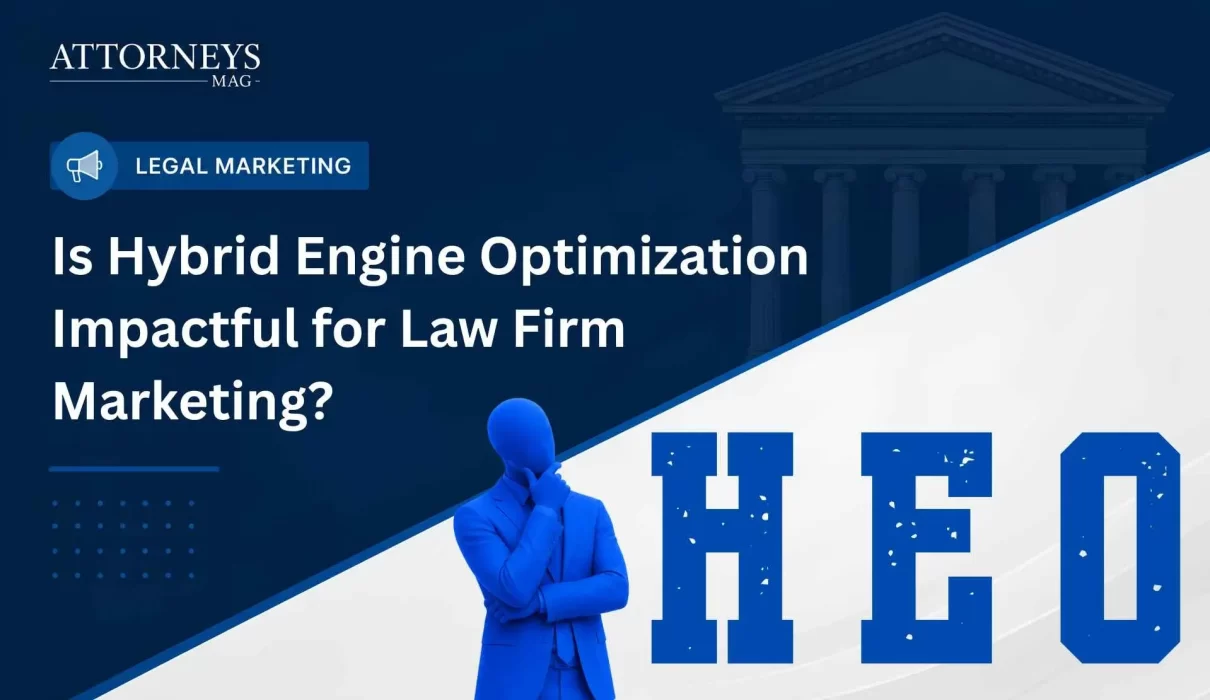
By No, not as a distinct methodology. Hybrid Engine Optimization (HEO) is a 2025 rebrand of tactics already sold as GEO and AEO. The work it describes, structuring content so both Google and AI tools can find and cite it, is worth doing. Paying extra for a vendor’s “HEO package” specifically is not.
That distinction matters before any firm sets a budget around the term. Here is what HEO actually is, how it compares to SEO, AEO, and GEO, and what firms should do regardless of which acronym a vendor is currently selling.
What Is Hybrid Engine Optimization (HEO)?
Jori Ford, a search marketing strategist, introduced the term during a session at SEO Week 2025 in New York, hosted by the agency iPullRank. Ford chose “hybrid” to describe one idea: optimizing content to perform in both traditional search rankings and AI-generated answers at the same time, instead of treating the two as separate budgets or separate teams.
The tactics behind that idea are not new. They include writing clear, fact-dense content; adding schema markup and FAQ formatting so AI systems can extract answers; monitoring crawler and bot activity in server logs to see which AI platforms visit a site; and building consistent “named entity” signals, meaning consistent references to a firm, its attorneys, and their credentials, that AI models can recognize and cite.
Since Ford’s talk, several marketing agencies have adopted HEO as a service name. Their published definitions track closely with what was already being sold as GEO or AI-visibility services a year earlier. What is documented is the underlying tactics. What is not independently documented is any evidence that the HEO label itself produces better outcomes than the same tactics sold under a different name.
| Related Readings On Attorneys Magazine: Review Management for Law Firms |
HEO vs SEO vs AEO vs GEO vs LLMO: What Is Actually Different
For a firm deciding where to spend a marketing budget, the label matters less than knowing what each term claims to do.
| Term | Coined / Popularized | Stated Focus | Core Tactics | Independently Verified? |
|---|---|---|---|---|
| SEO | Late 1990s | Ranking in traditional search results | Keywords, backlinks, technical site health | Yes, decades of data |
| AEO | Early 2020s | Getting selected as a direct answer | FAQ formatting, schema, concise answers | Partially, growing research base |
| GEO | 2023 | Being cited inside AI-generated answers | Entity signals, structured content, source authority | Partially, academic papers exist |
| LLMO | 2023 to 2024 | Visibility inside LLM outputs specifically | Same core tactics as GEO | No, mostly agency usage |
| HEO | Mid-2025, Jori Ford / SEO Week | Ranking and AI citation treated as one combined effort | Same tactics as GEO and AEO, combined | No, agency-driven term only |
Why AI Search Visibility Matters for Law Firm Marketing Right Now
Regardless of what any of this gets called, the underlying shift is real and already measurable in how prospective clients search for attorneys.
| Data Point | Source |
|---|---|
| 41.9% of people say they would use ChatGPT to research a lawyer | iLawyer Marketing, 2026 survey |
| Google AI Overviews appear on roughly 23.6% of legal search queries | Industry AI Overview analysis |
| AI Mode and AI Overviews cite the same URL only about 13.7% of the time | 2026 AI Mode vs AI Overview comparison |
| Only about 12% of AI Mode citations match a page’s top-10 organic ranking | Independent citation analysis |
| Click-through drops to about 8% when an AI summary appears, vs. 15% without one | Pew Research Center |
Ranking well on Google no longer guarantees a firm is mentioned when someone asks an AI tool the same question. Fewer searchers are clicking past an AI-generated answer at all, which raises the stakes for being the source that answer is built from.
Is HEO Better Than SEO, AEO, or GEO for Law Firms?
No. Based on Ford’s original talk and how agencies have used the term since, HEO is not a separate technical approach. It is a framing choice that combines GEO and AEO tactics under one label. A firm already doing solid GEO or AEO work is, in practice, already doing what HEO describes.
The framing has one genuine benefit: it discourages firms from treating “Google rankings” and “AI visibility” as two unrelated line items in a marketing budget. Beyond that reframing, a firm evaluating a vendor’s HEO pitch should ask the same questions it would ask about any GEO or AEO offer: what specifically changes on the site, how will results be measured, and what happens when AI platforms change how they crawl or cite content, which they do on a regular basis.
| Related Readings On Attorneys Magazine: Legal Advertising Guide for U.S. Law Firms |
What Actually Improves a Law Firm’s AI Search Visibility
Setting the terminology aside, the practices tied to better AI-search visibility for law firms are consistent across GEO, AEO, and HEO advocates alike:
- Structured, answerable content: clear headers, FAQ sections, and direct answers to the specific questions prospective clients type into search bars and AI chatbots.
- Consistent, verifiable attorney and firm information across the website, legal directories, and review platforms, since AI systems favor sources that agree with each other over sources that stand alone.
- Schema can help machines understand page/entity information, but you don’t want readers to interpret this as “add FAQ schema and AI will cite you.”
- Third-party validation: Reviews, legal directories, bar association recognition, and independent coverage can help reinforce a firm’s credibility beyond what it says about itself. As AI search evolves, those outside signals may become increasingly important when AI systems decide which firms to surface and how to describe them.
- Monitoring how AI platforms actually cite or ignore a firm, using server log data or a dedicated AI-visibility tracking tool, since standard analytics were not built to measure this.
None of this requires adopting HEO as a label. It requires treating AI visibility as a trackable part of a firm’s marketing, which is the same conclusion GEO and AEO advocates had already reached before the term existed.
Should a Law Firm Pay for HEO Services?
Only if the deliverables are specific and measurable, not because of the acronym attached to them. Before signing with any agency selling HEO, GEO, or AEO services, a firm should get concrete answers on: which pages will be restructured and how; what schema will be added; how AI citation tracking will be reported; and what the contract defines as success. A vendor that cannot answer those questions specifically is selling a label, not a strategy.
FAQ: Hybrid Engine Optimization for Law Firms
Is Hybrid Engine Optimization a real marketing discipline?
It is a real term, coined in 2025, but not an independently verified methodology. It describes combining existing GEO and AEO tactics into one effort rather than introducing new techniques.
Who coined the term HEO?
Jori Ford introduced the term during a talk at SEO Week 2025 in New York, hosted by the agency iPullRank.
Is HEO the same as GEO or AEO?
The tactics overlap heavily. HEO combines GEO’s focus on AI citation and AEO’s focus on direct-answer formatting under a single label.
Should a law firm rewrite its marketing strategy around HEO?
No. A firm should focus on the underlying tactics, structured content, schema markup, consistent entity information, and third-party validation, regardless of which acronym a vendor uses to describe them.
How can a law firm tell if an AI visibility vendor’s pitch is credible?
Ask for specific, measurable deliverables: which pages change, what schema is added, and how AI citations will be tracked and reported. Vague claims tied to a trending acronym are a warning sign.
Last Updated on: September 2, 2026
Sources
- iPullRank: Hybrid Engine Optimization — Jori Ford, SEO Week 2025
- Best Lawyers: How AI Is Changing How Clients Find Lawyers
- Lexicon Legal Content: AI Search Visibility for Law Firms
- Matador Solutions: How Does AI Learn About Your Law Firm?
- LawRank: How Law Firms Can Improve Their Online Visibility With AI (2026 Guide)
1 Comment
Comments are closed.