
 By
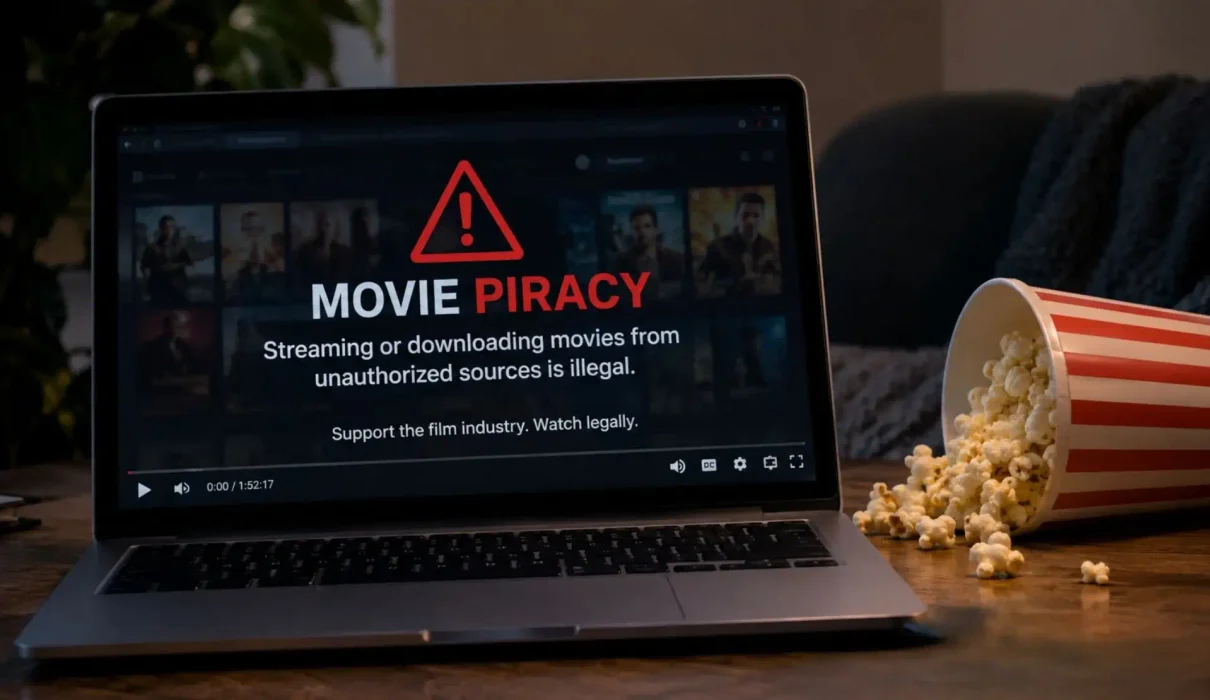
7starhd movies shows up in search results every time a new Bollywood or Hollywood release hits theaters, promising free downloads within hours of the film’s premiere. The pitch is simple: skip the ticket price, skip the subscription, and watch anything you want in HD. The reality is less simple. 7starhd is a piracy website, and using it carries real legal exposure along with security risks that most visitors never think about until something goes wrong.
This article breaks down what 7starhd actually is, whether watching or downloading from it is legal anywhere in the world, what the copyright laws in the United States and India say about movie piracy, and what penalties people have actually faced for using sites like this one. It closes with legal alternatives that cost little or nothing.
Quick Answer: Is 7starhd Legal?
No. 7starhd is not a licensed movie platform anywhere in the world. It hosts and distributes copyrighted films and shows without permission from the studios, production houses, or copyright owners that own the rights to them. Operating the site is a criminal and civil offense in most jurisdictions, and using it to download or stream content exposes visitors to copyright claims, device infection, and data theft, even though individual users are rarely the ones targeted directly.
What Is 7starhd Movies?
7starhd movies is a piracy platform that uploads newly released and older films in formats like 480p, 720p, and 1080p, often within days of a theatrical or OTT release. It covers Bollywood, Hollywood, South Indian cinema, and dubbed versions in Hindi, Tamil, Telugu, Punjabi, and Marathi, alongside web series and TV shows. The site does not hold distribution rights to any of this content; every film listed on it has been copied and re-uploaded without the copyright holder’s consent.
The 7starhd website is not a single, stable domain. It operates under a rotating list of extensions, including 7starhd.com, 7starhd.in, 7starhd.bid, 7starhd.website, 7starhd.surgery, and 7starhd.review, among others. This pattern is typical of piracy operations: once a domain gets blocked by internet service providers or flagged by registrars, the operators relaunch under a new top-level domain and push the new link through Telegram channels and social media.
How 7starhd and Sites Like It Operate
Domain registration records for 7starhd-style sites are typically masked behind privacy protection services, making it difficult to identify who actually runs the operation. Hosting is frequently routed through services that tolerate copyright-infringing content, and many of these domains sit behind Cloudflare, which hides the origin server’s real location.
Independent site-safety scanners have repeatedly flagged 7starhd mirror domains as low-trust or outright unsafe. Security review tools have assigned several 7starhd variants trust scores at or near zero, citing newly registered domains, blacklisting by security vendors, and a complete absence of verifiable business information. That combination, a brand-new domain with no corporate footprint and content built entirely around unlicensed movie downloads, is the standard profile of a piracy site rather than a legitimate media platform.
This is also why 7starhd movies download pages are loaded with pop-up ads, redirect scripts, and fake “download” buttons. Ad revenue, not subscriptions, is how these sites make money, and the incentive is to maximize clicks rather than protect visitors.
Movie Piracy Laws: The International Framework
Piracy is defined, in legal terms, as the unauthorized reproduction or distribution of copyrighted material, whether that material is a film, a piece of software, a book, or a piece of music.
According to Encyclopaedia Britannica, piracy has existed since the earliest days of recorded media, but it accelerated dramatically with the arrival of digital formats and peer-to-peer networks, which made copying and redistributing copyrighted works nearly effortless and almost impossible to fully contain.
At the international level, copyright protection is anchored by a handful of treaties. The Berne Convention requires signatory countries to protect the works of authors from other member countries as they would protect their own. The TRIPS Agreement, administered through the World Trade Organization, obligates member states to provide minimum standards of copyright enforcement, including against pirated goods, which it defines as copies made without the consent of the rights holder.
A detailed breakdown of how national governments translate these international obligations into domestic law, including India’s approach, is available from iPleaders. The analysis traces how countries combine copyright statutes, criminal codes, and customs regulations to enforce these treaty obligations domestically.
What this means practically is that there is no country where downloading or streaming from a site like 7starhd is a legal gray area simply because the site is hosted overseas. Copyright protection under these treaties extends across borders, which is exactly why Indian productions get pulled from piracy sites hosted outside India, and why American studios can take action against platforms operating out of countries with weaker local enforcement.
Copyright Law in the United States
In the United States, copyright protection for films is governed by the Copyright Act, codified at Title 17 of the U.S. Code. Section 106 grants copyright holders the exclusive right to reproduce, distribute, and publicly display their work. Downloading a pirated movie from a site like 7starhd involves making an unauthorized copy, which implicates the reproduction right, and if the download process also uploads or shares pieces of the file (common with torrent-based piracy), distribution rights are triggered as well.
Civil infringement claims are filed under Section 501 of the Copyright Act, and a copyright holder who wins such a claim can recover statutory damages ranging up to $150,000 per work for willful infringement, even without proving actual financial loss. Criminal copyright infringement, covered under Section 506 and Title 18 of the U.S. Code, applies when infringement is committed willfully and for commercial advantage or private financial gain, and can carry fines and prison time.
Congress specifically targeted illegal streaming operations with the Protecting Lawful Streaming Act of 2020, which added Section 2319C to Title 18 and made large-scale, for-profit illegal streaming a federal felony rather than a misdemeanor. This law was aimed at the people running streaming piracy services, not at individual viewers, but it signals how seriously U.S. law now treats commercial-scale piracy operations.
In practice, individual downloaders are far more likely to encounter the civil side of this system, typically through a copyright holder’s monitoring service detecting their IP address on a peer-to-peer network, followed by a settlement demand letter, than to face criminal prosecution. Enforcement against individual streamers who never download a file is rarer still, because proving a completed, unauthorized reproduction is harder when no file was saved to the device, but the legal risk does not disappear entirely, since temporary buffer copies and the terms governing certain jurisdictions have been argued to fall within reproduction rights.
Copyright and Piracy Law in India
Because 7starhd overwhelmingly targets Hindi and other Indian-language audiences, Indian copyright law is directly relevant here. The primary statute is the Copyright Act, 1957. Section 63 makes copyright infringement a criminal offense punishable with imprisonment of not less than six months, extendable up to three years, along with a fine between Rs 50,000 and Rs 200,000. Section 63A increases these penalties for repeat offenders, with a minimum imprisonment term of one year.
India has also legislated specifically against film piracy through the Cinematograph Act, 1952. Following amendments passed in 2023, Section 6AA of the Act prohibits unauthorized recording or transmission of a film without the written authorization of the rights holder, and Section 7 sets out penalties of a minimum of three months and up to three years of imprisonment, along with a fine that can reach Rs 10 lakh (one million rupees), for violating this prohibition.
Indian courts have also built an active enforcement mechanism against piracy websites specifically. In UTV Software Communications Ltd. v. 1337X.TO and Others, the Delhi High Court introduced the concept of a “dynamic injunction,” which lets a copyright holder get new mirror or redirect domains of an already-blocked piracy site blocked quickly, without filing a fresh lawsuit each time a site reappears under a new URL. This is precisely the mechanism used against 7starhd’s many domain variants: a court order against one domain can be extended to its successors once a rights holder demonstrates the new domain is simply a continuation of the blocked site.
India’s Cell for IPR Promotion and Management, working with the National Internet Exchange of India and state cybercrime units, has coordinated the blocking of hundreds of infringing domains in past years. This is the reason 7starhd rarely stays on one domain for long: blocking orders and ISP-level restrictions push the operation to relaunch repeatedly under new extensions.
Penalties for Downloading Pirated Movies
The exact penalty for using a site like 7starhd depends on the country, whether the case is pursued civilly or criminally, and whether the person involved is an individual viewer or someone operating or profiting from the infringing platform.
| Jurisdiction | Civil Penalty | Criminal Penalty |
|---|---|---|
| United States | Statutory damages up to $150,000 per work for willful infringement, plus attorney’s fees and injunctions. | Fines and imprisonment under 17 U.S.C. §506 for willful, commercial-scale infringement; felony streaming charges under the Protecting Lawful Streaming Act for operators. |
| India | Injunctions, damages, and account of profits under Section 55 of the Copyright Act, 1957. | 6 months to 3 years imprisonment and a fine of Rs 50,000 to Rs 200,000 under Section 63; up to 3 years and a Rs 10 lakh fine under the Cinematograph Act for unauthorized recording or transmission. |
| Operators of piracy sites | Exposed to damages claims from every rights holder whose content was hosted without permission. | Treated as commercial-scale, willful infringement in most jurisdictions, carrying the highest fines and the longest custodial sentences available under local law. |
In practice, most enforcement effort and the harshest penalties are directed at the people who upload, host, and operate piracy sites rather than at individual viewers, simply because operators profit at scale and are easier to build a case against once identified. That does not make individual downloading risk-free. Civil lawsuits against individual downloaders, particularly through monitoring of peer-to-peer and torrent traffic, remain an active enforcement tool in the United States and several other countries.
| Related Readings on Attorneys Magazine Anthropic Copyright Lawsuit: $1.5B Settlement Gets Final Approval Satta King: Inside India’s Illegal Gambling Racket That Keeps Reinventing Itself Online |
The Risks Beyond Copyright Law
Legal exposure is only part of the picture. Piracy sites are not subject to the content, advertising, or security standards that legitimate platforms follow, which makes them a common vector for malware, deceptive ads, and data harvesting.
Site-reputation scanners have consistently flagged 7starhd’s various domain iterations as high-risk. Multiple 7starhd mirror domains have received trust scores close to zero from automated safety checkers, with flags for recently registered domains, blacklisting by security vendors, and a total absence of verifiable ownership information. None of this is unusual for a piracy operation, but it means every visit carries a real chance of exposure to malicious redirects, fake update prompts, or scripts designed to harvest browser data.
- Malvertising: pop-up and redirect ads on piracy sites frequently lead to phishing pages or drive-by malware downloads.
- Fake download buttons: many “download” links on these pages do not lead to the advertised file at all, instead triggering ad redirects or unwanted browser extensions.
- No recourse: because these sites operate anonymously and outside consumer protection law, there is no support channel, refund process, or accountability if something goes wrong.
Why 7starhd Keeps Changing Its Domain
Anyone who has searched for this site over the years will have noticed it rarely sits at one address. This is a direct consequence of enforcement. Once a domain is reported, blocked by ISPs following a court order, or suspended by its registrar, the operators simply register a new domain, often with a different top-level extension, and redirect traffic there through forums, Telegram groups, and search engine optimization targeting the same keywords. WHOIS lookups on these domains typically show privacy-shielded registration details, and hosting infrastructure analysis tools generally reveal reliance on content delivery networks that make the true origin server difficult to trace. This cycle is exactly what dynamic injunctions, like the one issued in the 1337X case referenced above, were designed to short-circuit, by letting a single court order extend automatically to new mirror domains instead of requiring a fresh legal process every time the site resurfaces.
Safe and Legal Alternatives to 7starhd
The fragmentation of legal streaming across multiple paid subscriptions is a genuine frustration, and it is part of why piracy sites remain popular. But there are legal ways to watch recent and classic films without the legal and security exposure that comes with 7starhd:
- Subscription platforms such as Netflix, Amazon Prime Video, and Disney+ Hotstar for current-season content and originals.
- Transactional rental or purchase through Apple TV, Google Play Movies, and YouTube Movies for new theatrical releases before they hit subscription platforms.
- Ad-supported, free, and fully licensed platforms such as YouTube, Tubi, MX Player, and Pluto TV, which carry a smaller but genuinely legal catalog at no cost.
- Library and public-domain archives for older films whose copyright protection has expired, which can be streamed or downloaded without any licensing issue.
Conclusion
7starhd movies is not a legal streaming or download service in any country, and no amount of rebranding under a new domain extension changes that. The site infringes copyright law under both international treaty frameworks and the domestic statutes of the countries where its content originates, carries real civil and criminal exposure for the people who run it, and puts every visitor’s device at a measurably higher security risk than a licensed platform would. With legal streaming, rental, and free ad-supported options now covering most of what piracy sites offer, the trade-off involved in using 7starhd is harder to justify than it might first appear.
Frequently Asked Questions
Is 7starhd legal in India?
No. 7starhd distributes copyrighted films without licenses, which violates the Copyright Act, 1957 and the Cinematograph Act, 1952. Indian courts have issued blocking orders against its domains under the dynamic injunction framework established in prior piracy litigation.
Can I get in trouble just for watching, not downloading?
Enforcement against individual streamers who do not download or redistribute a file is uncommon, mainly because it is harder to prove a completed act of infringement when no file is saved locally. That said, streaming from an unlicensed source still supports an illegal distribution network, and some jurisdictions treat the temporary copies created during streaming as a form of reproduction, so it is not a guaranteed safe harbor.
Is the 7starhd website safe to visit?
Independent site-safety scanners have repeatedly rated 7starhd’s various domains as high-risk or outright unsafe, citing newly registered domains, blacklisting, and heavy ad-redirect activity. Visiting the site exposes a device to a meaningfully higher chance of malware and deceptive ads than a licensed streaming platform.
What happens if I get caught downloading a pirated movie?
Outcomes vary by country and by whether the copyright holder pursues a civil claim or a criminal referral. In the United States, this most commonly takes the form of a settlement demand letter following detection on a torrent network. In India, the Copyright Act and Cinematograph Act both carry imprisonment and fines for infringement, though enforcement is concentrated on site operators and large-scale distributors rather than individual viewers.
Last updated on: November 11, 2026