
 By
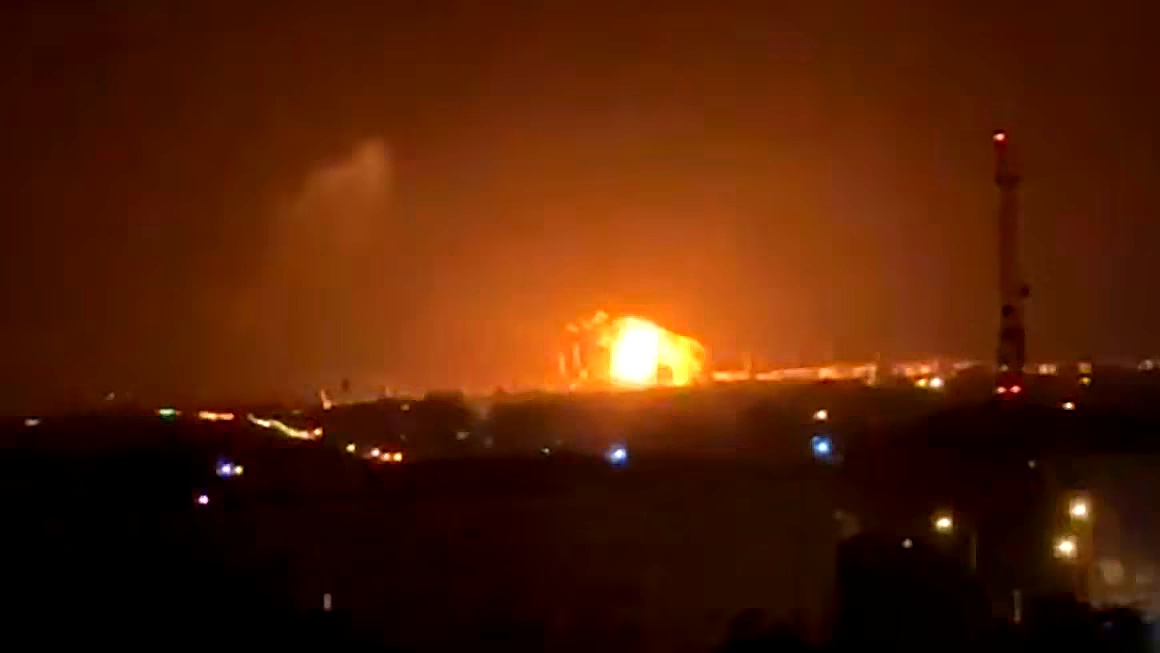
By Ukraine launched one of its most damaging drone offensives of the war overnight on March 22–23, 2026, striking the port of Primorsk on Russia’s Baltic Sea coast — the country’s single largest oil export hub — setting fuel tanks ablaze and forcing a complete halt of tanker loading operations. The strike sent thick black smoke billowing over the facility and triggered evacuations of port workers, with fires still burning hours after the initial impact.
Leningrad region Governor Alexander Drozdenko confirmed the attack via Telegram, stating that air defense systems intercepted more than 70 Ukrainian drones over the region between Sunday night and early Monday morning. Despite those interceptions, enough drones broke through to ignite at least one major fuel storage tank at the Transneft-operated terminal. Satellite imagery captured by Planet Labs PBC on March 23 showed smoke rising from multiple points within the terminal complex, while NASA’s Fire Information for Resource Management System detected blazes near both crude oil and petroleum product loading areas.
Ukraine’s General Staff officially confirmed the strike later in the day, stating that “both the tank farm and oil loading infrastructure were affected.” Radio Free Europe/Radio Liberty, citing satellite data, reported that as many as four tanks were simultaneously on fire at the facility — a significantly wider scope of damage than Russian officials initially acknowledged.
Key Facts at a Glance
- Target: Transneft-Port Primorsk oil terminal, Leningrad Oblast, Russia
- Capacity: Over 1 million barrels of oil exports per day; 60–75 million tons annually
- Drones launched: 249 fixed-wing drones intercepted across Russia overnight, per Russia’s Defense Ministry
- Drones over Leningrad region: 70+ intercepted; unknown number hit their targets
- Second target: Ust-Luga port (~700,000 bbl/day), 80km south — also suspended operations
- Third target: Bashneft-Ufaneftekhim refinery in Ufa, Bashkortostan (6–8M tons/year capacity)
- Aviation impact: Pulkovo Airport (St. Petersburg) suspended flights midnight–9am local time
A Port That Keeps Russia’s War Economy Running
Primorsk is no ordinary industrial facility. Operated by Transneft — Russia’s state-owned pipeline monopoly it sits at the western end of the Baltic Pipeline System and serves as the primary seaborne exit point for Urals crude oil flowing out of western Siberia. With an annual throughput capacity of up to 75 million tons, it accounts for a substantial portion of Russia’s entire oil export volume, making it a critical financial lifeline for the Kremlin’s war budget.
According to Ukrainian monitoring channel Exilenova+, Primorsk is also a central node in the so-called “shadow fleet” operations the network of aging, often uninsured tankers Russia uses to ship oil at above the G7-imposed price cap, effectively bypassing Western sanctions. The channel noted that the fire involved a light petroleum products terminal, meaning it likely affected stocks of gasoline, diesel, and jet fuel products with higher commercial value and direct military utility rather than crude oil alone.
Industry sources confirmed to Reuters that operations at Primorsk were suspended on the evening of March 22 and had not resumed as of noon on March 23. The nearby port of Ust-Luga which handles around 700,000 barrels of oil exports per day and lies approximately 80 kilometers south of Primorsk along the Gulf of Finland also suspended operations following the overnight barrage, though it remained unclear whether Ust-Luga itself sustained direct physical damage.
Related Reading on Attorneys Magazine
Global energy markets were already under pressure before this strike. The ongoing U.S.-Iran conflict has compounded supply chain uncertainty worldwide. Read our latest coverage: Israel-Iran Tensions Escalate After New Attacks, Fueling Energy Concerns.
The Wider Overnight Offensive: Refineries and Runways
The Primorsk strike was just one component of an unusually broad overnight drone campaign. Ukraine’s General Staff also confirmed a simultaneous attack on the Bashneft-Ufaneftekhim oil refinery in Ufa, located in Russia’s Republic of Bashkortostan — more than 1,400 kilometers from Ukraine’s border, underscoring how dramatically Ukraine has extended its strike range since the war began in 2022.
The Ufa refinery has a primary processing capacity of around 6–8 million tons of crude per year and, according to Ukraine’s General Staff, functions as a key fuel supply and storage facility for the Russian military. A fire was confirmed at the site following the strike.
Russia’s Defense Ministry claimed that a total of 249 Ukrainian fixed-wing drones were intercepted across the country overnight — one of the highest single-night drone figures reported since the war began. Targeted regions included Belgorod, Bryansk, Kursk, Leningrad, Moscow, and the Sea of Azov. In the village of Izora near Gatchina in the Leningrad region, a residential building had its windows blown out in three apartments following what local authorities attributed to a Russian air defense missile detonating mid-intercept. No casualties were reported at that location.
St. Petersburg’s Pulkovo International Airport temporarily halted all arrivals and departures around midnight due to the drone threat. At least 10 flights were delayed and 7 canceled before restrictions were lifted at around 9 a.m. local time.
Related Reading on Attorneys Magazine
The geopolitical and military dimensions of the U.S.-Iran conflict are reshaping the global security landscape at the same time. See our report: U.S. State Department Issues Worldwide Caution as American Military Operations in Iran Enter Fourth Week.
Ukraine’s Strategy: Hit the Money, Not Just the Military
The attack on Primorsk fits squarely into a deliberate and escalating Ukrainian strategy: target Russia’s energy export infrastructure to drain the revenue that funds Moscow’s military machine. Ukraine has argued consistently that every refinery damaged, every tanker delayed, and every oil terminal set ablaze directly reduces the hard currency Russia earns — currency it uses to pay soldiers, buy weapons, and sustain a war now in its fifth year.
The results are accumulating. According to Reuters calculations, cumulative Ukrainian drone strikes on Russian oil refineries have already reduced Russia’s domestic refining capacity by approximately 17%, equivalent to around 1.1 million barrels per day. Russian fuel exports have fallen to their lowest levels since February 2022.
This latest wave of strikes also came at a politically charged moment. The attack followed Ukraine’s public criticism of the Trump administration’s decision to waive certain Russian oil sanctions — a move Kyiv opposed as undermining the economic pressure campaign against Moscow. By launching this offensive simultaneously, Ukraine sent a clear signal that regardless of shifts in U.S. policy, it will continue to apply direct pressure on Russia’s energy revenues through military means.
Peace Talks Stall as Attacks Intensify
The Primorsk offensive unfolded against a backdrop of stalled diplomatic efforts. U.S.-mediated peace talks between Ukraine and Russia — which had been progressing through meetings in Miami — have been postponed amid the escalating U.S.-Iran conflict. Ukrainian President Volodymyr Zelensky confirmed that while the U.S. proposed a trilateral meeting on American soil, Russia declined to participate. Zelensky also stated publicly on March 23 that Ukrainian intelligence believes Russia may be preparing a new large-scale offensive, urging citizens to remain alert to air raid warnings.
As diplomacy remains frozen, both sides are doubling down on the military and economic pressure track. Russia launched a combined missile and drone assault on multiple Ukrainian cities overnight on March 24 — the day after the Primorsk strike — continuing its near-daily pattern of attacks on Ukrainian civilian infrastructure, power grids, and urban centers.
For Russia, the loss of even temporary export capacity at Primorsk and Ust-Luga is a tangible economic blow. For Ukraine, the ability to set fire to a port complex over 675 miles from its nearest border — and to simultaneously strike a refinery nearly 870 miles away in Bashkortostan — is a demonstration of both military reach and strategic resolve that carries its own message at any future negotiating table.
Authority Sources
- Reuters — Confirmed suspension of operations at Primorsk and Ust-Luga ports via industry sources.
- Bloomberg — Reported satellite imagery from NASA FIRMS confirming fires at Primorsk crude and product terminals.
- Kyiv Independent — Carried Ukraine’s General Staff official statement on the Primorsk and Ufa refinery strikes.
- Kyiv Post — Reported satellite imagery showing up to four simultaneous tank fires at Primorsk.
- The Maritime Executive — Detailed the Primorsk and Ust-Luga suspension and the broader Ukraine-Russia energy infrastructure targeting context.
