
 By
By The Physical Mechanics: Backward Fall vs. Forward Fall
The distinction starts with physics, not paperwork. When someone slips, their foot loses grip on the surface beneath them think of stepping on a wet grocery store floor or black ice in a parking lot. That foot shoots forward, and the body collapses backward. As a result, slip and fall victims tend to land on their back, hips, or the back of their head.
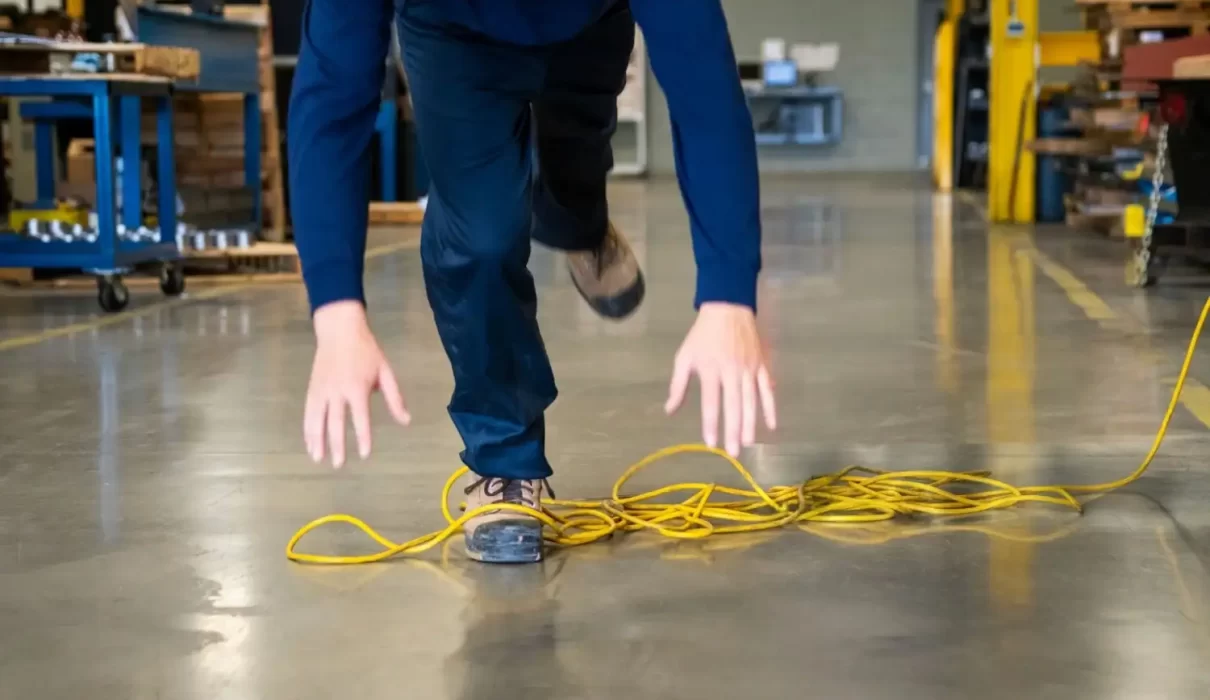
A trip works differently. Your foot catches on something a raised sidewalk crack, a loose floor mat, a door threshold that’s slightly too high and your forward momentum keeps going while your foot stops. The body pitches forward. Trip and fall victims frequently land on their hands, wrists, knees, and face because they instinctively reach out to break the impact.
This difference in body mechanics is not just interesting anatomy. It directly influences which injuries you report to doctors, how surveillance footage gets interpreted, and the strategy a premises liability lawyer uses when building your case.
Common Causes: Slick Surfaces vs. Structural Hazards
Slip and fall accidents typically involve temporary or transient hazards a spill that hasn’t been cleaned, a floor that’s still wet after mopping, rainwater tracked in near an entrance. These situations are often short-lived, which creates a unique challenge: your lawyer has to show the hazard existed long enough that the property owner knew or should have known about it.
Common slip and fall causes include:
- Spilled liquids in retail stores and restaurants
- Freshly waxed or mopped floors without warning signs
- Ice or snow on walkways and parking lots
- Leaking refrigeration units in grocery stores
- Shower or pool deck surfaces without anti-slip coating
Trip and fall accidents are usually linked to physical obstructions or structural defects hazards that do not disappear on their own. A cracked sidewalk does not fix itself overnight. A broken step handrail stays broken for weeks. This persistence matters because it strengthens the argument that the property owner had constructive knowledge of the hazard long before your fall.
Common trip and fall causes include:
- Raised or cracked sidewalk panels
- Uneven thresholds between floor surfaces
- Loose, bunched, or curled carpeting or mats
- Debris or merchandise left in walkways
- Potholes in parking lots
- Missing or broken stair nosing
Premises Liability Law: How Negligence is Proven in Each Case
Both slip and fall and trip and fall claims fall under premises liability law. The legal framework is the same you must prove the property owner was negligent but the route to proving negligence diverges depending on the type of hazard.
In slip and fall cases, the key question is usually: how long was the hazard present? Surveillance footage, employee cleaning logs, and witness accounts all help establish a timeline. If a liquid sat on the floor for forty-five minutes before someone fell, courts are more likely to find the owner had constructive knowledge meaning they should have found and fixed it, even if no one specifically reported it.
In trip and fall cases, the focus often shifts to code compliance and maintenance records. A raised sidewalk panel in violation of the Americans with Disabilities Act (ADA) or local building codes gives a strong signal that the owner failed their duty of care. Courts will look at whether the property was inspected regularly, whether complaints were documented, and whether prior incidents occurred at the same location.
The standard of care in both cases requires the property owner to take reasonable steps to protect visitors. The exact definition of ‘reasonable’ depends on the type of visitor whether they were an invitee (like a customer), a licensee (like a social guest), or a trespasser and this classification affects how aggressively a premises liability lawyer can pursue the claim.
Evidence That Wins Fall Cases
The evidence strategies for slip and fall and trip and fall claims look different because the hazards are different. Here is what matters most in each type:
For Slip and Fall Claims:
- Security camera footage showing how long the spill was present
- Maintenance and cleaning logs to check if protocols were followed
- Photos of the floor surface and any missing warning signs
- Witness statements from employees or bystanders
- Incident reports filed at the time of the accident
For Trip and Fall Claims:
- Photographs and measurements of the defect (height differentials, crack dimensions)
- Building code violation reports or prior inspection records
- Evidence of prior complaints about the same hazard
- Expert testimony from engineers or safety consultants
- Medical records confirming injuries consistent with a forward fall
One often-overlooked detail: seek medical attention immediately, even if pain feels minor. Soft-tissue injuries and fractures from fall accidents can take 24 to 48 hours to become symptomatic. A documented medical visit creates a direct link between the fall and your injuries without it, the insurance company will argue the injury happened elsewhere.
What Are Fall Injury Claims Worth?
Settlement amounts depend heavily on the severity of injuries, the strength of negligence evidence, and jurisdiction. That said, national data provides some useful benchmarks:
- Minor soft-tissue injuries (sprains, bruising): $10,000 – $25,000
- Moderate injuries (fractures, ligament tears): $25,000 – $100,000
- Severe injuries (TBI, spinal cord damage, surgery required): $100,000 – $500,000+
- Catastrophic or wrongful death cases: settlements can reach seven figures
Factors that increase the value of a fall injury claim include clear surveillance footage of the hazard, a prior incident history at the same location, documented building code violations, significant lost wages, and a long or difficult recovery period. Comparative negligence laws in most states which reduce your award if you were partly at fault make it especially important to have a clear, well-documented account of exactly what caused the fall.
What to Do Right After a Fall on Someone Else’s Property
The actions you take in the first hour after a fall are critical. Here is a practical step-by-step:
- Do not leave the scene without documenting the hazard.
- Take photos and a short video of what caused the fall floor surface, obstruction, lack of signage.
- Report the incident to the property manager or store staff and ask for a written incident report.
- Get names and contact information from any witnesses.
- See a doctor the same day, even if you feel fine.
- Do not post about the fall on social media.
- Contact a premises liability lawyer before speaking with the property owner’s insurance company.
Frequently Asked Questions (FAQ)
Q: What is the main legal difference between a slip and fall and a trip and fall?
A: The core distinction is the direction of the fall and what caused it. A slip and fall results from a loss of traction typically from a wet or slick surface causing the victim to fall backward. A trip and fall occurs when a foot catches an obstruction, sending the victim forward. These mechanics influence the type of evidence needed, the injuries sustained, and how a lawyer argues the property owner’s negligence.
Q: Can I file a premises liability claim for both a slip and a trip in the same accident?
A: Yes, if the circumstances support it. For example, stepping on a wet mat that then bunched under your foot could involve elements of both. A qualified premises liability lawyer will assess the facts and identify the strongest theory of liability for your specific situation.
Q: How long do I have to file a slip and fall or trip and fall lawsuit?
A: The statute of limitations varies by state. Most states allow two to three years from the date of the accident to file a personal injury lawsuit. However, if the fall happened on government-owned property (a public sidewalk or government building), the window can be as short as six months. Missing this deadline typically bars you from recovering any compensation.
Q: Does it matter if the property owner fixed the hazard after my fall?
A: Generally, evidence of a subsequent remedial measure (repairing the hazard after an injury) cannot be used as direct proof of negligence in most courts under rules of evidence. However, it can sometimes be used for other purposes, and it is still worth documenting. Tell your attorney about any repairs you observed.
Q: What if I was partly at fault for the fall can I still get compensation?
A: In most states, yes. The majority of states use a comparative negligence system, meaning your compensation is reduced proportionally to your share of fault. If you were 20% at fault and your damages are $100,000, you would recover $80,000. Some states bar recovery entirely if you are more than 50% at fault, so understanding your state’s rules is important.
Q: Are trip and fall cases easier to win than slip and fall cases?
A: Trip and fall cases can be somewhat more straightforward when the hazard is a structural defect, because the physical evidence (a cracked sidewalk, a missing handrail) tends to persist and is easier to photograph and measure. Slip and fall cases often require more time-sensitive evidence gathering surveillance footage must be preserved quickly before it is overwritten. Neither type is automatically easier; the strength of the case depends on the specific facts.