
 By
By The Case That Captured America — And Why It Matters
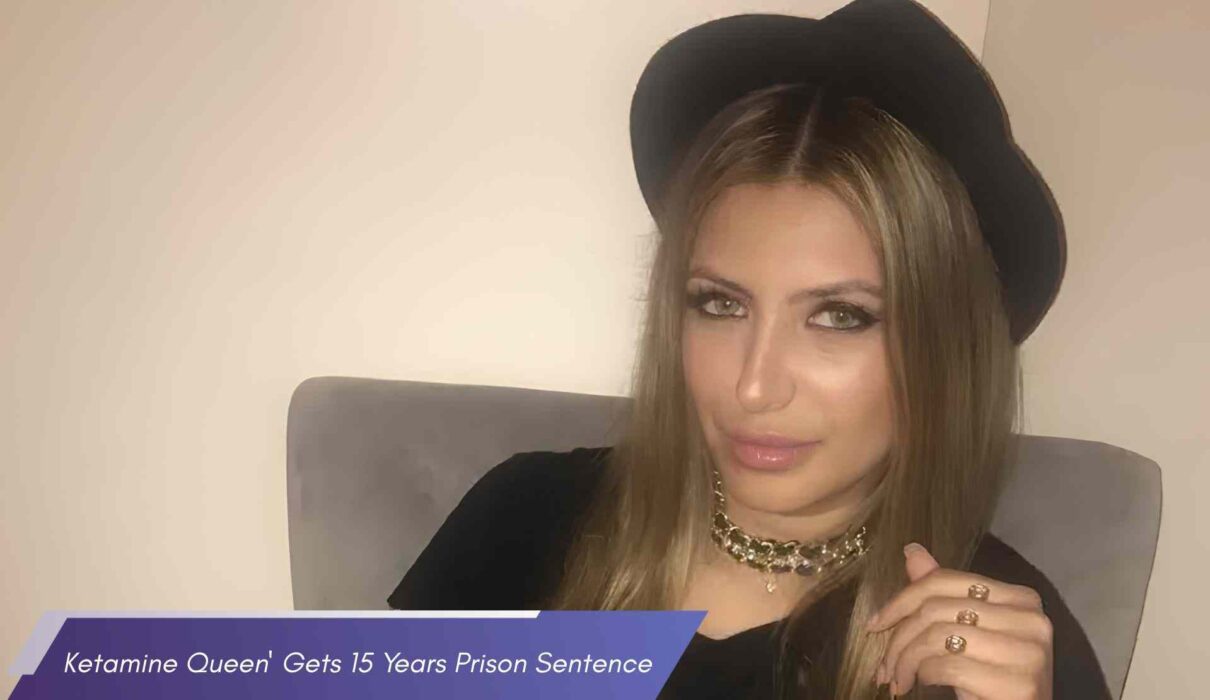
The ‘Ketamine Queen,’ a Los Angeles-based woman who appeared before the Federal court under this name due to her involvement in a drug-dealing ring that led to the death of Matthew Perry, the famous Friends actor, received a 15-year prison sentence. The trial, spanning three years from April 2023 to April 2026 in the Central District Court of California, concluded in the month of April 2026; it became a hot topic not just because of Matthew Perry’s popularity but also because of the question: does who you are make the wheels of justice spin faster?
Jasveen Sangha, age 42, a British-American citizen from North Hollywood, pled guilty in September 2025 to a total of five federal charges. One of those included the most severe drug charge under federal statutes: drug distribution leading to the death of someone from ketamine abuse. Sangha did not sell drugs to just anybody; she ran what federal agents called a complete ‘drug-selling enterprise’ from her house, equipped with various types of drugs such as ketamine, methamphetamine, cocaine, and even Xanax tablets.
“When a celebrity or high-profile figure is the victim, the wheels of justice suddenly seem very well-oiled. For the rest of America, those same wheels barely turn.”
Matthew Perry, who earned fame for portraying the witty character of Chandler Bing on Friends, had been struggling with addiction issues for decades. For a long time before his death, Matthew had been receiving ketamine infusions for treating depression. However, while the ketamine infusions received under medical supervision helped him deal with his problems, the one that caused his untimely demise in October 2023 was self-injected without professional oversight. More precisely, this ketamine dose, which led to Matthew’s death, was acquired illegally and injected at his residence in Los Angeles from a distribution network associated with Sangha’s premises in North Hollywood.
It was discovered that Matthew was found dead in his hot tub as a result of a fatal reaction to the use of ketamine. The tragic outcome of the case resulted in a federal indictment against five people including the actor’s personal assistant, two doctors, an intermediary, and Sangha herself.
Inside the Sentencing: No Remorse, Maximum Punishment
Sangha wept in court as victims’ impact statements were given by family members of Perry. The remarks were targeted to the accused woman, who was described as the head of the ketamine distribution chain. Perry’s step-mother Debbie Perry filed an impact statement describing the harm caused by Sangha ‘as irreversible’. She pleaded the presiding judge to mete out the harshest possible sentence that would keep her behind bars.
‘You caused all of this. It was you, who despite having the skills of making money, took up that method that harms others,’ pleaded Debbie Perry to the court. ‘Please punish this heartless woman by imprisoning her for as long as possible.’
In her chance to address the court, Sangha admitted that her actions had destroyed many people’s lives and expressed great remorse for her mistakes. However, Judge Sherilyn Peace Garnett made it known that there had been no remorse on Sangha’s behalf throughout the past four years after her arrest. Her behavior had not changed even after the involvement of the police. Sangha was facing a potential sentence of 65 years in federal prison. Instead, she got 15.
The defense team for Sangha tried arguing her case for lenience, citing her lack of criminal history and admitting to her wrongdoing. On the other hand, prosecution officials cited her continued drug dealing efforts even after being charged with a crime and admitting guilt as evidence of her fake remorse.
Finally, Sangha confessed, according to the terms of her plea deal, that she had sold the drug to Cody McLaury, a guy who was not related to Matthew Perry, in August 2019. Hours after buying drugs from Sangha, the man died. While Perry may be the celebrity involved, his death should not overshadow the other victims whose deaths were caused by her illegal business.
The Five People Who Failed Matthew Perry
Sangha is among the five suspects implicated in the case involving the death of Perry. The five pleaded guilty, but each of their sentencing periods varies significantly, an issue which has raised eyebrows both in legal circles and among members of the general public.
Dr. Salvador Plasencia provided Perry with ketamine during the last few months before Perry’s death. In December 2025, Plasencia received a sentence of 30 months of incarceration in a federal penitentiary. Another physician, Dr. Mark Chavez of San Diego, sold the drug ketamine to Plasencia following its procurement through fraudulent means from his clinic and was sentenced to only eight months under house arrest, and three years of probation.
Kenneth Iwamasa, who is Perry’s personal assistant living with him and both buying and injecting him with ketamine, was waiting for his sentencing when Sangha went to court. The lawyer representing Iwamasa is pleading for a delay in his sentencing. Eric Fleming acted as an intermediary for this crime, obtaining ketamine from Sangha and selling it to Perry; he will be sentenced in June 2026.
The judge, Garnett, has admitted that she is “calibrating” her sentences for all five offenders in a way that they can make sense together. This delayed approach to justice is indicative of not only the complicated nature of drug trials in the US, but also the logistics involved.
Who Is Judge Sherilyn Peace Garnett? The Woman Who Handed Down the Sentence
In the case of Matthew Perry, the sentencing phase was conducted by United States District Court Judge Sherilyn Peace Garnett, who is a federal judge who has been in the American judicial system for more than thirty years, moving from prosecuting cases to becoming a member of the highest courts in the land.
Judge Garnett was born in 1969 in Grand Cayman and holds a bachelor’s degree from the University of California, Riverside, graduating with honors in 1991, and a Juris Doctor from Harvard Law School in 1995. She practiced law in Chicago before moving to Los Angeles, where she worked as a law clerk for a federal district court judge before joining the United States Attorney’s Office for the Central District of California in 2001.
During her tenure, she served in various capacities as a federal prosecutor, which include her appointment as the Deputy Chief of the General Crimes Section, Chief of the General Crimes Section, and Domestic Terrorism Coordinator of the Central District, a position she occupied between 2008 and 2011. Additionally, she has been lecturing in Legal Writing and Oral Advocacy at the University of Southern California Gould School of Law from 2008 to 2010.
In 2014, Governor Jerry Brown of California nominated her to serve on the Los Angeles County Superior Court, where she heard and determined misdemeanor and felony cases, conducting more than 30 bench trials during her service. She has also served as a Justice Pro Tem of the California Court of Appeal. On December 10, 2021, President Joseph Biden nominated her to the United States District Court for the Central District of California. The Senate confirmed her nomination on April 27, 2022, by a vote of 62 to 33.
How She Works: Principles on the Bench
According to a recent interview with the California Lawyers Association, the judicial philosophy that Judge Garnett follows can be described by three principles, namely justice, listening carefully, and civility. She insists that everyone who walks into her office – regardless of whether he or she is an attorney or a litigant – needs to be heard and treated fairly. Moreover, Judge Garnett openly advocates civility in court, stating that personal attacks are useless and do not bring any value to the discussion.
As a former prosecutor for the United States Department of Justice, Judge Garnett clearly understands how the criminal process works from the government’s perspective – as exemplified by her tendency to impose hefty sentences but always taking into consideration a particular defendant’s position in a crime. In the Perry case, it was done by balancing the sentences imposed on five different individuals involved in the very same criminal activity.
This paper also refers to a previous article by the Pasadena Star-News newspaper which highlights that Judge Marsha J. Slavitz once ordered some former graduates of Caltech to spend more time in the federal penitentiary, showing that she is not afraid to impose strict punishments if she feels like it. She is known in the legal community as a meticulous and principled judge who strictly interprets the laws and punishes defendants for their deeds.
For more on federal sentencing and criminal law developments, visit AttorneysMag.com.
Two Tiers of Justice: What Everyday Americans Face in the Courts
“Justice delayed is justice denied” — William E. Gladstone. For millions of ordinary Americans, this is not a quote. It is a lived reality.
While the Matthew Perry case was handled expeditiously within the U.S. federal judicial process from October 2023 to April 2026, this is far from the norm for the average American whose life has become entangled in the judicial process. The Matthew Perry case received ample government funding, media attention, and the will to take quick action, while average Americans with valid civil claims and criminal cases wait for years, even decades, before their day in court.
The Numbers Tell a Damning Story
As per the US Court system, the total number of civil cases pending for more than three years has increased by 346% between 2004 and 2024, from approximately 18,000 to more than 81,600 cases. Currently, the national average delay from the filing of a civil suit until its trial exceeds two years. However, in cases when courts face understaffing, it can take anywhere between three to four years and even more. According to a study conducted in 2023, over 75% of judges and court professionals experienced delays in hearings within that very year.
The Federal Court system does not have any comprehensive judgeship expansion bill approved by the government since 1990. In 2023, the Judicial Conference of the United States proposed to the Congress an addition of 66 new district judgeships for addressing the existing problem. In 2024, the US Senate adopted the JUDGES Act that aimed at solving the issue; however, it was insufficient. Many judicial districts face serious problems related to understaffing and currently exist in the state of ‘judicial emergency.’
Real People, Real Consequences
These are not mere numbers but represent individuals behind those delays — victims demanding justice, defendants seeking the benefit of the speedy-trial provision, and families demanding answers about the fate of their loved one.
One example is that of Kalief Browder, an African-American teenager from the Bronx who was accused of robbing a backpack in 2010. Due to inability to pay for bail, Kalief was imprisoned in Rikers Island and remained there in prison for more than three years without having gone to trial; during the three-year period of his incarceration, he had to spend more than 800 days in isolation. The charges were finally dropped and he was released in 2013; however, the suffering of imprisonment without conviction proved too much to handle for him, and he killed himself two years later.
Victims suffer when there are delays in court hearings as well. According to the National Center for Victims of Crime, prolonged litigation exposes the victim to intimidation and re-victimization, as well as a complete lack of faith in the judicial system. Victims end up giving up on the process entirely and become frustrated with the justice system because of the delays.
In the case of a family that is going through custody battles or divorce, which requires immediate judicial intervention, delays can cause months of agony with no solution in sight, especially when there are innocent children involved. In small businesses or individuals seeking monetary compensation, lengthy litigation processes can take an immense toll on their finances, with the costs being so high that settlements have to be reached.
The Public Defender Crisis
To make matters worse, there is an overall lack of public defenders and prosecutors across the country. Both professionals are abandoning the legal profession in droves due to the unmanageable amount of cases they must deal with and compensation that does not take into account the difficult nature of their jobs. Public defenders cannot focus on each case when they are already swamped with other clients. Prosecutors can only handle so many cases at once, causing cases to backlog in the process.
Celebrity Justice: When Fame Buys Speed and Sometimes Immunity
High-profile defendants often have access to resources the average American cannot imagine: elite legal teams, PR firms, and the media spotlight — all of which can accelerate, shape, or even derail criminal proceedings.
Matthew Perry’s case is exceptional since Perry did not act as the defendant but rather as the plaintiff. However, there is a recurring trend within the US judicial system where celebrities or influential people have an effect on how quickly and decisively a case is addressed. The trend can work to the advantage or disadvantage of the famous person.
When Fame Helps Defendants Escape Accountability
None other than the O.J. Simpson murder trial in 1995 epitomizes this phenomenon of the American legal system better. An NFL Hall of Fame star and a well-known personality of Hollywood, Simpson was accused of the killing of his ex-wife, Nicole Brown Simpson, along with her boyfriend, Ronald Goldman. There was ample evidence of the murders – bloodstained gloves, a known record of domestic abuse, and DNA analysis. Nevertheless, Simpson managed to hire some top-notch lawyers for his defense, including Johnnie Cochran and Robert Kardashian Sr., whom media called the ‘Dream Team.’ Despite lasting for nine months, from January through October 1995, the verdict turned out to be in favor of O.J. Simpson, who was found not guilty of the murders. However, just two years down the line, a civil court convicted O.J. Simpson of causing death to Nicole and Ron and ordered him to pay damages of $33.5 million.
Indeed, there have been discussions about whether wealth and fame have ever enabled some defendants to buy results that are otherwise unattainable by common citizens in the United States. While for many African Americans, the OJ Simpson acquittal was proof of a long-existing problem within the police force in the country, the Simpson case is also a perfect example for lawyers and social justice activists to illustrate their points regarding the impact of celebrity and financial means of some suspects on court trials.
R. Kelly provides another interesting example of the role of celebrity in criminal investigations and prosecution cases. Although accusations of sexual abuse of minors have been publicly discussed since the 1990s, it took almost two decades before R. Kelly’s first conviction for racketeering and sex trafficking in the U.S. The singer was indicted on child pornography charges in 1998, but he was not tried until 2008, ten years after the case had emerged, and was acquitted at his first trial. It was only in 2021 that New York prosecutors managed to secure Kelly’s conviction for several offenses and receive a thirty-year prison sentence. The victims in this case were predominantly young black women and girls.
When Fame Accelerates Justice for Victims and Defendants Alike
The Weinstein scandal is an example where things work out differently. In October 2017, when the New York Times released a scathing investigation into the long history of sexual assault allegations made against the prominent Hollywood producer Harvey Weinstein, the response from the authorities came swiftly. Indeed, Weinstein was soon fired from the company he led, was arrested within a year of his first conviction, and was on trial in 2020 – an incredibly quick process for a case of this magnitude at the federal level. After being convicted of rape and criminal sexual assault charges in New York and sentenced to 23 years in prison, he received another sentence of 16 years in California after going through trial again there.
Even in the Weinstein example, there are disturbing currents running beneath the surface. The legal team succeeded in convincing the courts that the overwhelming media coverage would prevent him from receiving a fair trial. In a New York Court of Appeals decision, Weinstein’s initial conviction was overturned in 2024 on the grounds that the trial judge had biased the jury by admitting the testimonies of women who were not formally charged. A new trial was held, leading to his re-conviction, yet it highlighted how the very same media scrutiny that expedited justice in the case of a well-known defendant could also be a weakness in ordinary cases.
The indictment of Martha Stewart for her lies to federal agents regarding the trading of stocks in 2004 is an example of a third facet in which, at times, individuals who become famous are persecuted all the more by the prosecutors on account of their fame and the fact that they serve as political as well as legal targets. Martha Stewart had been sentenced to five months of imprisonment in a federal prison.
For in-depth coverage of high-profile legal cases, visit AttorneysMag.com.
The Bottom Line: One Case, Two Americas
Jasveen Sangha’s sentencing in the Matthew Perry case highlights the issue of accountability, and the case represents the injustice that is deeply entrenched in the very same system. In the same American justice system, both exist simultaneously. A prosecution initiated by the murder of an iconic personality took place quite promptly resulting in a real prison term for all members of the supply chain. However, in countless numbers of courtrooms around the country in each state, regular Americans will have to endure several years before receiving any kind of justice not due to the fact that these cases were any less deserving of attention, but simply because they lack the means, the visibility, and the celebrity name for their cases to be handled so smoothly.
It took Kalief Browder almost three years in jail before being found not guilty of a charge he had not even committed, whereas Matthew Perry’s family did not take more than three years to obtain a guilty verdict followed by fifteen years of imprisonment for the guilty.
So long as the country continues to have a system of laws where the speed and efficiency of delivery depend on what you are, whom you harm, and your wealth, then “Equal justice under law,” written above the Supreme Court of the United States, will always be something to aspire to rather than reality.
Justice should not depend on whether your name is on a marquee or on a court docket buried beneath 80,000 others. Every American deserves the same urgency.
References & Further Reading:
1. U.S. Department of Justice — Matthew Perry Ketamine Case: justice.gov
2. Federal Judicial Center — Judge Sherilyn Peace Garnett: fjc.gov
3. U.S. Courts — The Need for Additional Judgeships: uscourts.gov
4. PA Times — Justice Delayed: The Growing Impact of Judicial Backlogs: patimes.org
5. California Lawyers Association — Interview with Judge Sherilyn Peace Garnett: calawyers.org
6. Vera Institute — Millions of People Miss Their Court Date: vera.org
7. Brennan Center for Justice — Justice Delayed, Justice Denied: brennancenter.org
8. Bureau of Justice Statistics — Federal Justice Statistics 2023: bjs.ojp.gov
9. AttorneysMag.com — Legal Analysis and Court Watch: attorneysmag.com
