
 By
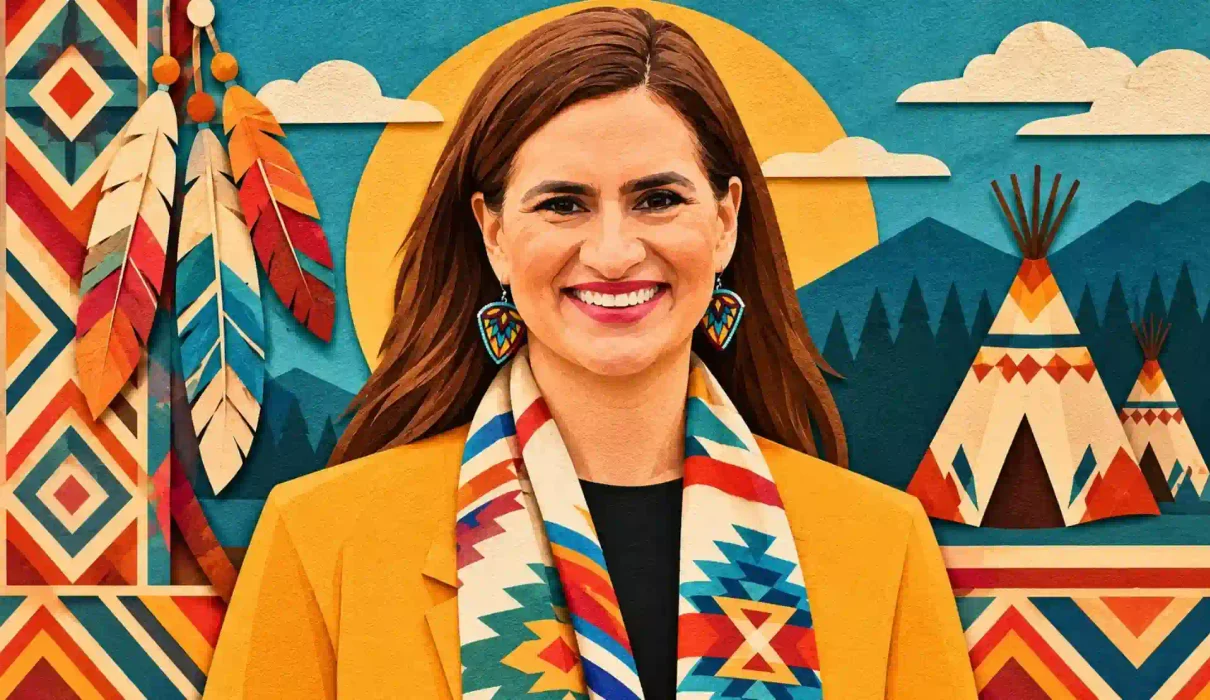
How Minnesota’s lieutenant governor, raised by a single mother and shaped by public programs, became the state’s next senator and the first Native American woman elected to the chamber
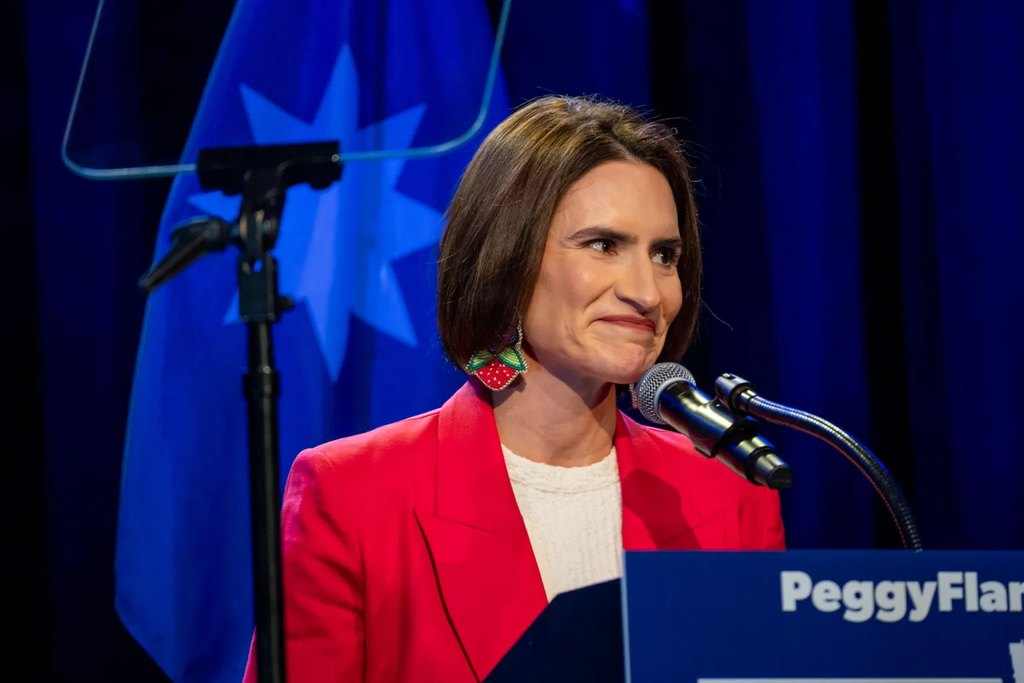
Peggy Flanagan, Minnesota’s lieutenant governor, has been elected to the U.S. Senate. The Associated Press declared her the winner at 12:07 a.m. Eastern on Wednesday, November 4, 2026, after she defeated Republican Michele Tafoya in the race to succeed retiring Democratic Sen. Tina Smith. With 99% of the vote counted, Fox 9 reported that Flanagan held 53.7% to Tafoya’s 43.6%.
Flanagan is a citizen of the White Earth Nation, a band of Ojibwe. She is set to become the first Native American woman elected to the U.S. Senate, according to the Minnesota Reformer. Her route to Washington ran through a childhood supported by public assistance, a Minneapolis school board seat at 25, a rare Native voice in the state House and two terms as lieutenant governor under Gov. Tim Walz.
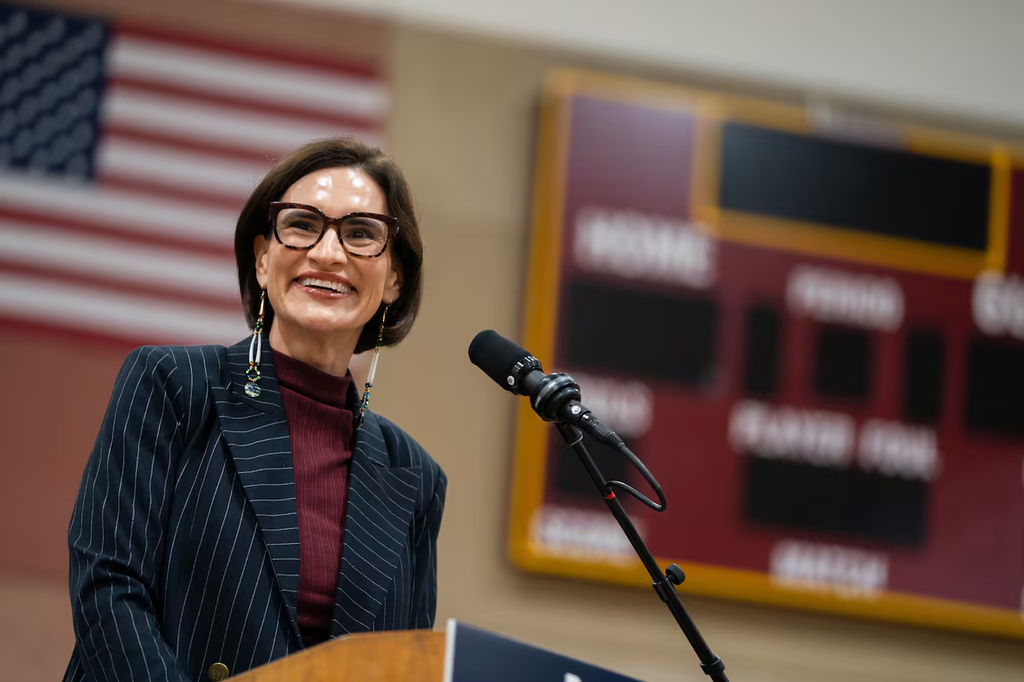
Peggy Flanagan at a Glance: Key Facts
| Detail | What to know |
|---|---|
| Current office | 50th lieutenant governor of Minnesota, serving since 2019 |
| Party | Democratic-Farmer-Labor (DFL), Minnesota’s Democratic party |
| Born | September 22, 1979, in St. Louis Park, Minnesota |
| Tribal citizenship | White Earth Nation (Ojibwe); of Irish and Ojibwe descent |
| Education | University of Minnesota, 2002, American Indian studies and child psychology |
| Earlier offices | Minneapolis school board (2005 to 2009); Minnesota House (2015 to 2019) |
| Senate race | Defeated Republican Michele Tafoya, 53.7% to 43.6% with 99% counted |
| Seat | Succeeds Sen. Tina Smith, who did not seek reelection |
| Historic marker | First Native American woman elected to the U.S. Senate |
Peggy Flanagan’s Early Life: A Single Mother and Public Programs
Flanagan was born in St. Louis Park, an inner-ring suburb of Minneapolis, where her mother, Patricia Flanagan, raised her. According to her biography, her mother was a phlebotomist and a lifelong DFL activist who had worked for Hubert Humphrey. Her father, Marvin Manypenny, was a longtime activist who spoke out against the loss of White Earth land.
Money was tight. The 74 reported that her mother got by with help from Medicaid, a Section 8 housing voucher, food stamps, state child care assistance and free or reduced-price school lunches. Flanagan has told that story on the campaign trail and in office. At her 2019 inauguration she described herself as the kid with the different colored lunch ticket.
School was where she first noticed who was missing. She told Sahan Journal she felt “invisible in my own classroom” because Indigenous people were barely represented in St. Louis Park schools. That experience later fed her push for Indigenous curriculum. The 74 reports that students in the district can now study Ojibwe.
She graduated from St. Louis Park High School and earned a bachelor’s degree from the University of Minnesota in 2002, with a focus on American Indian studies and child psychology.
From the Wellstone Campaign to the Minneapolis School Board
Flanagan’s political education started in college. She worked on Sen. Paul Wellstone’s campaign and went on to organize the urban Native American community, according to MPR News. Wellstone’s organizers, The 74 noted, put her to work mobilizing Native voters in the Twin Cities.
In 2004, at 25, she ran for the Minneapolis school board. The 74 reported that she entered the race expecting to lose, and hoping to force a conversation about the system’s long record of failing American Indian students. She won, becoming the board’s youngest member, and served from 2005 to 2009, state legislative records show.
She then ran the Minnesota office of the Children’s Defense Fund, a child advocacy group. That job was listed as her occupation when she first won a legislative seat.
Peggy Flanagan in the Minnesota House: A Rare Native Voice
Flanagan won a special election for House District 46A on November 3, 2015. She ran unopposed and was sworn in on November 9, according to her biography. At the time only two other Native Americans sat in the House: Susan Allen, a Democrat, and Steve Green, a Republican.
The national stage came next. On July 28, 2016, she became the first Native American woman to address the convention of a major American political party, speaking at the Democratic National Convention. She served in the House until 2019.
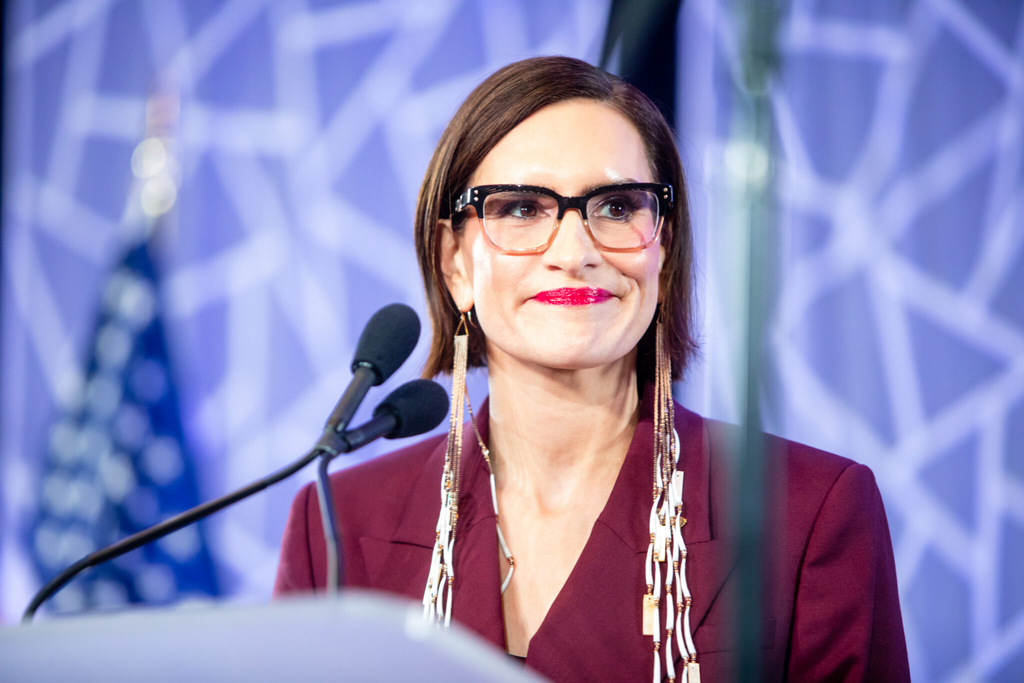
Peggy Flanagan as Lieutenant Governor: The Policy Record
Walz picked Flanagan as his running mate at an unusually early moment in the 2018 cycle, pairing a rural white Democrat with an urban Native one. They won. She was sworn in on January 7, 2019, becoming the first Native woman in the Lower 48 states to serve as a state’s lieutenant governor. They were reelected in 2022.
Her portfolio leaned heavily on children and families. The 74 describes her as a driving force behind universal free school meals, expanded paid family and medical leave and a larger state child tax credit. Flanagan has also called free school meals one of the most important things she has worked on, saying they remove shame and stigma for kids.
Where Flanagan’s Record Shows Up
| Issue | What it does | Flanagan’s role |
|---|---|---|
| Universal free school meals | Breakfast and lunch offered to every public school student | Cited by The 74 as a driving force; she has said participation rose about 30% |
| Child tax credit | State credit for families raising children | Pushed alongside Walz, per The New Republic as quoted by The Week |
| Paid family and medical leave | State program for time off after a birth, adoption or serious illness | Cited by The 74 as an effort she helped extend |
| Missing and Murdered Indigenous Relatives Office | State office focused on cases involving Indigenous people | Credited by Politico, via The Week, with establishing the first such office in the country |
| Cash, food and child care aid | Support for low-income households | Politico, via The Week, says she increased this assistance |
Sources for the table: The 74, The Week and Sahan Journal.
Peggy Flanagan’s Advocacy for Native Americans
Flanagan’s Anishinaabe name, according to Minnesota Monthly, means “Speaks with a Clear and Loud Voice Woman.” Much of her record has been about making Native people visible in public systems that overlooked them.
- Missing and Murdered Indigenous Relatives. Politico credited her with establishing the nation’s first state office devoted to the crisis, as quoted by The Week.
- Schools and curriculum. She told Sahan Journal that the push for Indigenous curriculum came directly from tribal leaders, who made it a top priority.
- Boarding school history. The 74 reports that she regularly points students to a book of letters from American Indian boarding schools, a system that stripped Native children of language and culture. Read the reporting.
- Accountability to tribes. She has described a cultural expectation she calls the “auntie burden,” the extra scrutiny that comes with being a Native elected official. Indian Country Today reported that her tribal ties add accountability to the state’s tribal nations.
The symbolism has been hard to miss. When she won the August primary, ICT reported, she delivered her victory speech in beaded moccasins and earrings. At the general election celebration she opened with “Miigwech,” the Ojibwe word for thank you, according to MPR News.
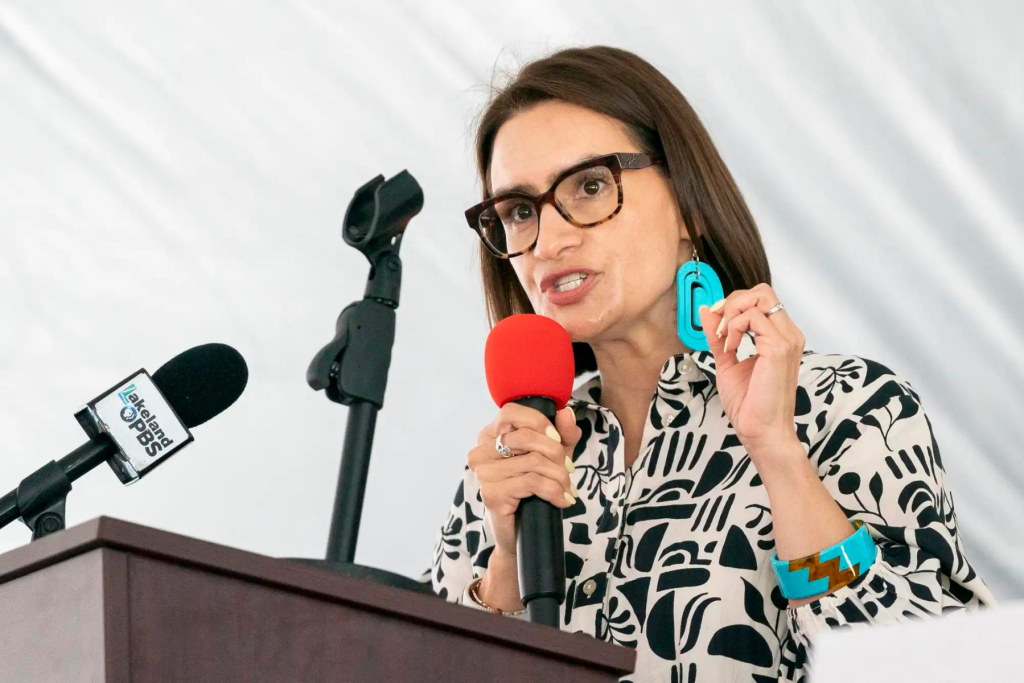
Peggy Flanagan’s Social Services Agenda
Flanagan does not present social programs as abstractions. She says she is a product of them. At her inauguration, as Sojourners reported, she said Medicaid saved her life when she was a child with asthma. Her campaign biography credits Section 8 housing, SNAP and child care assistance with keeping her family afloat.
That is the thread running through her Senate pitch: free school meals, child tax credits, paid leave, higher wages and affordable child care. Minnesota Monthly summarized her career as organizing for higher wages, expanding free school meals and pushing for paid family leave.
Her campaign also leaned on an economic message she called the many versus the money. After the primary, Common Dreams reported, she told supporters the many had just won.
How Peggy Flanagan Won the Minnesota Senate Race
Smith’s decision not to seek reelection opened the seat. Flanagan entered the race on February 13, 2025. The path to the nomination went through a contested DFL primary against U.S. Rep. Angie Craig.
| Date | Milestone |
|---|---|
| February 13, 2025 | Flanagan announces her Senate candidacy |
| May 30, 2026 | DFL state convention in Rochester endorses Flanagan by acclamation; Craig skips the endorsement process |
| July 27, 2026 | Second primary debate; first lady Gwen Walz endorses Craig the same day |
| August 11, 2026 | Flanagan wins the DFL primary with 58.7% of the vote; Craig concedes |
| November 3, 2026 | General election against Republican Michele Tafoya |
| November 4, 2026 | AP declares Flanagan the winner at 12:07 a.m. ET |
Craig had told delegates she was bowing out of the endorsement fight because turnout at the convention was too small to reflect the primary electorate, KNSI reported. The primary was expensive and sometimes bitter. Ballotpedia counted $20.6 million in outside spending supporting or opposing Craig or Flanagan through August 10, and Flanagan’s own campaign raised about $6.5 million, according to AP reporting carried by KFGO. When Craig conceded, she offered Flanagan her “full and complete support”.
In the general election, Flanagan faced Tafoya, a former NFL sideline reporter and Twin Cities radio host. Forecasters rated the race Likely Democratic after the primary, per Ballotpedia, but Newsweek reported Tafoya polled within the margin of error in early October. Republicans have not won a U.S. Senate race in Minnesota since 2002, ICT noted.
Flanagan won by roughly 10 points. Fox 9’s county map shows Tafoya led in 72 of Minnesota’s 87 counties, mostly rural ones, while Flanagan’s margins in the most populous counties carried the state. AP noted that her win held a seat Democrats could not afford to lose as the party tried to flip control of the Senate, and that it gave progressives a notable victory in a year when the party’s left flank has been ascendant.
For wider context on the midterm results, see Attorneys Magazine’s coverage: Democrats Retake Congress in Landslide Midterms, Send Most Diverse Senate Class to Washington.
Criticism and Challenges Facing Senator-Elect Flanagan
Her record has critics. Tafoya made fraud in Minnesota the center of her campaign, and conservative outlets argued that Flanagan’s years in the Walz administration were marred by fraud scandals. Flanagan said during the campaign that she also wants to address fraud, along with the influence of corporate interests in politics, Northern News Now reported.
Conservative outlets also attacked her positions on immigration enforcement and transgender rights, while The Advocate praised her stance on trans issues. In the primary, Craig argued Flanagan was too far left for a purple state. The general election result suggests that case did not persuade enough voters, though Tafoya’s strength across rural Minnesota shows the state’s divide has not gone away.
What a Native Woman in the Senate Means for Indian Law and Civil Rights
Attorneys and law students follow Native representation closely because federal Indian law is a specialized field. Native Americans are U.S. citizens protected by the Bill of Rights and federal anti-discrimination law. Tribal governments, meanwhile, are bound by the Indian Civil Rights Act of 1968, which lists rights they must respect, as FindLaw explains.
Questions of tribal sovereignty, jurisdiction, treaty rights and child welfare all run through Congress. Flanagan has spent her career on child welfare, education and Native visibility, but her Senate committee assignments have not been announced as of November 5, 2026. Lawyers who work in Indian law, civil rights and public benefits have reason to watch where she lands.
What Happens Next for Peggy Flanagan
Flanagan is expected to take office when the new Congress convenes in January 2027, succeeding Smith. The Minnesota Reformer reported that Alaska Democrat Mary Peltola could share the distinction of being a Native woman in the Senate if she wins her own race, so readers should check the Alaska result for the latest.
Until she is sworn in, Flanagan remains Minnesota’s lieutenant governor.
Peggy Flanagan FAQ
Who is Peggy Flanagan?
Peggy Flanagan is Minnesota’s lieutenant governor and the Democratic-Farmer-Labor senator-elect from Minnesota. She is a citizen of the White Earth Nation, a former Minneapolis school board member and state representative, and a longtime advocate for children and families.
Did Peggy Flanagan win the Senate race?
Yes. The Associated Press declared Flanagan the winner at 12:07 a.m. ET on November 4, 2026. She beat Republican Michele Tafoya, 53.7% to 43.6% with 99% of the vote counted.
Is Peggy Flanagan the first Native American woman in the U.S. Senate?
The Minnesota Reformer reports that she is the first Native American woman elected to the U.S. Senate. Alaska’s Mary Peltola could share that distinction if she wins her race.
What tribe is Peggy Flanagan from?
Flanagan is a citizen of the White Earth Nation, part of the Ojibwe people. She is of Irish and Ojibwe descent.
Who did Peggy Flanagan replace?
She succeeds Sen. Tina Smith, a Democrat who chose not to run for reelection.
What has Peggy Flanagan done for Native Americans?
As lieutenant governor, she is credited with helping establish Minnesota’s Missing and Murdered Indigenous Relatives Office and backing Indigenous curriculum in schools. Earlier, she organized urban Native communities and became the youngest member of the Minneapolis school board.
When does Peggy Flanagan take office?
She is expected to be sworn in when the new Congress convenes in January 2027.
Last updated on: November 11, 2026