 By
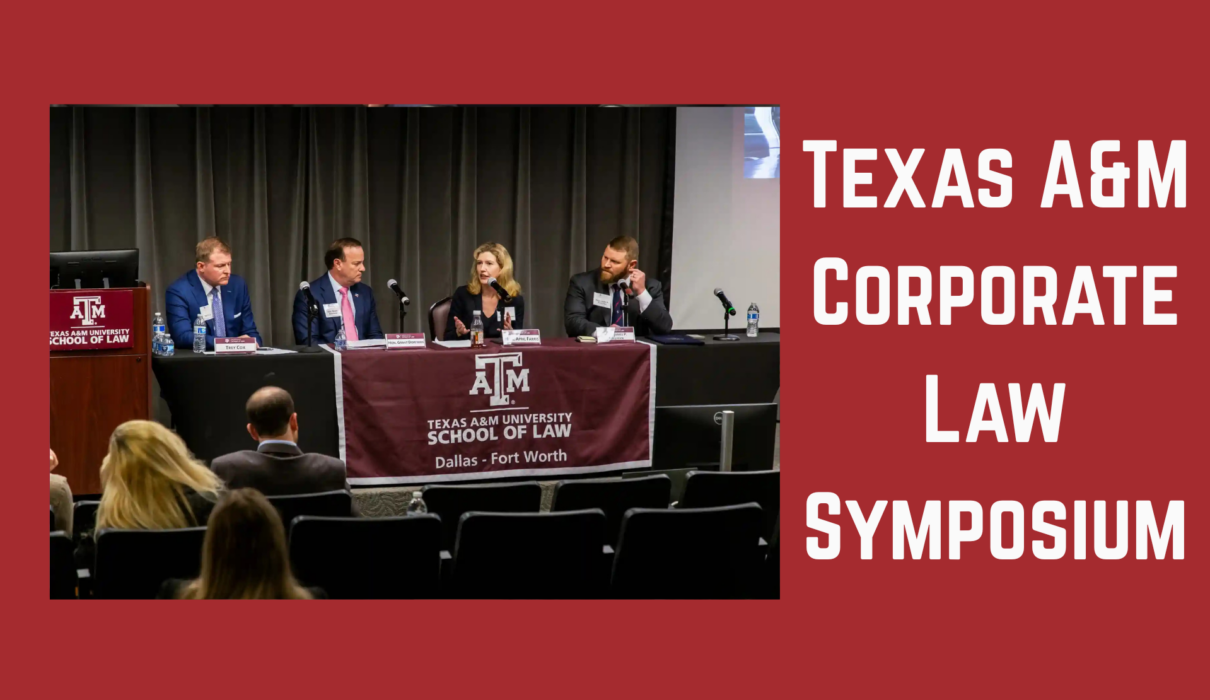
Texas A&M University School of Law in Fort Worth hosts “The Ingredients of Capitalism: The Changing Landscape of Shareholders, Boards and Corporate Law” on Friday, November 13, 2026. The symposium focuses on corporate governance, shareholder rights, and the structure of corporate boards at a time when all three have come under unusual pressure from activist investors, regulatory shifts, and ongoing debate over what obligations corporations owe beyond maximizing shareholder returns.
Corporate governance has become a genuinely contested field over the past several years. Shareholder activism, once primarily the domain of a handful of specialized hedge funds, has broadened considerably, with institutional investors increasingly willing to push boards on everything from executive compensation to environmental and social policy. At the same time, a counter-movement has pushed back against what critics call mission creep in corporate decision-making, arguing that boards should focus narrowly on financial performance. Texas A&M’s symposium sits directly at the intersection of that debate.
Sessions are likely to cover fiduciary duty standards and how courts, particularly in Delaware, continue to refine what boards owe shareholders when facing takeover attempts, activist campaigns, or conflicts of interest involving controlling shareholders. Delaware’s corporate law doctrine remains the dominant framework nationally given how many public companies incorporate there, which means even attorneys practicing outside Delaware need to track its evolving case law closely.
Shareholder rights discussions will likely address proxy access, say-on-pay votes, and the mechanics of shareholder proposals under SEC rules, areas where regulatory guidance has shifted meaningfully in recent years. Board structure sessions typically cover independence requirements, board diversity considerations, and the practical governance challenges that arise when a board needs to respond quickly to a crisis, whether that crisis involves a cybersecurity breach, an activist campaign, or allegations of executive misconduct.
For corporate and securities attorneys, symposia like this one offer a useful way to track doctrinal shifts before they show up in a client’s active matter. Corporate governance disputes often move quickly once litigation begins, and attorneys who understand the current direction of fiduciary duty case law are better positioned to advise boards proactively rather than purely reactively.
The symposium also carries relevance for attorneys advising on mergers and acquisitions, where governance disputes frequently surface during deal negotiations, particularly in contested transactions where a target company’s board faces competing offers or activist pressure to pursue a sale. Attorneys Mag’s coverage of the multistate effort to block Paramount’s proposed acquisition of Warner Bros. Discovery illustrates how governance and antitrust concerns can intersect in a single high-stakes transaction, a dynamic that corporate attorneys increasingly need to anticipate when advising on major deals.
Full details on the symposium’s agenda and registration are maintained through the AALS Upcoming Symposia calendar, which tracks academic legal events hosted by member schools across the country.
Law students interested in corporate and securities law will find the symposium useful as an introduction to the live debates currently shaping the field, debates that rarely come through clearly in a standard business organizations course built around settled case law. Attorneys building a corporate governance or M&A practice, meanwhile, stand to benefit from engaging directly with scholars tracking these shifts in real time, since governance disputes tend to move from academic discussion to active litigation faster than many other areas of corporate law.
Last updated on: November 3, 2026
1 Comment
Comments are closed.