
 By
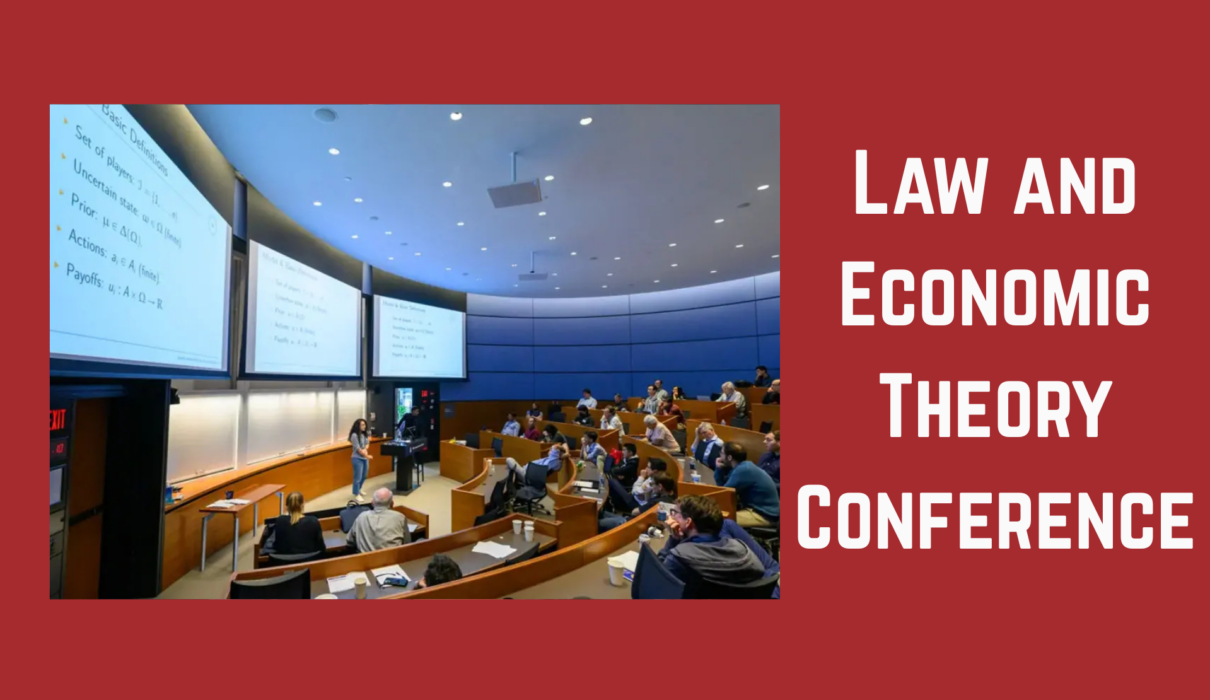
Texas A&M University School of Law hosts the 15th Annual Law and Economic Theory Conference, known in academic circles as LET XV, over two days from November 13 through 14, 2026, in Fort Worth. The conference has run for fifteen years as a dedicated venue for scholarship applying economic analysis to legal rules and institutions, a field that has steadily grown in influence across American legal academia since the law and economics movement first took hold in the 1960s and 70s.
Law and economics as a discipline asks a deceptively simple question: what are the actual incentive effects of a given legal rule, and does that rule achieve its intended outcome efficiently? That framework has shaped everything from antitrust doctrine to tort law to contract interpretation, and it remains one of the dominant analytical lenses used by judges, particularly at the federal appellate level, when reasoning through novel legal questions. Conferences like LET XV exist to push that scholarship forward, testing new theoretical models and empirical methods against the legal doctrines they claim to explain.
The two-day format allows for a depth of engagement that shorter conferences typically cannot match. Presenters generally work through full academic papers rather than condensed summaries, and the audience, made up largely of law and economics scholars, judges with an interest in the field, and practicing attorneys who rely on economic analysis in litigation, tends to engage in substantive back-and-forth rather than the more superficial Q&A common at larger conferences.
For practicing attorneys, particularly those working in antitrust, regulatory, or complex commercial litigation, law and economics scholarship carries direct practical weight. Expert witnesses in antitrust and damages cases routinely draw on economic models developed and refined at conferences exactly like this one, and attorneys who understand the underlying theoretical debates are better equipped to cross-examine opposing experts or build a stronger foundation for their own expert’s testimony.
The conference’s location at Texas A&M reflects the school’s growing reputation in law and economics scholarship, an area where the institution has invested meaningfully in recent years. Fort Worth’s accessibility within Texas also makes the event a convenient stop for attorneys and academics across the broader Texas legal market, which includes a substantial concentration of antitrust and complex commercial litigation practices given the state’s large corporate presence.
Schedule details and the full paper lineup are tracked through the AALS Upcoming Symposia calendar, which lists LET XV alongside other academic legal conferences hosted by AALS member institutions this fall.
Attorneys working in corporate and regulatory practice areas may also find it useful to track how economic analysis intersects with ongoing high-profile litigation. Readers following major corporate disputes with significant economic and antitrust dimensions may be interested in Attorneys Mag’s coverage of the multistate lawsuit challenging Paramount’s proposed takeover of Warner Bros. Discovery, a case likely to generate exactly the kind of economic analysis discussed at conferences like LET XV.
For law students considering an academic career or a JD/PhD track in economics, LET XV offers a rare chance to observe the kind of rigorous, empirically grounded scholarship that increasingly shapes appellate reasoning. Even students who plan to practice rather than pursue academia stand to benefit from understanding how economic reasoning gets built and tested, since that same reasoning frequently appears, often without much explanation, in the judicial opinions they will spend their careers reading and citing.
Last updated on: November 3, 2026