
 By
BELGRADE Serbia’s student-led political movement declared victory in Sunday’s snap parliamentary election, bringing an end to 14 years of dominance by Aleksandar Vucic’s right-wing populist party and marking the country’s most significant political turnover since the fall of Slobodan Milosevic in 2000.
The result caps nearly two years of sustained anti-government demonstrations that trace back to the collapse of a railway station canopy in Novi Sad in 2024, which killed 16 people. The disaster was widely attributed to corruption and neglect, and it became the spark for the largest wave of protest Serbia had seen in a generation.
Students Claim a Decisive Lead
At the movement’s election headquarters, Students’ List candidate Radomir Saicic told supporters that early returns showed the movement “convincingly leading in almost all polling stations,” casting the outcome as a turning point for the country’s political direction.
Voters turned out in numbers Serbia has not seen in more than three decades. Election officials reported that nearly 65 percent of the country’s 6.4 million registered voters had already cast ballots two hours before polls closed, a figure that pushed turnout past the previous high set in the 1993 parliamentary election, when just over 61 percent voted.
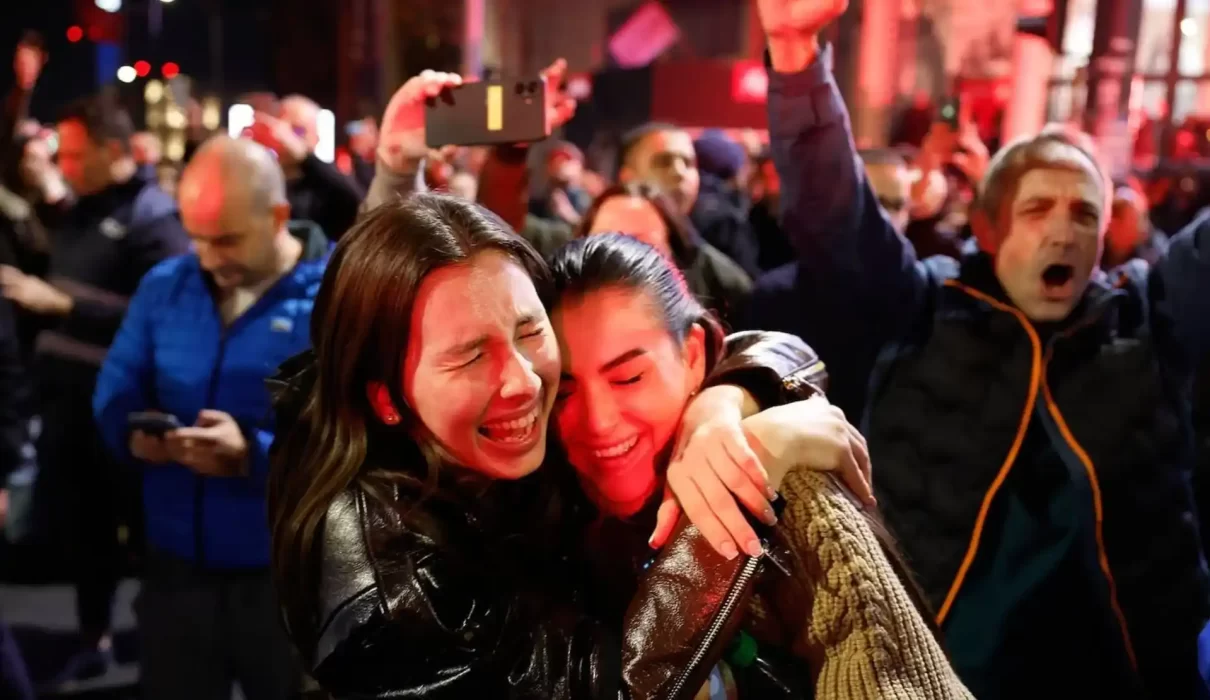
Vucic conceded less than two hours after polls closed. Belgrade’s streets filled quickly afterward, with celebrating crowds, honking cars and fireworks marking the end of his party’s run in power.


A Likely Majority in Parliament
In his concession remarks, the 56-year-old Vucic said preliminary figures pointed to the student movement winning between 135 and 140 of the 250 seats in parliament enough for an outright majority. He attributed the loss to foreign interference, alleging the vote reflected backing from European governments and opponents of the Trump administration in the United States, a claim the movement has not substantiated and has previously dismissed.
For nearly two years, students organized rallies across the country in an effort to reach voters directly and counter what they viewed as favorable state media coverage of Vucic’s Serbian Progressive Party. Their movement built considerable momentum heading into the vote: an independent protest monitor estimated that around 150,000 people turned out for the movement’s final pre-election rally in Belgrade last Thursday.
International Reaction
European Commission President Ursula von der Leyen and Hungarian Prime Minister Peter Magyar both congratulated the Students’ List following the win. Von der Leyen signaled the EU’s readiness to back reforms on the rule of law, media freedom and anti-corruption efforts as Serbia pursues its path toward membership. Magyar, whose own right-wing predecessor Viktor Orban lost power to a different political movement earlier this year, said he had spoken directly with the movement’s leaders and offered his country’s support.
An Inexperienced Slate With a Simple Mandate
Most of the roughly 250 candidates running under the Students’ List banner come from outside politics entirely academics, artists and other professionals with little to no governing experience. The platform that carried them to victory is comparatively narrow: a pledge to root out corruption that grew directly out of demands for a transparent investigation into the Novi Sad disaster and eventually hardened into a call for early elections.
Vucic resisted that pressure for nearly two years before relenting last month, calling the snap vote while citing what he described as significant turbulence in the country’s domestic politics. He stepped down from the presidency beforehand in order to run for prime minister instead.
Both domestic and international observers monitored Sunday’s vote, with the student movement mobilizing a large volunteer network of its own to watch over the process at polling stations nationwide. What remains unclear is who will actually lead the incoming government and how a coalition of political newcomers intends to translate a campaign built on protest into the mechanics of governing including sensitive questions about Serbia’s foreign relationships with the EU, Russia and China.
Last updated on: October 26, 2026